🇷🇺Country
Russia: a neutrino telescope installed from lake ice, letters scratched on birch bark and mammoth radiocarbon dates from an Arctic island
Lake Baikal in south-east Siberia, Veliky Novgorod in the north-west of Russia, where the Volkhov leaves Lake Ilmen, and Wrangel Island, well above the Arctic Circle in north-east Siberia, lie in three regions. Russia is far larger than these three areas, and they do not stand for the country as a whole.
At a glance
- Lake Baikal
- 36 optical modules per string, 15 m apart between 750 and 1,275 m depth; the lake’s winter ice is the deployment platform[1]
- Novgorod
- Of 1,209 birch-bark letters known by the end of 2017, 1,102 came from Novgorod and only two are in ink[3]
- Wrangel Island
- 106 of 124 radiocarbon dates on mammoth bone fall between 3,700 and 9,000 years ago[8]
A place worth remembering
Lake Baikal: a neutrino telescope on the lake bed
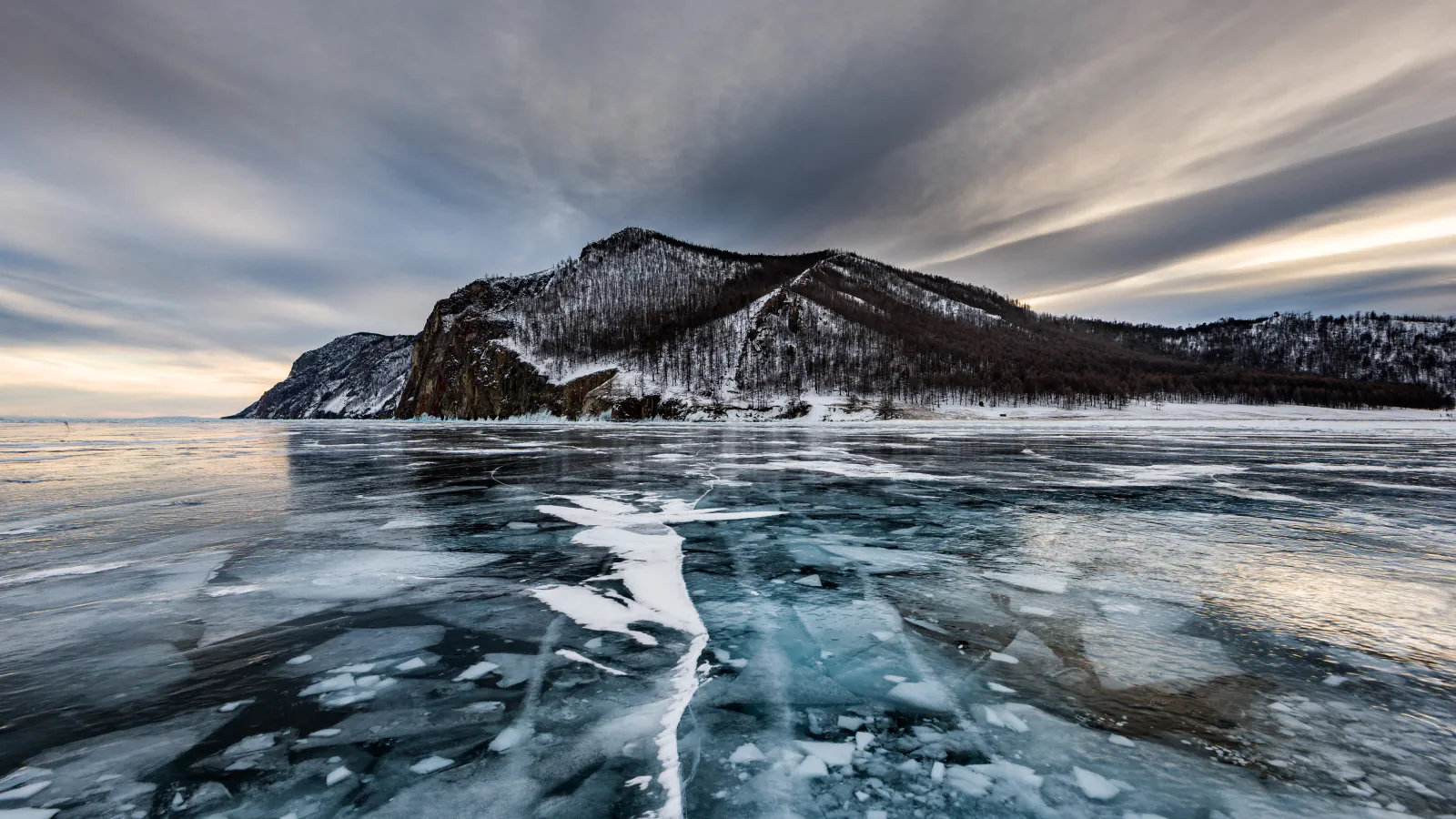
UNESCO places Lake Baikal in south-east Siberia. In its southern basin, 3.6 km offshore where the lake is about 1,365 m deep, the Baikal-GVD collaboration is building a neutrino telescope on the scale of a cubic kilometre. Its optical modules, light sensors in pressure-resistant glass spheres, hang on vertical strings, 36 to a string and 15 m apart at depths between 750 and 1,275 m; eight strings make up a cluster. The lake is part of the instrument. Dmitry Zaborov, writing for the collaboration, notes that the ice, up to about 1 m thick from February to mid-April, serves as a solid platform for deploying and servicing the detector, and gives the light absorption length in the deep water as reaching 22 m. The first cluster was installed in 2016, and the November 2024 preprint reports 13 completed clusters occupying about 0.6 km³ of water.[2][1]
Veliky Novgorod: letters scratched on birch bark
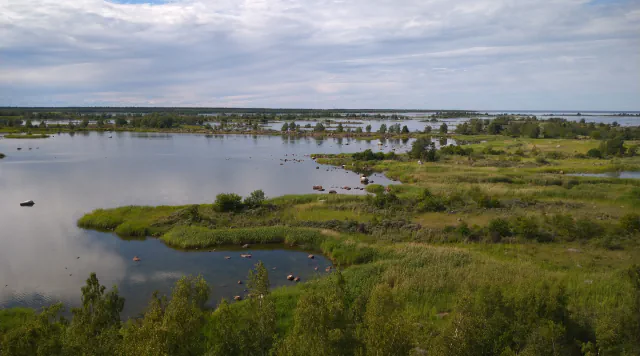
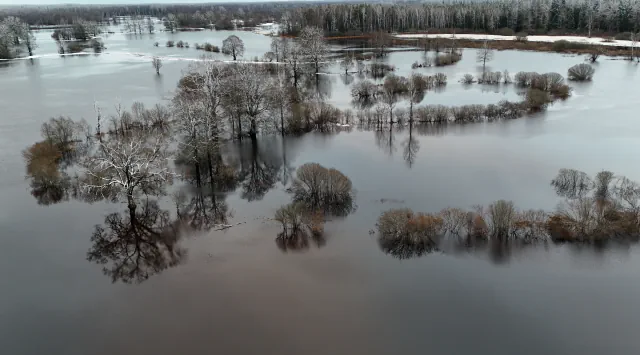
According to its city portal, Veliky Novgorod lies in the north-west of Russia, near where the Volkhov leaves Lake Ilmen. UNESCO describes the town’s archaeological layers of the 10th–17th centuries as covering about 347 ha, 7–8 m deep, waterlogged and anaerobic, which preserves organic materials. The first birch-bark letters were found there in 1951. In an overview published on gramoty.ru, A. A. Zaliznyak counts 1,209 such letters by the end of 2017, 1,102 of them from Novgorod, with finds in eleven other Old Russian towns. All but two were scratched with a metal or bone stylus; only nos. 13 and 496 are in ink. Most are 15–40 cm long and 2–8 cm wide, and only about a quarter survive whole, most often torn by recipients who did not want others to read them. The database lists letter no. 292, dated to about 1240–1260 (possibly somewhat earlier), as a charm, or incantation, in the Karelian language.[6][5][3][4]
Wrangel Island: mammoths in the Arctic Holocene
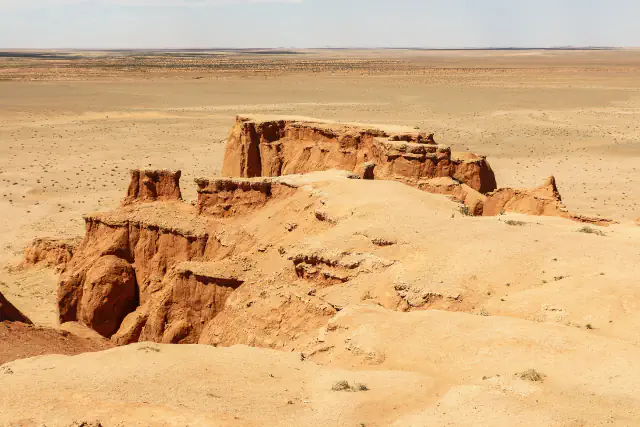
Wrangel Island and Herald Island, with the surrounding waters, form the Natural System of Wrangel Island Reserve, which UNESCO places well above the Arctic Circle; Wrangel itself covers 7,608 km². UNESCO says it was not glaciated during the Quaternary Ice Age, and lists 417 species and subspecies of vascular plants, 23 of them endemic. A 2008 paper in Quaternary Research by Vartanyan and colleagues presents 124 radiocarbon dates on mammoth bone from the island, 106 of which fall between 3,700 and 9,000 years ago. The authors take these dates to bracket the period of mammoth isolation on the island and their extinction, which they attribute to natural causes. They also found that the island’s Holocene mammoths were comparable in size to mainland ones and cannot be classed as dwarfs.[7][8]
Good to know
A few clear answers before you explore.
How is the Baikal neutrino telescope installed?
In the collaboration’s description, strings carrying 36 optical modules each are anchored to the lake bed and held upright by buoys. The ice cover, up to about 1 m thick from February to mid-April, serves as a platform for deployment and maintenance. The first cluster was installed in 2016.[1]
What were Novgorod’s birch-bark letters written with?
Almost all were scratched into the bark with a metal or bone stylus; only two of the letters, nos. 13 and 496, are written in ink. UNESCO adds that Novgorod’s waterlogged, anaerobic archaeological layers preserve organic materials.[3][5]
How do researchers know when mammoths lived on Wrangel Island?
From radiocarbon dating of bone. The 2008 study lists 124 dates on mammoth bone, 106 of them between 3,700 and 9,000 years ago, and notes that the absence of dates between 9,000 and 12,000 years ago probably indicates a period when mammoths were absent from the island.[8]
The WorldStamped community
Every visit becomes part of a story.
- Members with public visits
- 0
- Places with public visits or memories
- 0
- Public memories
- 0
No public visits have been counted here yet. Add this destination to your own map and choose what you want to share.
Members are counted once. Counts include only eligible public activity from profiles that allow search discovery. Private and followers-only content is excluded.