🇫🇮Country
Finland: a rising coast, a fortress that served three states and the Sámi Homeland
Land still rising out of the sea in the Kvarken Archipelago off the Ostrobothnia coast, Suomenlinna, a sea fortress in Helsinki that defended three states, and the Sámi Homeland in northern Lapland, where the constitution gives the Sámi linguistic and cultural self-government, come from different parts of Finland.
At a glance
A place worth remembering
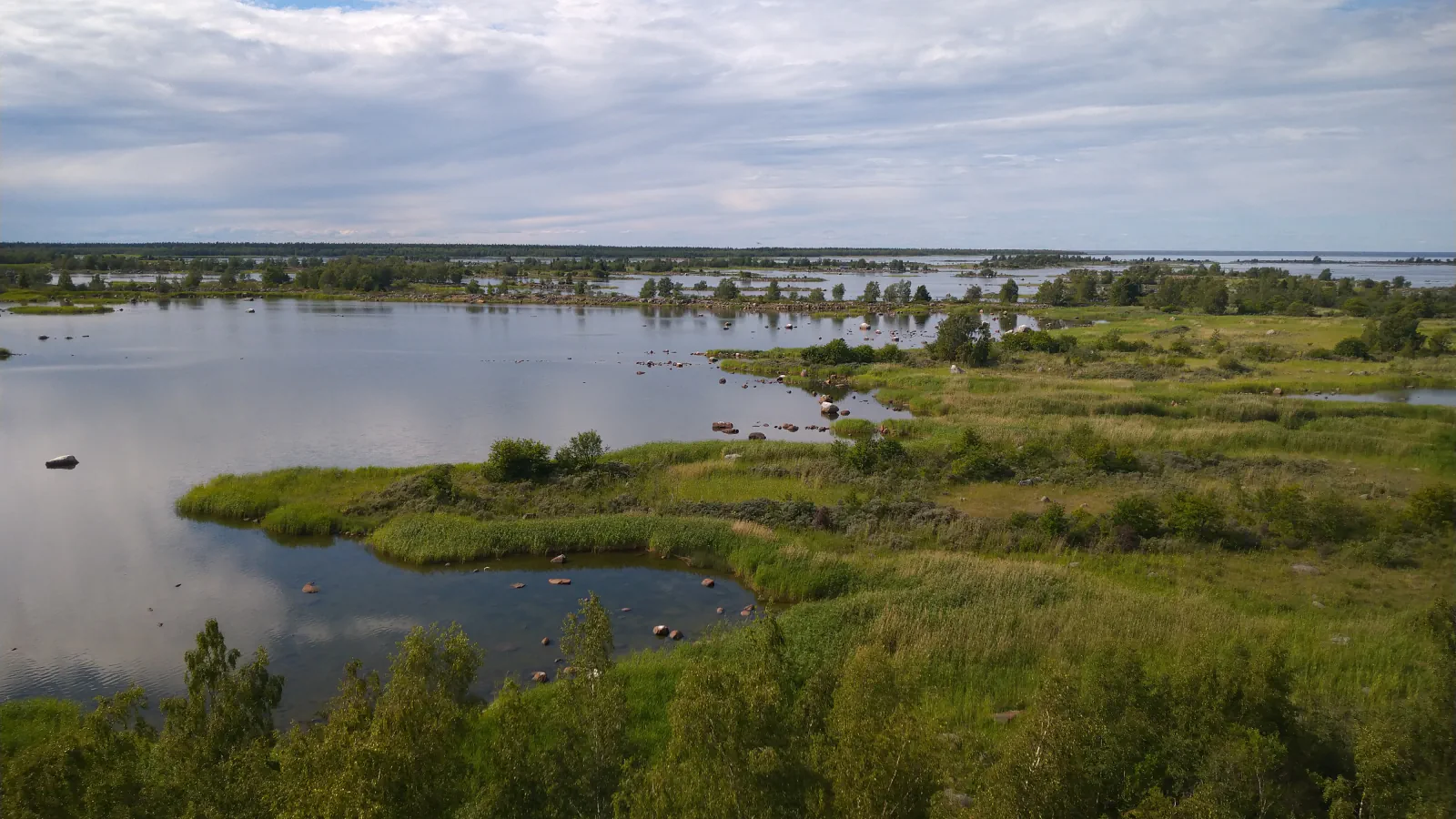
Kvarken: land that is still rising out of the sea
The Kvarken Archipelago (Merenkurkku in Finnish) lies in the Gulf of Bothnia, and Metsähallitus lists it under Ostrobothnia. Its seabed is gradually turning into land, and flads and gloes, lagoons shaped by the uplift, are typical of the coast. The cause is the land still recovering from the heavy load of the last ice sheet. The National Land Survey of Finland says uplift in the Kvarken and High Coast area has been measured at more than 8 mm a year relative to sea level, and that over time the process will create a walkable link between Sweden and Finland in the northern part of the archipelago. UNESCO lists Kvarken together with Sweden’s High Coast as one property and names De Geer moraines among its distinctive landforms.[1][2][3][4]
Suomenlinna: a Swedish sea fortress renamed in 1918
Suomenlinna stands on a group of islands at the entrance to Helsinki’s harbour, in the Uusimaa region. Sweden began work on the fortress in 1748 and named it Sveaborg in 1750; in Finnish the name became Viapori. It surrendered to Russian forces in May 1808, and the official Suomenlinna site calls the reasons an unsolved mystery. It then belonged to the Russian Empire until 1918, when the newly independent Finland took it over and renamed it Suomenlinna, ‘Castle of Finland’. UNESCO notes that it has served to defend three different states: the Kingdom of Sweden, the Russian Empire and the Republic of Finland. The property covers 210 ha, with about 200 buildings and 6 km of defensive walls across six separate islands, and it forms a district of Helsinki.[5][6]
The Sámi Homeland in northern Lapland
According to the visitor guidance on the Sámi tourism site, which lists the Sámi Parliament as its contact, the Sámi Homeland in Finland covers the municipalities of Enontekiö, Inari and Utsjoki and the northern part of Sodankylä, around Vuotso village. The same guidance gives the name of the Sámi land in three languages: Sápmi in North Sámi, Säämi in Inari Sámi and Sääʹmm in Skolt Sámi. The Constitution of Finland says the Sámi, as an indigenous people, have the right to maintain and develop their own language and culture, and that in the Sámi Homeland they have linguistic and cultural self-government as provided by an Act of Parliament. The Sámi Parliament has 21 members, elected from among the Sámi every four years.[7][8][9]
Good to know
A few clear answers before you explore.
Is the Kvarken coast still rising?
Yes. The National Land Survey of Finland reports uplift of more than 8 mm a year relative to sea level in the Kvarken and High Coast area, as the land recovers from the heavy load of the last glacial period. UNESCO gives a long-term figure of around 0.9 m per century over the past 10,500 years.[1][4]
Why was Suomenlinna renamed?
Sweden named the fortress Sveaborg in 1750; Viapori was its Finnish rendering. In May 1918, after Finland’s independence, it was renamed Suomenlinna, ‘Castle of Finland’, to reflect that independence.[5]
Which municipalities form the Sámi Homeland?
Enontekiö, Inari and Utsjoki, plus the northern part of Sodankylä around Vuotso village, according to the Sámi tourism guidance. The Constitution of Finland provides the Sámi with linguistic and cultural self-government in this area.[7][8]
The WorldStamped community
Every visit becomes part of a story.
- Members with public visits
- 0
- Places with public visits or memories
- 0
- Public memories
- 0
No public visits have been counted here yet. Add this destination to your own map and choose what you want to share.
Members are counted once. Counts include only eligible public activity from profiles that allow search discovery. Private and followers-only content is excluded.