🇷🇴Country
Romania: a river delta, a painted church and fortified village churches
The Danube splits into three main branches before reaching the Black Sea; Voroneț’s exterior frescoes and Transylvania’s fortified villages preserve two very different church traditions.
At a glance
A place worth remembering
Danube Delta: a reserve of 5,800 square kilometres
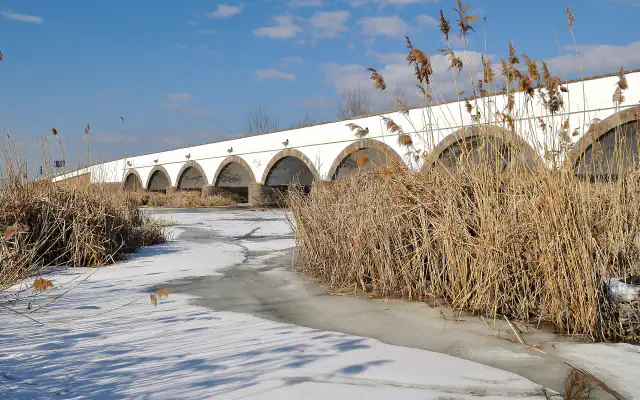
The Romanian Cultural Institute describes the Danube Delta Biosphere Reserve as 5,800 km² across six geographic units. The delta itself covers 4,178 km² and lies 82% in Romania and 18% in Ukraine. Its three main branches are Chilia, Sulina and Sfântu Gheorghe. The Institute attributes the connected Letea and Caraorman sandbanks to Pleistocene deposits, either carried in by the river or shifted by the Black Sea’s circular current. The UNESCO-listed property lies in Tulcea County; the Institute also describes the reserve’s channels, lakes, reed beds and floating islets of vegetation.[6][1]
Voroneț: a church raised in 1488, painted outside in 1547
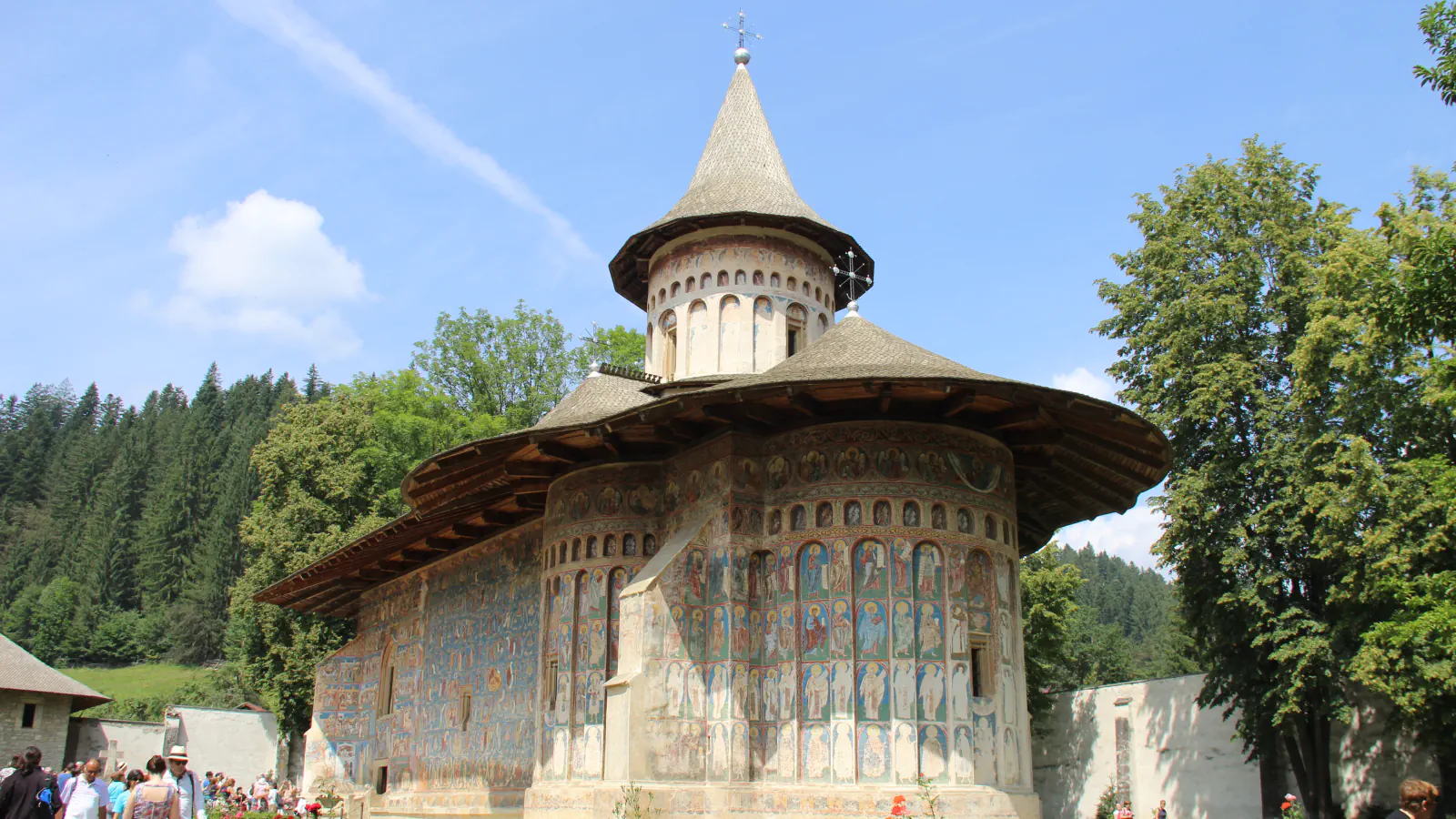
UNESCO groups eight churches in the north of Moldavia, raised between the late 15th and late 16th centuries, with frescoes covering their outer walls. Romania’s National Heritage Institute lists Arbore, Humor, Moldovița, Pătrăuți, Probota, the church of the St John the New Monastery in Suceava, Sucevița and Voroneț, places this painted-exterior tradition in northern Moldavia (Bucovina) and describes the paintings as fresco finished a secco, covering the walls as a whole. At Voroneț, in Suceava County, the founding inscription records that Stephen the Great began the church on 26 May 1488 and completed it on 14 September that year. Art historian Constantin Ion Ciobanu considers the paintings in the nave and sanctuary likely to date from July 1496 through spring 1497. He dates the porch paintings and exterior façades to 1547, initiated by Metropolitan Grigore Roșca.[2][3][4]
Transylvania: village churches turned into fortresses
UNESCO inscribes seven villages in southern Transylvania, founded by the Transylvanian Saxons, whose fortified churches show how building styles changed between the 13th and 16th centuries. The National Heritage Institute’s account mentions Prejmer, Viscri, Biertan, Saschiz, Valea Viilor and Câlnic among its examples. It begins with the Saxon settlers who arrived from the 12th century; the rights of those in the Sibiu Province were set down in the Andreanum, signed by King Andrew II in 1224. After the Tatar invasion of 1241–42 the crown encouraged fortified settlements, and after the great Ottoman invasion of 1491 all churches in the Saxon villages on royal land, about 200, were fortified in the first quarter of the 16th century. The Institute sorts the churches into three types: those with a fortified enclosure, such as Prejmer; fortified churches such as Biertan, whose enclosure has three rings; and church-redoubts, a type it says began with Saschiz in 1496. It also cites the fortified church at Dârjiu as an example of Székely influence on fortification.[5][3]
Good to know
A few clear answers before you explore.
How large is the Danube Delta Biosphere Reserve?
The Romanian Cultural Institute gives 5,800 km² for the reserve and 4,178 km² for the Danube Delta itself, 82% in Romania and 18% in Ukraine. It also lists six geographic units within the reserve.[6]
When were the Voroneț church and its outer paintings made?
The founding inscription records construction from 26 May to 14 September 1488. Art historian Constantin Ion Ciobanu says the paintings in the nave and sanctuary were probably completed between July 1496 and spring 1497; he dates porch and exterior painting to 1547, at Metropolitan Grigore Roșca’s initiative.[4]
Why do Transylvanian Saxon villages have fortified churches?
After the Tatar invasion of 1241–42 the crown encouraged fortified settlements, and after the great Ottoman invasion of 1491 all churches in Saxon villages on royal land, about 200, were fortified within the first quarter of the 16th century. The Institute says the interiors held food stores, wells, a mill, a bread oven and a school, so that daily life could continue during a siege.[3]
The WorldStamped community
Every visit becomes part of a story.
- Members with public visits
- 0
- Places with public visits or memories
- 0
- Public memories
- 0
No public visits have been counted here yet. Add this destination to your own map and choose what you want to share.
Members are counted once. Counts include only eligible public activity from profiles that allow search discovery. Private and followers-only content is excluded.