🇲🇼Country
Malawi: closely related lake cichlids, white clay paintings at Chongoni and 845 hectares of Mulanje cedar
A 2018 genome study of 73 Lake Malawi cichlid species found an average sequence divergence of only 0.1–0.25% between pairs of species. In the Chongoni hills, rock shelters were painted with white clay that appears to have been mixed with water alone. On Mount Mulanje, a 2004 survey recorded 845.3 ha of Mulanje cedar. All three places lie in southern or central Malawi, so the north of the country is not covered.
At a glance
A place worth remembering
Lake Malawi: species pairs that differ by 0.1–0.25%
UNESCO places Lake Malawi National Park at the southern end of the lake and says it is home to many hundreds of cichlid species, nearly all of them endemic to the lake. For a 2018 genome study, Malinsky and colleagues sequenced 134 individuals from 73 species, using fin clips collected in Malawi and Tanzania between 2004 and 2014. Average sequence divergence between pairs of species was only 0.1–0.25%, a range that overlaps with the diversity found within species, and 82% of heterozygosity, the variation between an individual’s two sets of chromosomes, was shared between species. The authors divide the species into seven groups by ecology and body form, among them the rock-dwelling mbuna, the typically deep-water Diplotaxodon and the Copadichromis utaka, which feed in open water but breed on or near the bottom. Their analysis points to serial branching from a generalist ancestor resembling Astatotilapia, and no single species tree fits all the relationships, which they read as evidence of gene flow at multiple times.[2][1]
Chongoni hills, Dedza District: shelters painted with river clay
UNESCO lists 127 rock-art sites in the Chongoni Rock-Art Area, 126.4 km² of forested granite hills on the central plateau in Dedza District, with paintings by BaTwa hunter-gatherers and later ones by Chewa farmers. The Rock Art Research Institute at the University of the Witwatersrand describes the Chewa work as two traditions, chinamwali and nyau. The white paint is powdered clay dug from riverbeds, the same material still used to decorate houses, and it appears to have been mixed with water only. Chinamwali paintings, linked to the girls’ coming-of-age ceremony of the same name, are far more numerous, with more than a dozen superimposed layers at some sites; nyau paintings show masked figures and large animal basketwork figures and are known from only a few dozen sites. The institute says neither is made today, though some chinamwali shelters are still used for the ceremony; UNESCO adds that Chinamwali is still practised, mostly in secret, and that Nyau masked figures can be seen in most villages around Chongoni. UNESCO’s intangible heritage list also records Gule Wamkulu, the dance of the Chewa performed by members of the Nyau brotherhood in Malawi, Mozambique and Zambia.[3][4][5]
Mount Mulanje, southern Malawi: a cedar that regrows only from seed
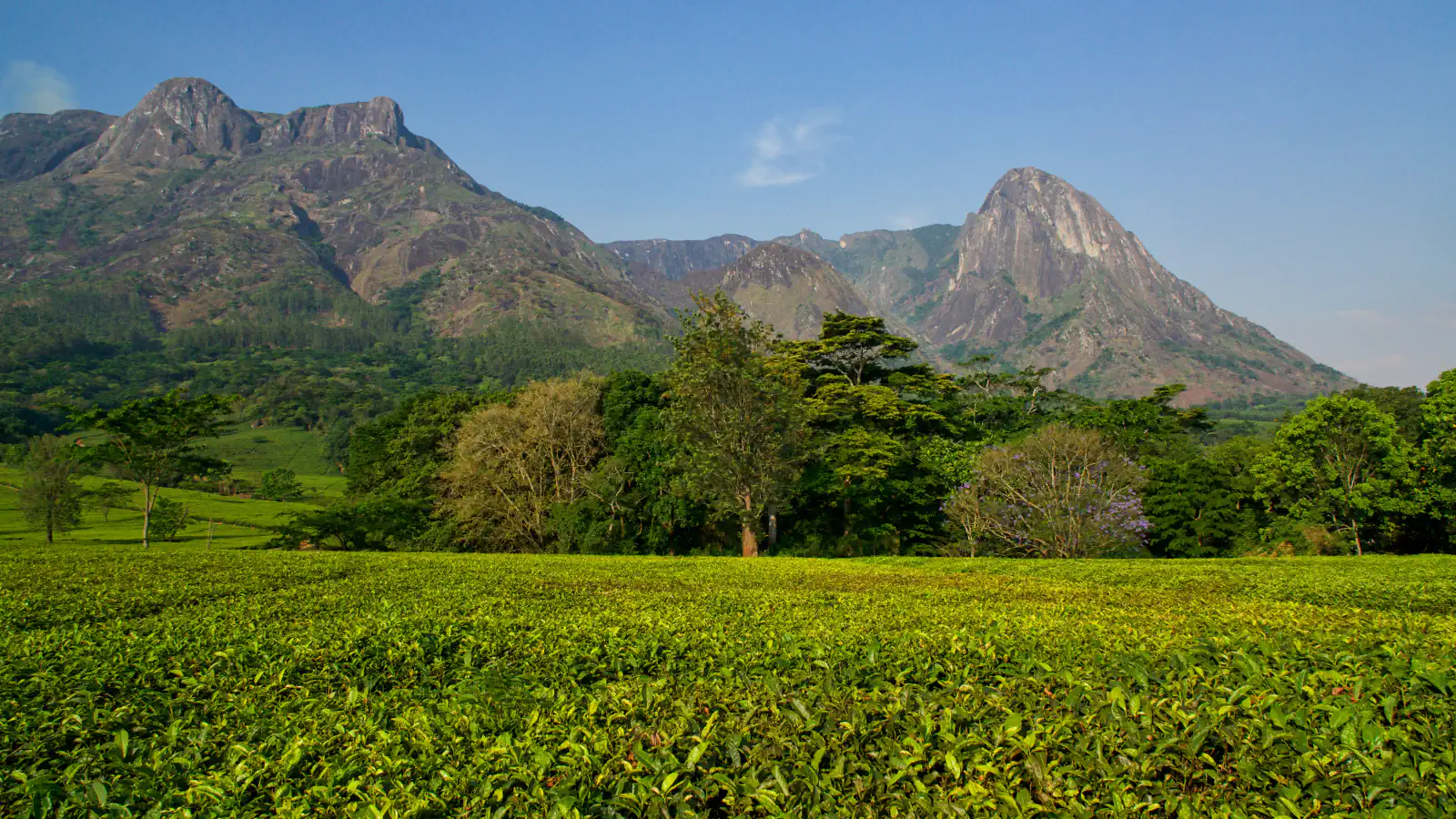
Bayliss and colleagues (2007) describe Mount Mulanje as rising above the plains of southern Malawi to more than 3,000 m over about 650 km², known locally as chilumba mu mlengalenga, the Island in the Sky, with tea estates along the southern and eastern edges of its forest reserve. The Mulanje cedar, Widdringtonia whytei, a conifer of the cypress family, is endemic to the massif. Their 2004 sample-plot survey found 30 cedar clusters in six regions, among them Chambe, Chinzama, Lichenya and Thuchila, covering 845.3 ha, and about a third of the recorded trees were dead. A 1989 survey had given 1,462 ha; the authors calculate a loss of 616.7 ha in 15 years but note that different methods make direct comparison difficult. The Royal Botanic Garden Edinburgh’s conifer profile gives an altitude range of 1830–2550 m and says that, unlike its relative Widdringtonia nodiflora, the cedar does not resprout from stumps burnt by fire and must regenerate from seed; it names more frequent fire as a barrier to regeneration and lists the species as Critically Endangered, where Bayliss and colleagues cited an Endangered listing from 2006.[6][7]
Good to know
A few clear answers before you explore.
How different are Lake Malawi’s cichlid species in their DNA?
In the 2018 study by Malinsky and colleagues, which sequenced 134 individuals from 73 species, the average sequence divergence between pairs of species was only 0.1–0.25%. That range overlaps with the diversity found within species, and 82% of heterozygosity was shared between species. The authors also report evidence of gene flow at multiple times, so no single species tree describes all the relationships. The paper says the radiation includes hundreds of species.[1]
Are the Chongoni paintings still being made?
According to the Rock Art Research Institute at the University of the Witwatersrand, neither chinamwali nor nyau rock art is made today, although some shelters with chinamwali paintings are still used for the ceremony. UNESCO says the Chinamwali initiation is still practised, mostly in secret, in some of the painted shelters, and that the Nyau masked figures that inspired the rock art can be seen in most villages around Chongoni.[4][3]
Why is the Mulanje cedar considered threatened?
Bayliss and colleagues (2007) report that commercial exploitation of the cedar began in 1898 and continued until 1955, and they attribute its decline to increased fire and illegal logging. Their survey recorded 845.3 ha, with about a third of the trees dead. The Royal Botanic Garden Edinburgh profile adds that the cedar does not resprout after fire and must regrow from seed, that most fires are set by people for hunting or crop burning, and that the species is assessed as Critically Endangered.[6][7]
The WorldStamped community
Every visit becomes part of a story.
- Members with public visits
- 0
- Places with public visits or memories
- 0
- Public memories
- 0
No public visits have been counted here yet. Add this destination to your own map and choose what you want to share.
Members are counted once. Counts include only eligible public activity from profiles that allow search discovery. Private and followers-only content is excluded.