🇬🇪Country
Georgia’s qvevri wine, Ushguli’s tower houses and Vardzia
Georgia’s qvevri traditions vary by region: Kakheti ferments wine with all the grape skins, stalks and pips, while Imereti adds at most one-third. UNESCO describes Upper Svaneti’s tower houses as both dwellings and defence posts; the towers typically rise three to five storeys. Vardzia’s monastery once had 28 wine cellars.
At a glance
A place worth remembering
How qvevri wine-making varies by region
A qvevri is a clay vessel, usually egg-shaped, for fermenting, maturing and keeping wine. Georgia’s National Wine Agency describes a regional difference in fermentation: Kakheti uses all the grape skins, stalks and pips (chacha), while Imereti’s churi receives at most one-third. The agency adds that in Kakheti the vessels are buried in cellars, while in western Georgia it describes airtight vessels standing outdoors. It says a buried qvevri keeps a steady 13–15 °C, and that Kakheti is known for large vessels of 6,000–8,000 litres. UNESCO inscribed the traditional method in 2013 and describes the skills as passed among families and neighbours.[1][2][3]
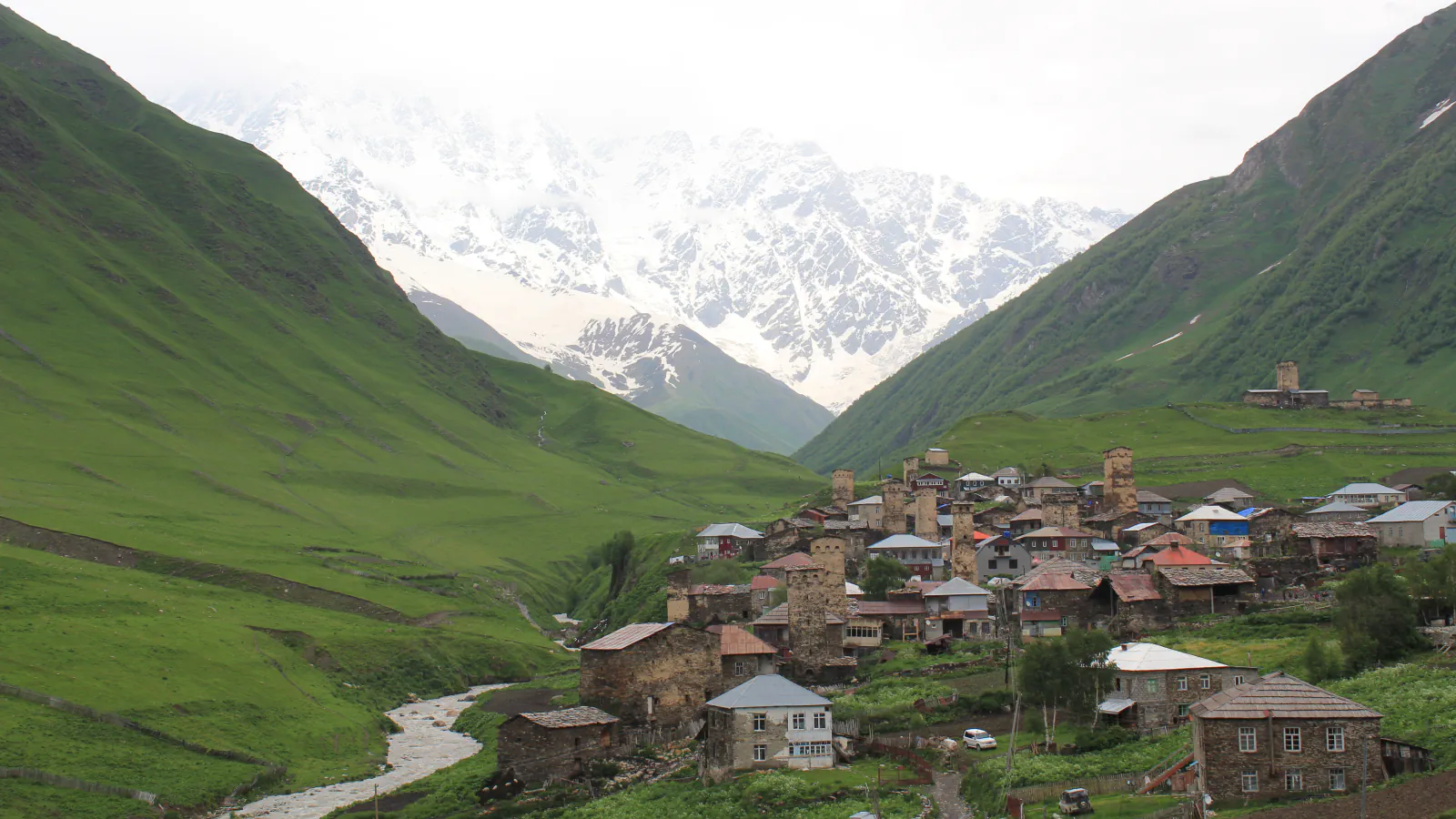
Ushguli: tower houses in Upper Svaneti
UNESCO describes the Upper Svaneti houses as both dwellings and defence posts. The houses are usually two-storeyed, and the towers typically rise three to five storeys, with walls that thin towards the top. A door on the upper floor gave access to the tower. The World Heritage entry places the village of Chazhashi, in the Ushguli community, at the confluence of the Inguri and Black Rivers and says that over 200 medieval structures survive there, among them tower houses, churches and castles.[4]
Vardzia: a monastery with its own wine cellars
Vardzia lies in the Aspindza district of Samtskhe-Javakheti. Georgia’s National Tourism Administration says it was mainly built in the 12th century and links it with the reign of Giorgi III and his daughter, Queen Tamar. The agency says the complex once had 28 wine cellars holding 235 qvevri. The Tentative List text submitted by Georgia dates the wall paintings of the main church to the 12th century and says they include depictions of Georgia’s royal family. UNESCO’s Tentative List entry for the wider Vardzia-Khertvisi area notes Asomtavruli inscriptions across the gorge, spanning the 9th to 18th centuries.[6][5]
Good to know
A few clear answers before you explore.
How does qvevri wine-making differ between Kakheti and Imereti?
Georgia’s National Wine Agency says that in Kakheti all of the grape skins, stalks and pips take part in fermentation, while in Imereti, where the vessel is called churi, at most one-third does. It adds that Kakheti’s vessels are buried in cellars, while in western Georgia it describes airtight vessels kept outdoors.[2][3]
What were Svan tower houses used for?
UNESCO describes the houses as both dwellings and defence posts. The houses are usually two-storeyed; their towers typically rise three to five storeys, with thinner walls toward the top, and a door on the upper floor gave access to the tower.[4]
What is Vardzia’s heritage status?
The Georgian National Tourism Administration lists Vardzia as an Immovable Cultural Monument of National Significance. The wider Vardzia-Khertvisi area appears on UNESCO’s Tentative List, with a 2007 submission date.[6][5]
The WorldStamped community
Every visit becomes part of a story.
- Members with public visits
- 0
- Places with public visits or memories
- 0
- Public memories
- 0
No public visits have been counted here yet. Add this destination to your own map and choose what you want to share.
Members are counted once. Counts include only eligible public activity from profiles that allow search discovery. Private and followers-only content is excluded.