🇦🇲Country
Armenia: a manuscript repository, a regulated lake and a restored temple
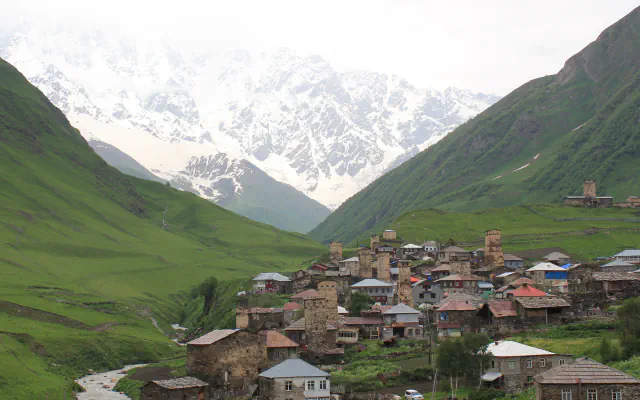
Yerevan, Gegharkunik and Kotayk each add a different layer: a manuscript repository that began as a church library, a lake whose level was lowered for power and irrigation and is now managed, and a temple in Hellenistic style that an earthquake brought down in 1679 and later work restored.
At a glance
A place worth remembering
Yerevan: from a church library to a research institute
Matenadaran means a repository of manuscripts. The institute’s own history says its collection grew from the library of the Catholicos of All Armenians at Etchmiadzin, which was already called Matenadaran before it moved to Yerevan in 1939. The first brief list of that library, compiled in 1828, counted 312 manuscripts; in 1913 there were 4,060, and the 1939 move brought 9,690 Armenian manuscripts and 675 in other languages. On 3 March 1959 the Matenadaran was converted into the Research Institute of Ancient Manuscripts, and in 1962 it was named after Mesrop Mashtots, creator of the Armenian alphabet. The institute adds that Armenian translations made in the Middle Ages preserved many works whose originals did not survive. The museum building was designed by the architect Mark Grigoryan, and its Hall of Maps and Hall of Foreign-Language Manuscripts show cartographic material and texts in Arabic, Persian, Ancient Greek, Latin and Syriac.[1][2]
Lake Sevan: lowered, then topped up
Lake Sevan lies in Gegharkunik province at more than 1,900 m above sea level, and the Hrazdan River flows out of it. The operator of the Sevan-Hrazdan Cascade of power stations, International Power Corporation, records that the programme begun in 1933 lowered the lake by 19.6 m by 2000 and cut its volume from 58.5 to 32.5 billion cubic metres. EVN Report, an Armenian news outlet, puts the 1933 surface at around 1,916 m and says the lake stood around 19 m lower by the mid-1990s. The 48.3 km Arpa-Sevan tunnel, in service since 21 March 1981, brings water from the Arpa River into the lake, and the operator says the annual water balance has been generally positive since 2002. Releases are capped by law at 170 million cubic metres a year, except in drought years.[3][4]
Garni: a temple, a fault and a basalt gorge
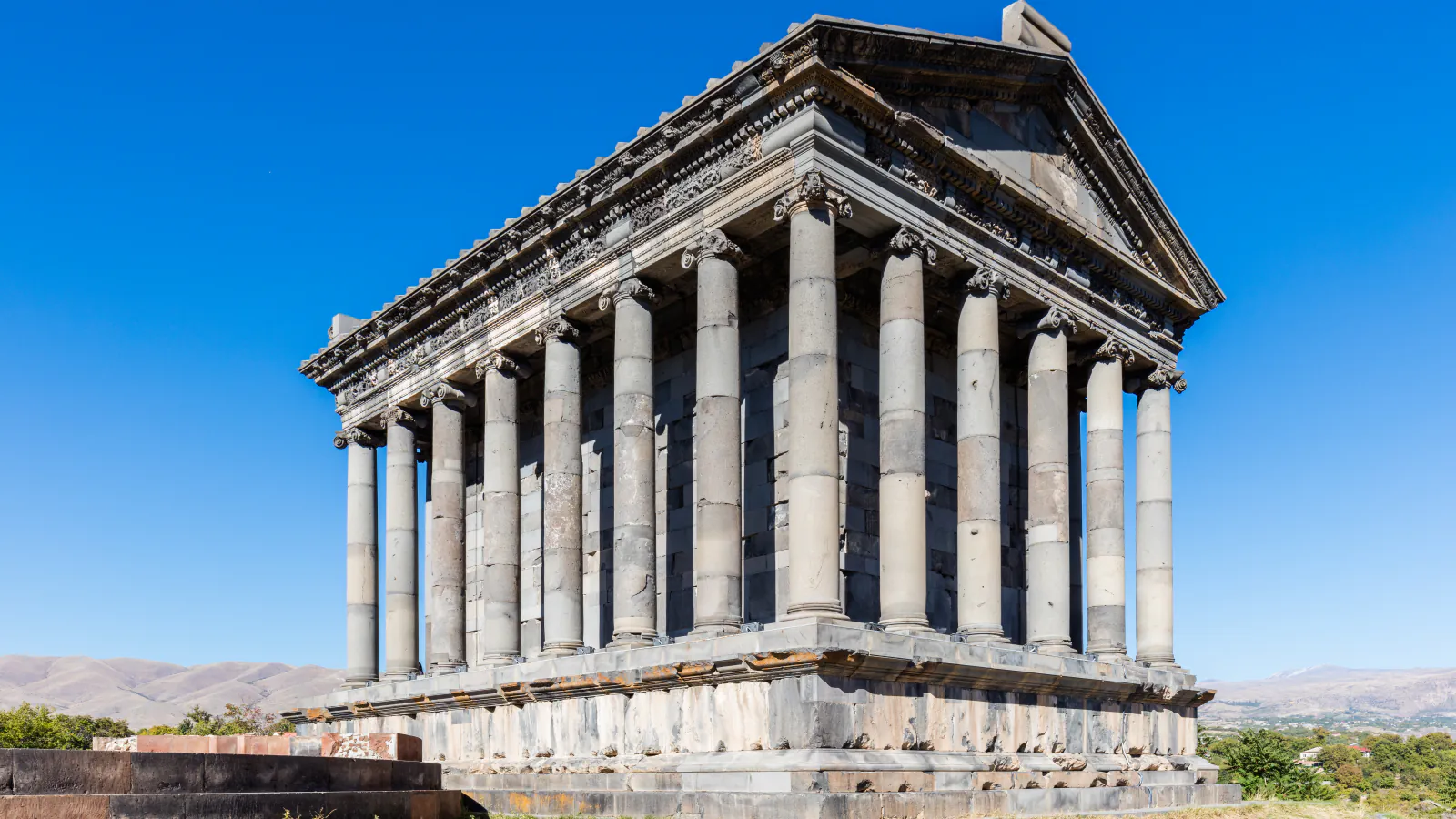
Garni is in Kotayk province, on a plateau 1,390 m above sea level overlooking the Azat River canyon. Armenia’s 2025 submission to UNESCO’s Tentative List describes a temple standing on a raised podium and ringed by 24 Ionic columns of basalt, and dates it to 77 AD under King Tiridates I, citing a Greek inscription found in 1945. The same text says an earthquake in 1679, linked to the Garni Fault, brought the temple down, and that it was restored under the architect Alexander Sahinyan between 1969 and 1975. About 900 metres south-east, in the canyon, lies the “Basalt Organ” columnar joint, part of a lava flow the text puts at roughly 30 km long and 60 m thick on average, with 40Ar/39Ar dating giving an age of about 127,000 years.[5]
Good to know
A few clear answers before you explore.
What does “Matenadaran” mean?
A repository of manuscripts. The institute says the Etchmiadzin library of the Catholicos was already called Matenadaran before it moved to Yerevan in 1939, and that the Research Institute of Ancient Manuscripts was established on 3 March 1959.[1]
Why was Lake Sevan lowered, and is the level recovering?
The programme begun in 1933 used the lake’s water for power and irrigation: of 26 billion cubic metres used, 65% went to energy and 35% to irrigation, according to the operator. The Arpa-Sevan tunnel stopped the fall in 1981 and the balance has been generally positive since 2002. EVN Report gives 1,900.75 m for July 2021 and notes that the level has not exceeded 1,901 m since the early 1960s.[3][4]
What is the “Basalt Organ” near Garni?
A columnar joint in the Azat River canyon about 900 metres south-east of the temple complex. The text submitted to UNESCO says hexagonal prisms formed as a lava flow cooled slowly and cracked, and dates the flow to about 127,000 years ago.[5]
The WorldStamped community
Every visit becomes part of a story.
- Members with public visits
- 0
- Places with public visits or memories
- 0
- Public memories
- 0
No public visits have been counted here yet. Add this destination to your own map and choose what you want to share.
Members are counted once. Counts include only eligible public activity from profiles that allow search discovery. Private and followers-only content is excluded.