🇨🇾Country
Cyprus: round houses, timber roofs and mosaic floors
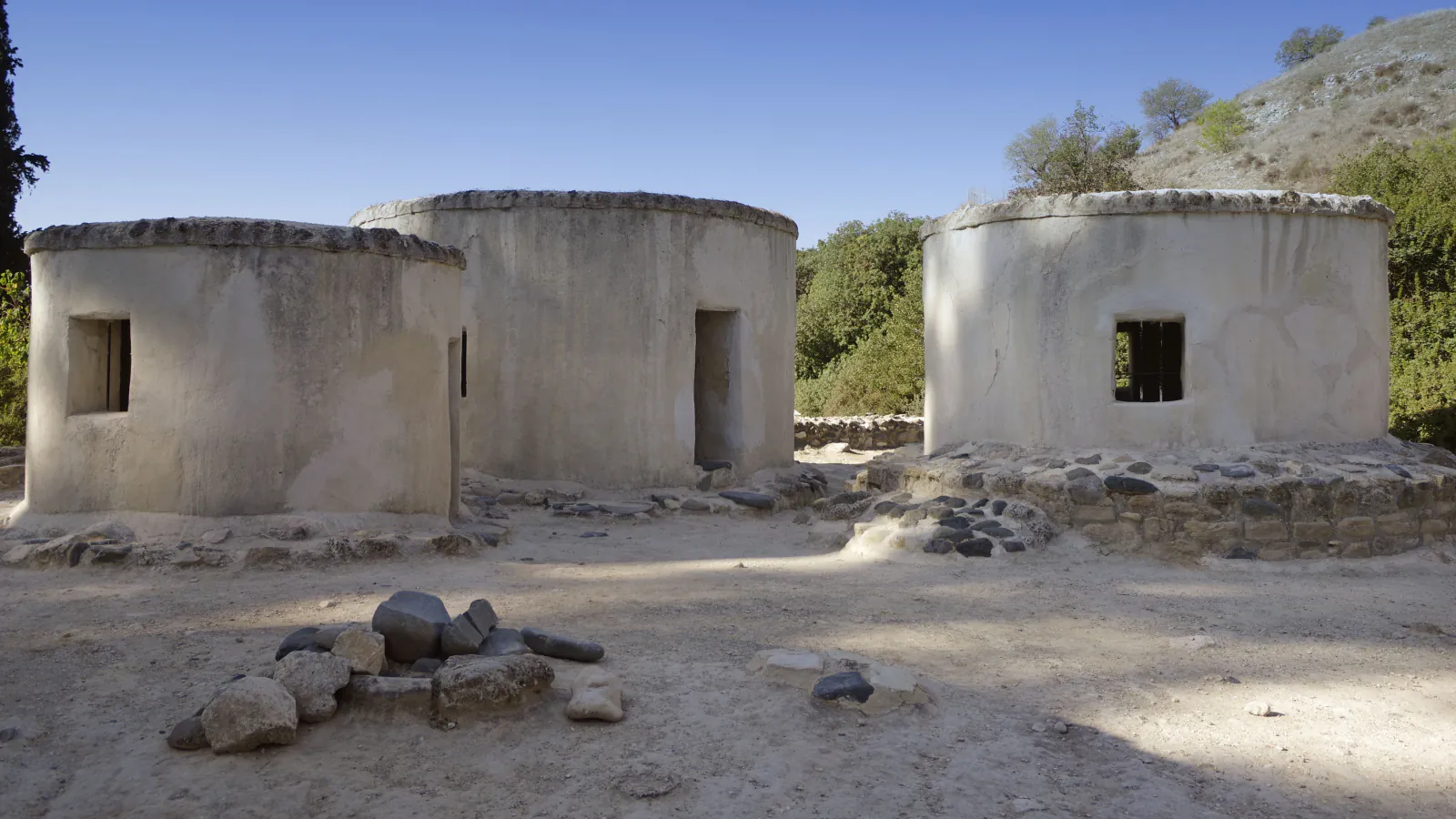
At Choirokoitia, Neolithic builders used flat roofs supported by rafters and branches and covered with straw and mud. In the Troodos mountains, steep timber roofs shelter some churches’ Byzantine domes and vaults; at Kato Paphos, mosaics reveal the work of Roman workshops. These three places connect domestic building, church architecture and floor decoration across Cyprus.
At a glance
- Painted Troodos churches in the World Heritage property
- Ten[3]
A place worth remembering
Choirokoitia: round houses and flat roofs
About 6 km inland from Cyprus’s south coast, the settlement sits on a hillside beside the Maroni River. Its round houses were built of stone and mudbrick, with flat roofs supported by rafters and branches and covered with straw and mud. Some bricks retain impressions of branches and reeds. The dead were usually buried in small pits beneath house floors. According to Visit Cyprus’s guide, the Department of Antiquities and the French Archaeological Mission rebuilt five circular buildings and part of the enclosure so that visitors can grasp the settlement more easily.[1][2]
Troodos: a roof over the roof
The UNESCO World Heritage property consists of ten painted churches scattered through Pitsilia, Solea and Marathasa in the Troodos mountains. Nine are in Nicosia District; Timios Stavros at Pelendria is in Limassol District. In some churches, a second timber roof with flat hooked tiles protects the Byzantine masonry dome or vault below. UNESCO links this roof form to Cyprus’s geography, history and climate. The ten include Agios Nikolaos tis Stegis at Kakopetria and Panayia tou Arakou at Lagoudera. UNESCO adds that the churches hold a wealth of dated inscriptions. UNESCO describes all ten churches as living monuments still used for worship.[3][4]
Kato Paphos: mosaics from Roman workshops
Visit Cyprus says the park’s four Roman villas date from between the 2nd and 5th centuries AD. The floor mosaics of the House of Dionysos cover 556 m². Its audio guide describes how mosaic workshops divided the work: apprentices completed most of it, while the master shaped the central figural scene.[5][6][7]
Good to know
A few clear answers before you explore.
Are the round houses at Choirokoitia original?
Not all. Only the lower, stone part of the house walls survived. The Visit Cyprus guide says five circular buildings and part of the enclosure were reconstructed using only traditional materials and methods, with raw materials from the surrounding area and the Maroni River.[1][2]
Where are the painted churches of Troodos?
They are spread across the Pitsilia, Solea and Marathasa areas. Nine lie in Nicosia District, while Timios Stavros at Pelendria is in Limassol District.[3][4]
Are the Paphos mosaics all in one house?
No. Roman mosaic floors survive in four villas named for Dionysos, Theseus, Aion and Orpheus at Kato Paphos. The sanctuary of Aphrodite at Palaepaphos, near Kouklia, is another component of the same property.[6][5]
The WorldStamped community
Every visit becomes part of a story.
- Members with public visits
- 0
- Places with public visits or memories
- 0
- Public memories
- 0
No public visits have been counted here yet. Add this destination to your own map and choose what you want to share.
Members are counted once. Counts include only eligible public activity from profiles that allow search discovery. Private and followers-only content is excluded.