🇪🇬Country
Egypt: temples that were cut up and rebuilt on higher ground
In the 1960s and 1970s the temples between Aswan and Abu Simbel were taken apart and rebuilt on higher ground before the reservoir behind the Aswan High Dam could cover them. UNESCO coordinated the campaign, and Abu Simbel and Philae are among the moved sites.
At a glance
A place worth remembering
Abu Simbel, sliced into blocks and set back together
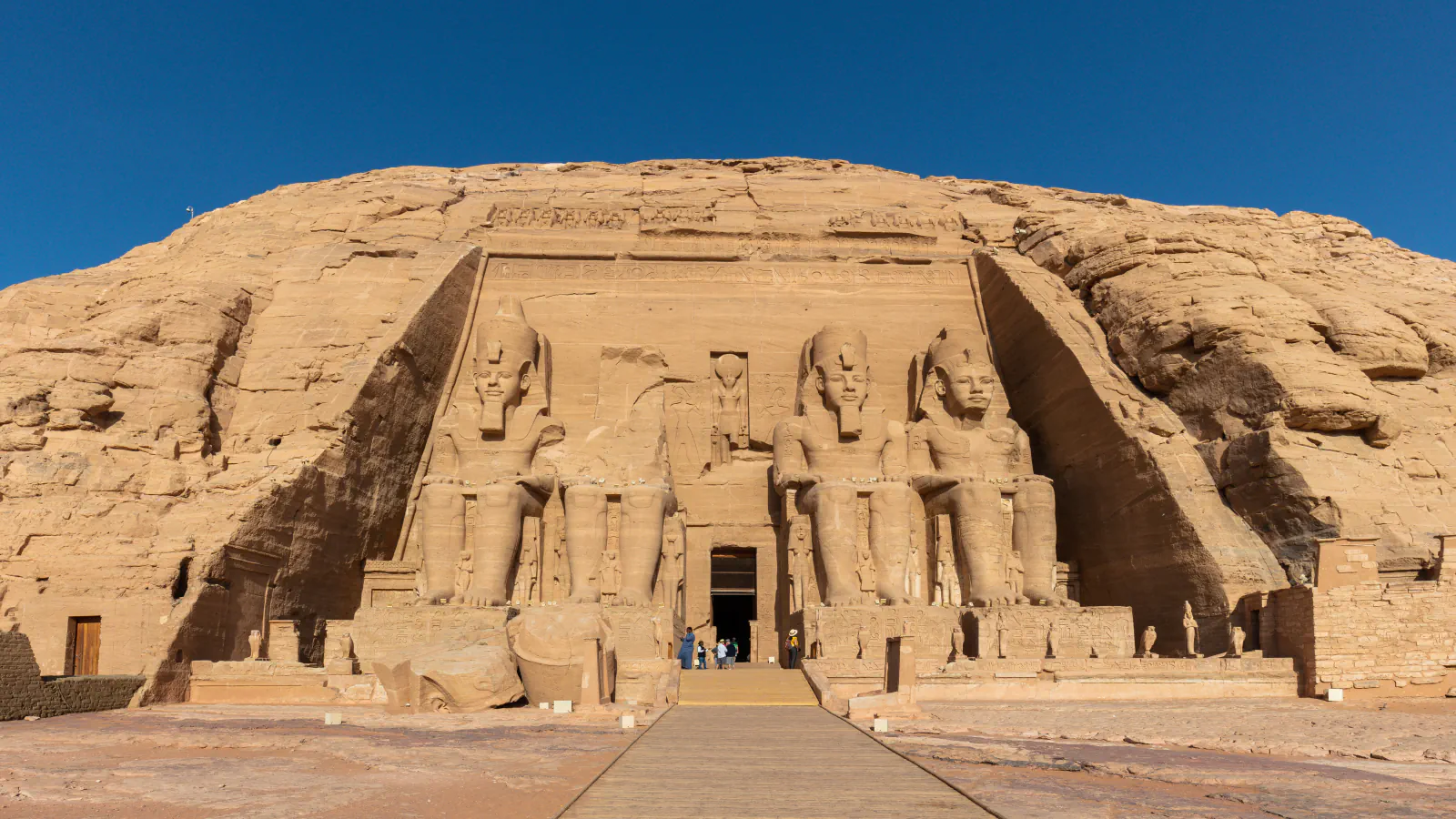
The decision to build the Aswan High Dam was made in 1954; its reservoir would cover the Nile valley from Aswan into Sudan, Nubia’s temples included. At Abu Simbel, 280 km south of Aswan, stand two rock-cut temples of Ramesses II: the Great Temple, whose façade has four seated colossi, and a smaller one for Hathor and Queen Nefertari. UNESCO’s account says workers began cutting them with wire saws in November 1963. More than a thousand blocks of about 30 tons each were numbered, stored and reassembled inside a purpose-built artificial cliff on higher ground inland, and the temples were inaugurated at the new site on 22 September 1968.[2][3][4][5]
Philae, Kalabsha and the other relocated temples
UNESCO writes that, with three exceptions, the threatened monuments were dismantled, carved up and moved. The Ptolemaic sanctuary of Isis on Philae went to Agilkia island, near the former Aswan dam, between 1972 and 1979. Kalabsha, Beit el Wali and the Kiosk of Qertassi were rebuilt near the High Dam; Amada and Derr near Amada’s old site; Dakka, Maharraqa and Wadi es Sebua together near the former Wadi es Sebua site. Egypt also gave four temples to countries that helped the campaign especially: Debod to Spain, Taffa to the Netherlands, Dendur to the United States and Ellesyia to Italy. UNESCO dates the end of the campaign to 10 March 1980.[3][4][2][1]
Aswan: the quarry where an obelisk was left unfinished
Not everything in the World Heritage property was moved. UNESCO says five of its ten parts cover the antiquities of the Aswan area: the Old and Middle Kingdom tombs at Qubbet el Hawa, the ruins of Elephantine, the monastery of St Simeon, an Islamic cemetery, and the stone quarries with an unfinished obelisk. According to Egypt’s Ministry of Tourism and Antiquities, the obelisk is believed to have been ordered by Hatshepsut for the temple of Amun at Karnak and abandoned because of flaws and fissures in the stone. UNESCO adds that the quarries, with the obelisk left behind, are the basis of what is known about ancient Egyptian quarrying technology.[1][6]
Good to know
A few clear answers before you explore.
Why were the Nubian temples moved?
The decision to build the Aswan High Dam was made in 1954, and its reservoir would flood the Nile valley from Aswan into Sudan. Egypt and Sudan asked UNESCO for help in 1959, and the international campaign was launched in 1960.[2]
How was Abu Simbel moved?
UNESCO says workers began slicing the temples with wire saws in November 1963. More than a thousand blocks of about 30 tons each were numbered, stored and rebuilt inside an artificial cliff on higher ground inland. Egypt’s Ministry of Tourism and Antiquities also records the move and UNESCO’s lead role.[4][5]
Where are the moved temples now?
Abu Simbel stands near its old site, 280 km south of Aswan. Philae’s temples are on Agilkia island near the former Aswan dam; Kalabsha, Beit el Wali and the Kiosk of Qertassi are near the High Dam; Amada and Derr near Amada’s former site; Dakka, Maharraqa and Wadi es Sebua together near the former Wadi es Sebua.[3][4]
The WorldStamped community
Every visit becomes part of a story.
- Members with public visits
- 0
- Places with public visits or memories
- 0
- Public memories
- 0
No public visits have been counted here yet. Add this destination to your own map and choose what you want to share.
Members are counted once. Counts include only eligible public activity from profiles that allow search discovery. Private and followers-only content is excluded.