🇧🇸Country
The Bahamas from north to south: Hope Town’s lighthouse, the Lucayan caves and Inagua’s flamingos
The Elbow Reef Lighthouse Society says the Hope Town lantern is still wound by hand and fuelled with kerosene. In 1981, Jill Yager described the cave crustacean Speleonectes lucayensis from Lucayan Cavern on Grand Bahama and established the class Remipedia. Great Inagua’s national park is Ramsar site 892, with Lake Rosa noted for its flamingo breeding colony.
At a glance
A place worth remembering
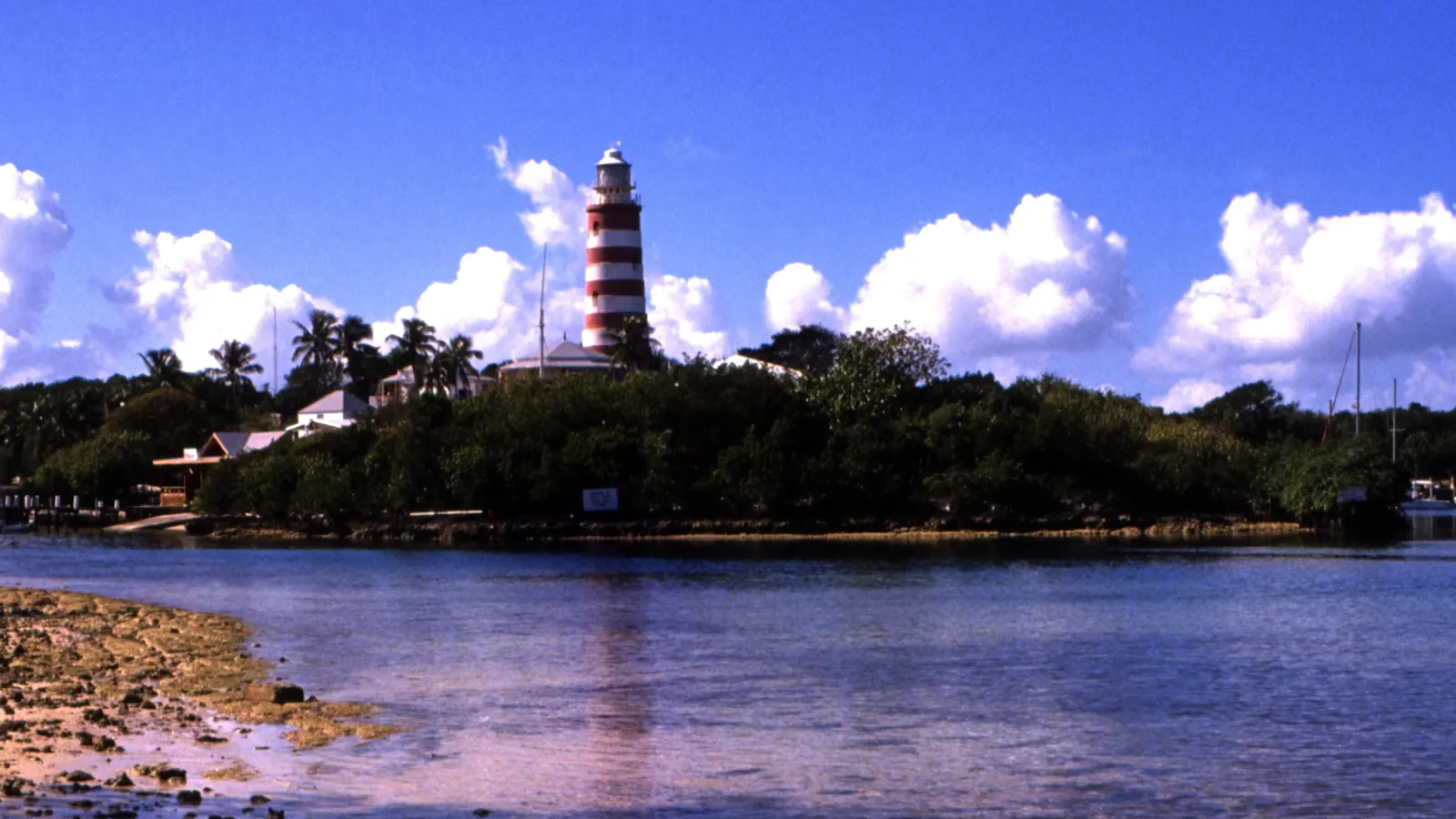
Hope Town: a lighthouse still lit by hand
The Elbow Reef Lighthouse Society dates continuous staffing and hand operation at this station to 1863; it says the lantern is still wound by hand and burns kerosene. The society’s history says that, after lighthouse oversight passed to the Bahamas Port Department in 1973, the other Bahamian lights were automated by 2012 except Elbow Reef and San Salvador. The compound has eight historic support buildings, including two former keepers’ homes, which the society dates to 1862–63. Hurricane Dorian badly damaged those buildings in 2019.[1]
Lucayan Cavern and a new crustacean class
Yager’s 1981 article gives Lucayan Cavern on Grand Bahama as the collection site for the type specimen of Speleonectes lucayensis; the paper introduced Remipedia as a new crustacean class. The Bahamas National Trust’s park history instead links the species to Ben’s Cave. The Trust dates the park’s establishment to 1982 and its expansion to 2015. It reports that the remains of six Lucayans, found in a cave in 1986, are evidence of pre-Columbian settlement, and says the park’s name honours the original inhabitants of The Bahamas.[3][4][5]
Great Inagua: flamingo estimates from different periods
Ramsar lists Inagua National Park as site 892, designated on 7 February 1997, and identifies Lake Rosa as important for a flamingo breeding colony. Bahamas National Trust’s history recalls the 1952 visit of Audubon researcher Robert Porter Allen, led by Sam Nixon to the Upper Lakes, where Allen saw more than a thousand birds courting. The Trust says it took over the flamingo-protection role when it was formed in 1959. Its page gives an undated estimate of about 70,000 flamingos; the Ramsar Information Sheet, which RSIS identifies as last updated in 1998, records about 21,000 in the early 1970s and 40,000–50,000 in its then-recent years.[6][7][8]
Good to know
A few clear answers before you explore.
Is the lighthouse at Hope Town still run by hand?
The Elbow Reef Lighthouse Society says the lantern is still wound by hand and uses kerosene, and dates the station’s staffed manual service to 1863. At the February 2022 restoration ceremony, Prime Minister Philip Davis described its staffing history as approaching 160 years.[1][2]
Are Ben’s Cave and Lucayan Cavern the same cave?
The sources do not confirm that they are. Yager’s 1981 paper names Lucayan Cavern on Grand Bahama as the collection site for the type specimen of Speleonectes lucayensis. The Bahamas National Trust’s park history associates the species with Ben’s Cave and separately reports the remains of six Lucayans found in a cave in 1986.[3][4][5]
How many flamingos live on Inagua?
The Bahamas National Trust’s page gives an undated estimate of about 70,000. The Ramsar Information Sheet is listed by RSIS as last updated in 1998; it estimated about 21,000 in the early 1970s and 40,000 to 50,000 in the sheet’s “recent years.” These are estimates tied to different periods, not one current census.[6][7][8]
The WorldStamped community
Every visit becomes part of a story.
- Members with public visits
- 0
- Places with public visits or memories
- 0
- Public memories
- 0
No public visits have been counted here yet. Add this destination to your own map and choose what you want to share.
Members are counted once. Counts include only eligible public activity from profiles that allow search discovery. Private and followers-only content is excluded.