🇩🇴Country
Dominican Republic: the Alcázar, Enriquillo’s changing level and winter whales
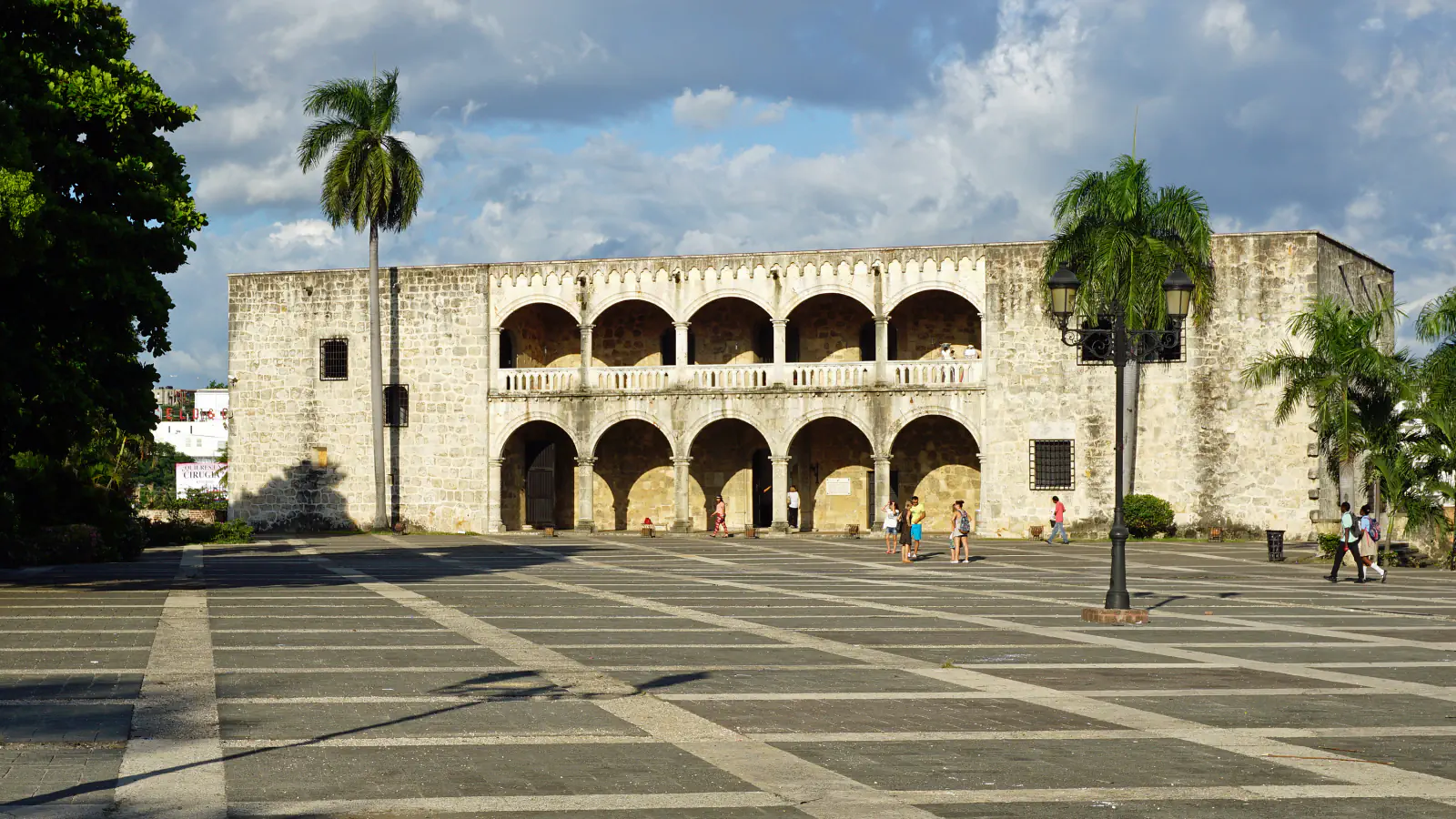
Construction of Santo Domingo’s Alcázar de Colón began in 1510, according to a Visit Dominican Republic article; a 2026 Presidency account describes later restoration work that included archaeological research and correction of earlier interventions. Lago Enriquillo rose about 10 m between 2005 and 2013, and humpbacks gather seasonally in Samaná Bay and on northern banks.
At a glance
- Alcázar restoration reported in 2026
- As described by a Ministry of Culture architect: remedial work, archaeological research, technology and correction of earlier interventions[3]
- Lago Enriquillo
- 54 m below sea level at its 2004 low, 41 m in 2013; area from 162.3 km² (2005) to 352 km² (2013)[4]
- Whales on the banks
- Published seasonal timing: early January to early April, centred on February and early March[5]
A place worth remembering
Santo Domingo: the Alcázar and its restorations
UNESCO says the colonial city where the Ozama reaches the sea was first established on the river’s east side in 1496, and that in 1502 its institutions were moved to the west bank and the city was given a grid layout. Visit Dominican Republic links the Alcázar to Diego Colón and dates the start of construction to 1510. The same article describes a Gothic-Mudéjar structure with a note of Isabeline influence and Renaissance doors and arches, and credits the Madrid architect Javier Barroso with the reconstruction now visible. The Presidency’s 2026 report quotes Ministry of Culture architect Juan Mubarak on the restoration, which he says involved remedial work, archaeological research, technology and correction of earlier interventions.[1][2][3]
Lago Enriquillo: a salt lake that rose 10 m in eight years
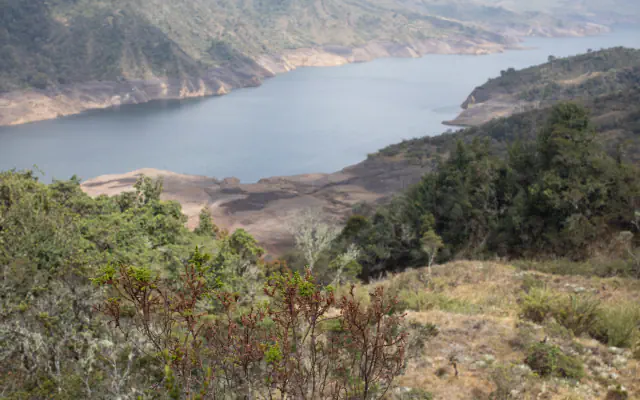
In Wright et al.’s 2005–2013 record, Lago Enriquillo rose by 10 m and more than doubled its mapped area, from 162.3 to 352 km². The explanation remains unsettled: the study reports only a weak correlation between rainfall and the lake’s level over 1984–2013 (0.2), though a moderately positive one (0.50) for 2005–2013. It proposes intermittent underground links with Lake Azuei as a possible contributor; the role of small earthquakes remains unclear. The observations end in 2013.[4]
North and north-east: seasonal humpback presence
Stevick and colleagues’ 2018 review of earlier field studies records arrivals at Silver and Navidad Banks in early January. The seasonal peak falls in February and early March; by early April, few whales remain. It describes similar timing in Samaná Bay.[5]
Good to know
A few clear answers before you explore.
What does the 2026 report say the Alcázar’s restoration involved?
The Presidency’s report dated 28 September 2026 quotes Ministry of Culture architect Juan Mubarak: the restoration made it possible to adapt the building to a new museum display through remedial work, archaeological research, technology and correction of earlier interventions.[3]
Why did Lago Enriquillo rise after 2005?
Wright and colleagues (2015) say the cause is not settled. They report a weak correlation between lake level and rainfall (0.2 for Enriquillo, 1984–2012), though a moderately positive one (0.50) for 2005–2013, and propose that increased rainfall together with changes in the hydraulic connections between the lake, Lake Azuei and the surrounding basin may explain the rise. They add that an earlier study tied the rise partly to more frequent and stronger storms, and that the effect of small earthquakes is unclear.[4]
When are humpback whales present around the Dominican banks and Samaná Bay?
A 2018 synthesis reports early-January arrivals at Silver and Navidad Banks and a seasonal peak in February and early March. By early April, few whales remain; the review describes similar timing in Samaná Bay.[5]
The WorldStamped community
Every visit becomes part of a story.
- Members with public visits
- 0
- Places with public visits or memories
- 0
- Public memories
- 0
No public visits have been counted here yet. Add this destination to your own map and choose what you want to share.
Members are counted once. Counts include only eligible public activity from profiles that allow search discovery. Private and followers-only content is excluded.