🇦🇫Country
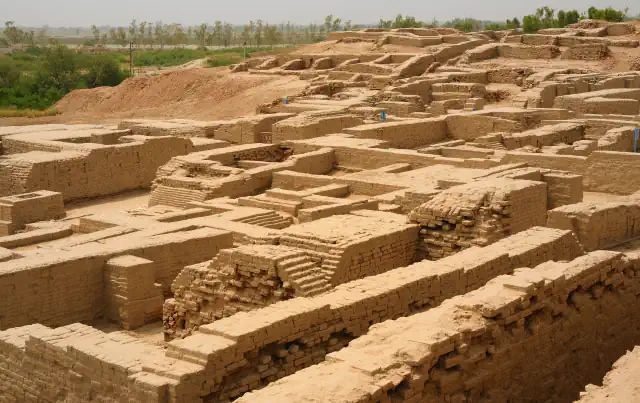
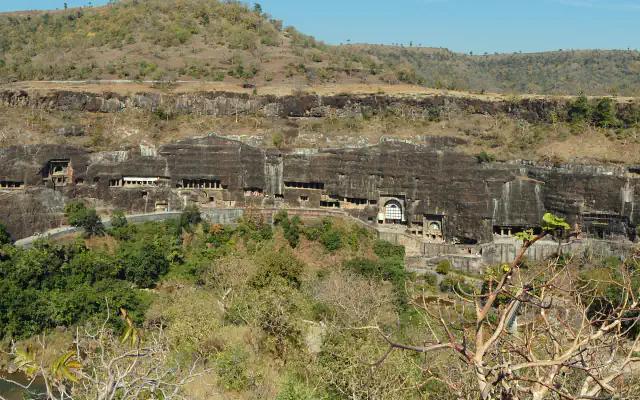
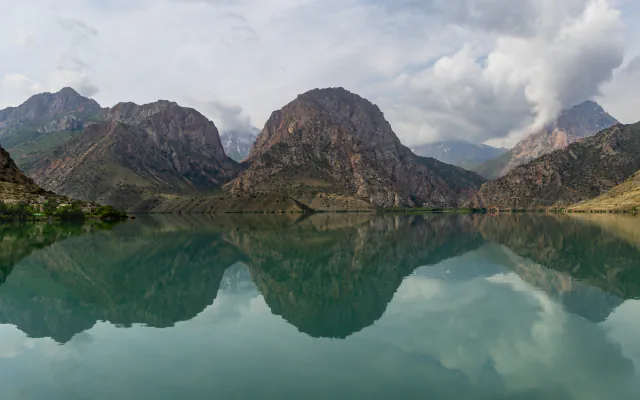
Afghanistan: a brick minaret in a deep river valley, painted caves in the Bamiyan Valley and a terraced garden in Kabul
Jam’s minaret marks a remote river valley in Ghur Province; the Bamiyan Valley preserves cliff-side Buddhist sanctuaries, while Bagh-e Babur spreads across a walled site in Kabul.
At a glance
- Minaret of Jam
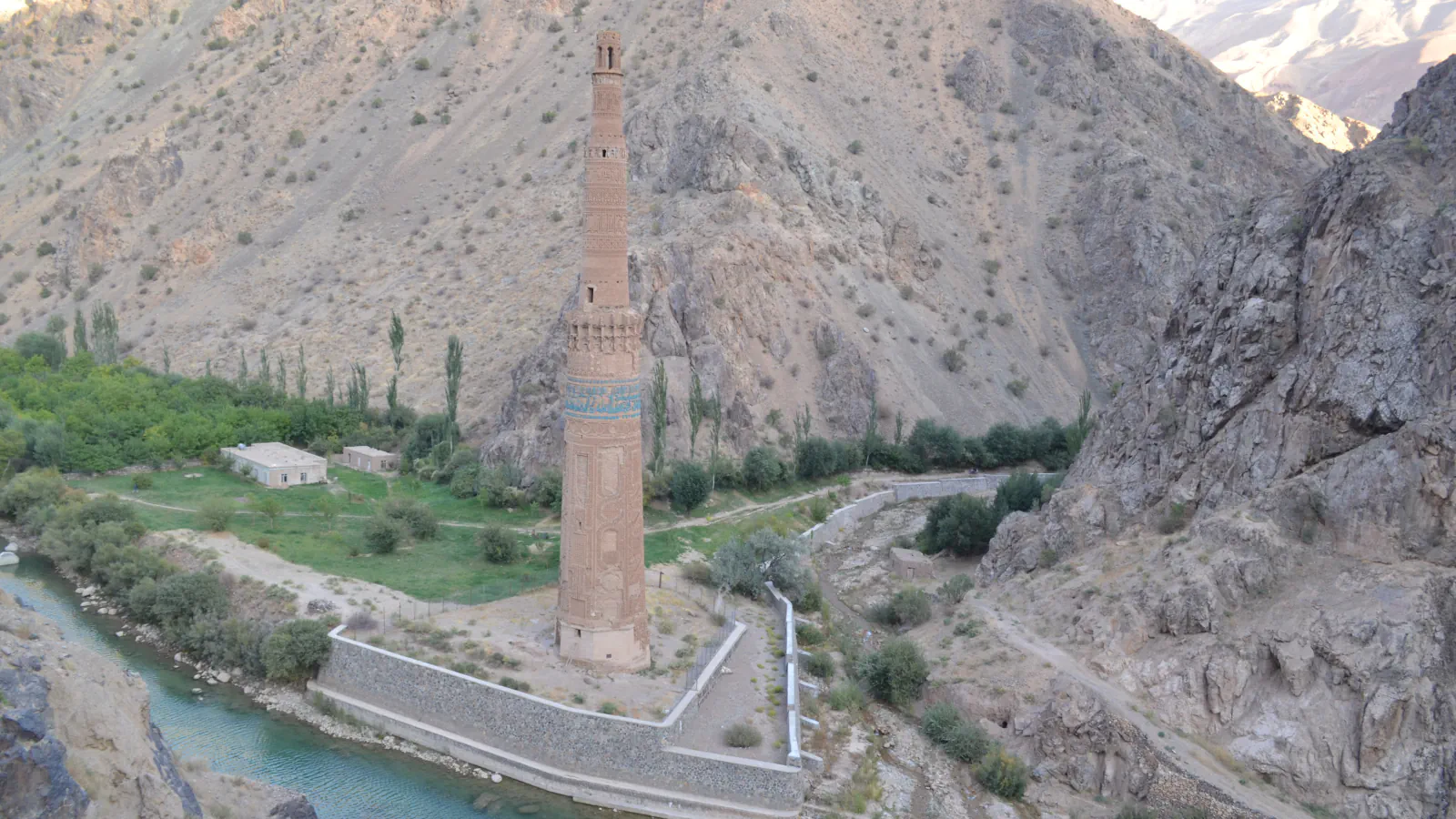
- 65 m high on an octagonal base 9 m across, inscribed with the whole Sura of Maryam, which ICOMOS counts as 976 words[1][2]
- Bamiyan
- About 700 caves, around 50 with wall paintings; drying oils reported in paintings from several caves[5]
- Bagh-e Babur
- A 17 m by 17 m stone platform encloses at least three tombs older than the platform[6]
A place worth remembering
Jam: a Qur’anic chapter rendered in brick
At roughly 1,900 m elevation, the Minaret of Jam stands about 215 km east of Herat, where the Hari-rud and Jam rivers meet. UNESCO gives the brick tower’s height as 65 m and its octagonal footing as 9 m across; an inscription dates construction to 1194. ICOMOS identifies the calligraphy around the first shaft as Sura Maryam, chapter 19: 976 words in Kufic lettering made from small carved terracotta bricks. ICOMOS says stones carved with Hebrew inscriptions, thought to be from the 11th or 12th century, were found on nearby Kushkak hill in 1962 and most likely originated in a Jewish burial ground close by; eight further inscriptions have since come to light.[1][2]
Bamiyan: cliff sanctuaries and evidence from paint
Bamiyan’s UNESCO property comprises eight separate sites in the central highlands. The valley’s north cliff has two niches that once held standing Buddhas, 55 m and 38 m tall; caves across the area served as monasteries, chapels and sanctuaries. In Kakrak, about 3 km south-east, more than a hundred caves date from the 6th–13th centuries, including remains of a 10 m Buddha. A 2022 materials study by Yoko Taniguchi and colleagues describes about 700 caves in Bamiyan, roughly 50 with wall paintings. The authors report vegetable drying oils as binding media in wall paintings from several caves, naming walnut, perilla and poppyseed oils as the likeliest candidates. For Cave N(a), whose wall painting they date to the mid-7th century, they describe horse glue in the sizing layer and drying oil in the paint. The authors call the identification of the particular drying oils speculative.[3][4][5]
Kabul: Babur’s garden above an earlier burial ground
South-west of Kabul’s old city, Bagh-e Babur occupies the rise of Kuh-e Sher Darwaza. The German Archaeological Institute’s chapter dates the garden’s foundation to between 1504 and 1525, during Babur’s rule in Kabul; Afghanistan’s 2009 Tentative List entry describes 15 terraces arranged on an east–west line. Franke-Vogt, Bartl and Urban date at least three tombs to before construction of a stone platform measuring 17 m on each side. One has a 1.2 m brick vault set in mud mortar, which the authors compare with Timurid construction. The Tentative List says 13 excavation seasons from 2002 to 2005 revealed that the garden overlies a monumental building from the 3rd century BC. It also describes an Aga Khan Trust for Culture rehabilitation project that began in 2003, gives its completion as 2006 and notes a 2008 memorandum of understanding on the garden’s management.[6][7]
Good to know
A few clear answers before you explore.
What is written on the Minaret of Jam?
ICOMOS identifies the calligraphy on the lower shaft as Sura Maryam, chapter 19, rendered in Kufic lettering from carved terracotta bricks. Its evaluation counts 976 words. UNESCO also notes a Kufic inscription made with turquoise tiles; another inscription records the construction year, 1194.[1][2]
What did scientists find in the Bamiyan wall paintings?
The paper describes the mid-7th-century wall painting in Cave N(a) as using horse glue in its sizing layer and drying oil in the paint. Across the caves studied, it reports vegetable drying oils and suggests walnut, perilla or poppyseed oil as the likeliest sources. The authors call the identification of the specific oils speculative.[5]
What lies beneath the terrace at Bagh-e Babur?
The DAI report records a 17 m by 17 m stone platform over at least three older graves. One burial has a brick vault 1.2 m high, set in mud mortar; the report says its full depth was not established because the grave was not excavated.[6]
The WorldStamped community
Every visit becomes part of a story.
- Members with public visits
- 0
- Places with public visits or memories
- 0
- Public memories
- 0
No public visits have been counted here yet. Add this destination to your own map and choose what you want to share.
Members are counted once. Counts include only eligible public activity from profiles that allow search discovery. Private and followers-only content is excluded.