🇮🇳Country
India: cave art, a garden tomb and monsoon forests
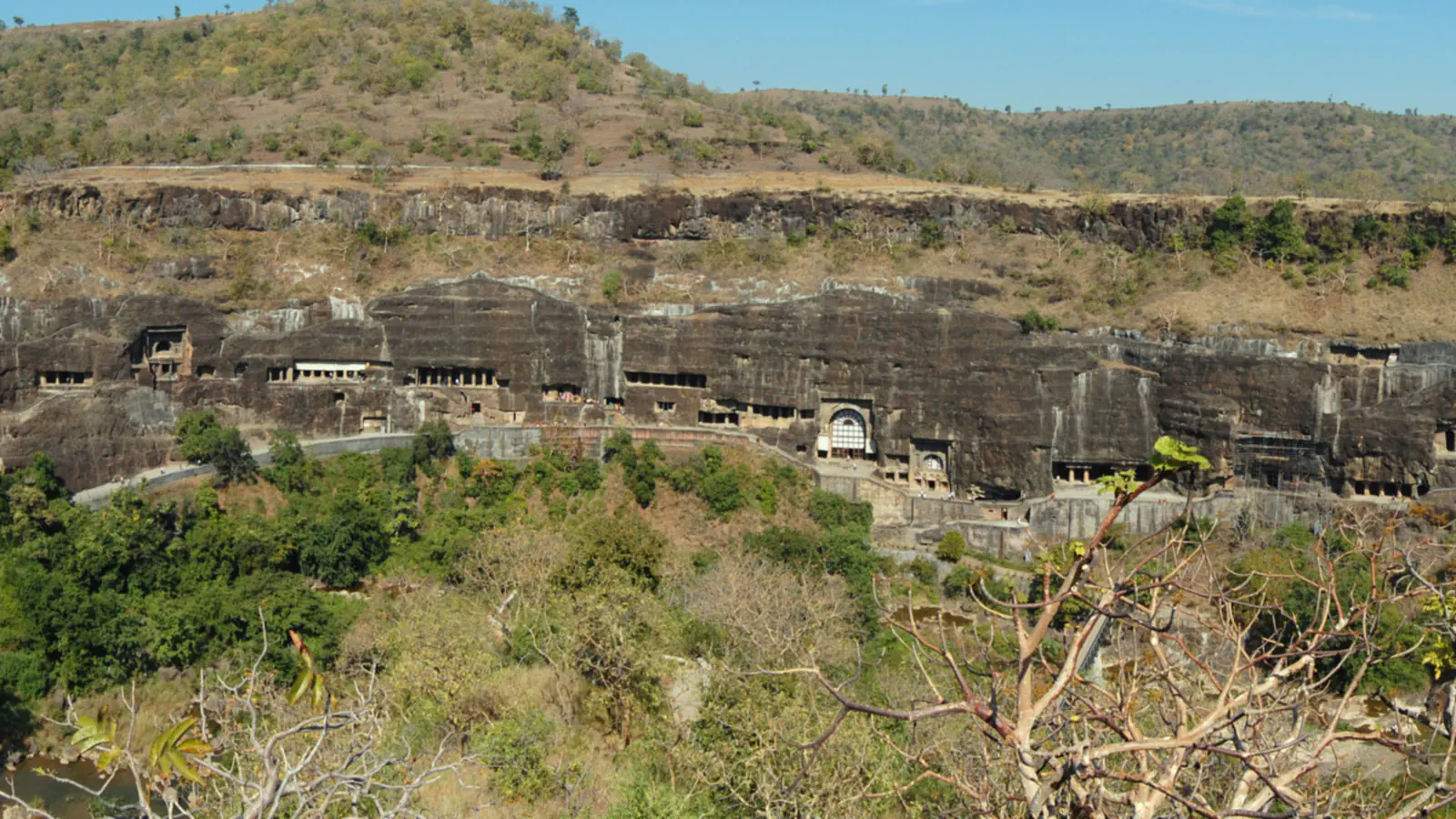
Ajanta’s caves follow a bend in the cliff, the Taj Mahal’s tomb stands at one end of its garden, and the Western Ghats influence monsoon weather.
At a glance
A place worth remembering
Ajanta: rock-cut caves made centuries apart
Taj Mahal: a tomb at the garden’s far end
The four-part Mughal garden places the tomb at one end, not at its centre. UNESCO says this arrangement gives the monument depth in distant views. The cenotaphs in the main chamber are symbolic; the actual graves are in the crypt below. ASI identifies Makrana in Rajasthan as the source of the white marble.[3][4]
Western Ghats: a mountain barrier to the monsoon
UNESCO says the Ghats’ high forests influence India’s monsoon weather. The mountains intercept rain-bearing south-west winds in late summer and moderate the region’s tropical climate.[5]
Good to know
A few clear answers before you explore.
How do Ajanta’s paintings differ from fresco?
At Ajanta, glue was the main binder for pigment. In fresco, wet lime plaster binds the paint, ASI explains.[1]
How do the tomb and the flanking buildings differ in material?
UNESCO describes the central tomb as faced with white marble, while the mosque and guest house are built of red sandstone. ASI identifies Makrana in Rajasthan as the source of the white marble.[3][4]
Why is the Western Ghats World Heritage property made up of separate areas?
UNESCO groups 39 components into seven sub-clusters because species composition changes along the range; one protected area would not represent all of its biodiversity.[5]
The WorldStamped community
Every visit becomes part of a story.
- Members with public visits
- 0
- Places with public visits or memories
- 0
- Public memories
- 0
No public visits have been counted here yet. Add this destination to your own map and choose what you want to share.
Members are counted once. Counts include only eligible public activity from profiles that allow search discovery. Private and followers-only content is excluded.