🇾🇪Country
Yemen’s ringless trees and earthen tower city
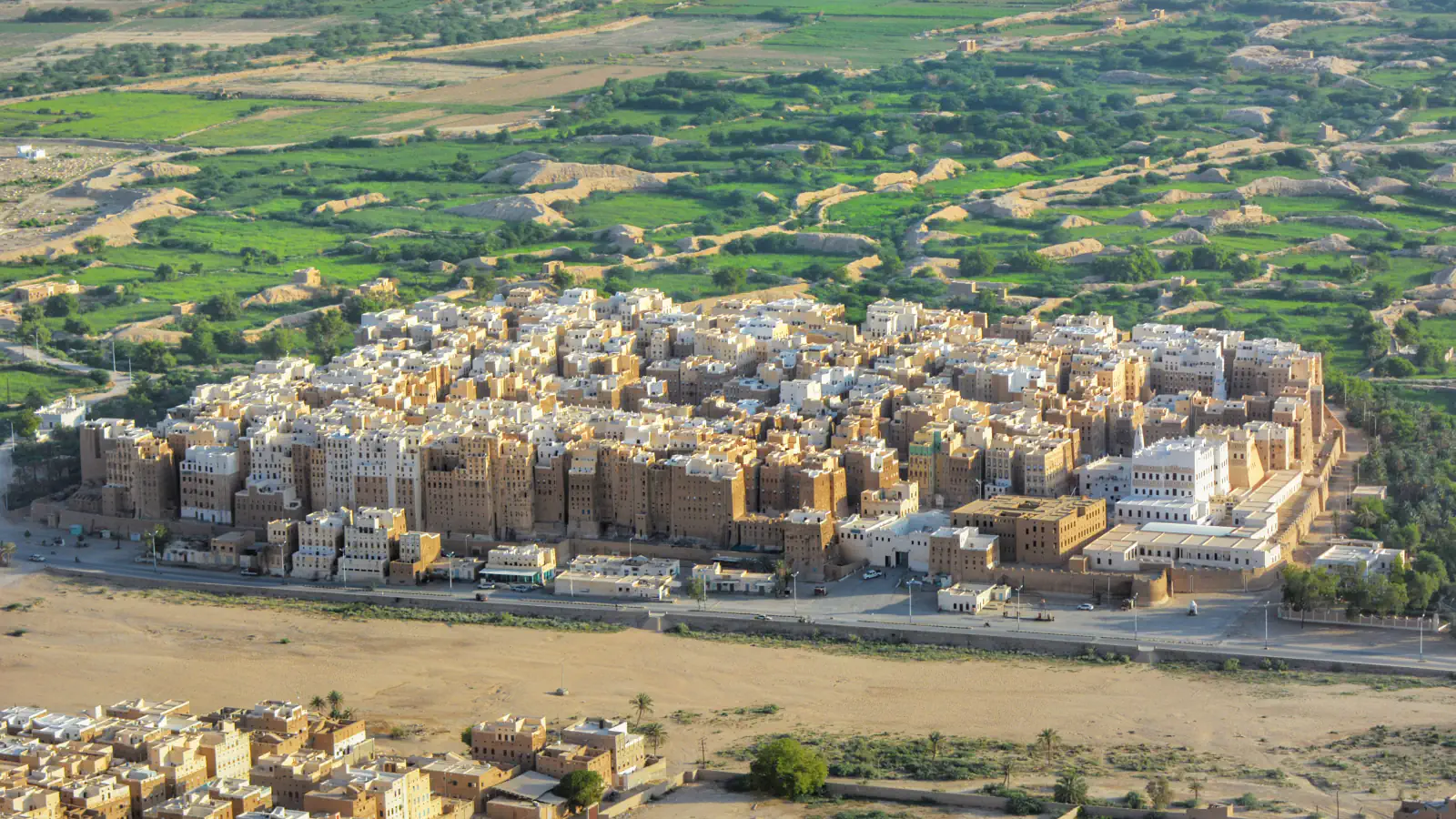
Socotra’s dragon trees lack annual rings, so researchers estimate their ages from growth. In Shibam, UNESCO connects earthen tower houses with irrigated fields and the mud used in construction.
At a glance
- Socotra tree-age estimates
- The 2023 study abstract estimates about 111 years for the 10.1–15 cm diameter-at-breast-height class and about 672 years for the 90.1–95 cm class.[1]
- Shibam’s setting
- ICOMOS’s 1982 evaluation says the hillock beneath Shibam helped the city escape destructive wadi floods.[3]
- Tallest house in 1982
- ICOMOS’s 1982 evaluation gives the highest house as eight storeys and 29.15 m tall.[3]
A place worth remembering
Socotra’s ringless dragon trees
Dracaena cinnabari does not form annual rings, so its age cannot be read by counting them. The 2023 study abstract describes a linear model using diameter at breast height and ten-year radial stem increment, with measurements taken on Firmihin Plateau in 2021 and data from 2011 as the basis of the model. It estimates about 111 years for the 10.1–15 cm diameter-at-breast-height class and about 672 years for the 90.1–95 cm class; these are model estimates for size classes, not counted ages of individual trees.[1]
Shibam and its flood-wadi landscape
Shibam’s earthen buildings sit within a wider agricultural landscape. UNESCO’s description links the irrigated fields around the city with farming and the mud used in construction, treating them as parts of the same economic setting. An ICOMOS evaluation from 1982 describes the old city on a hillock that helped it escape destructive floods from Wadi Hadramaut.[2][3]
Earthen walls and tall houses
ICOMOS’s 1982 evaluation says Shibam is enclosed by earthen walls, with dwelling blocks, also built of earth, laid out on an orthogonal grid. It gives the highest house as eight storeys and 29.15 m tall; many houses have six or seven storeys, and the average is five. UNESCO’s present-day description mentions homes of up to seven floors.[2][3]
Good to know
A few clear answers before you explore.
How do researchers estimate a Socotra dragon tree’s age?
Dracaena cinnabari forms no annual rings. The 2023 study abstract describes a model that uses diameter at breast height and ten-year radial stem increment, so the resulting ages are estimates for diameter classes rather than counts of individual trees.[1]
Why does the Shibam description include nearby fields?
UNESCO connects the irrigated farmland around the city with its agricultural economy and mud construction.[2]
How tall are the houses in Shibam?
ICOMOS’s 1982 evaluation gives eight storeys and 29.15 m for the highest house, with an average of five storeys; UNESCO’s description mentions homes of up to seven floors.[2][3]
The WorldStamped community
Every visit becomes part of a story.
- Members with public visits
- 0
- Places with public visits or memories
- 0
- Public memories
- 0
No public visits have been counted here yet. Add this destination to your own map and choose what you want to share.
Members are counted once. Counts include only eligible public activity from profiles that allow search discovery. Private and followers-only content is excluded.