City
How Filtry’s buildings reflect changing water treatment
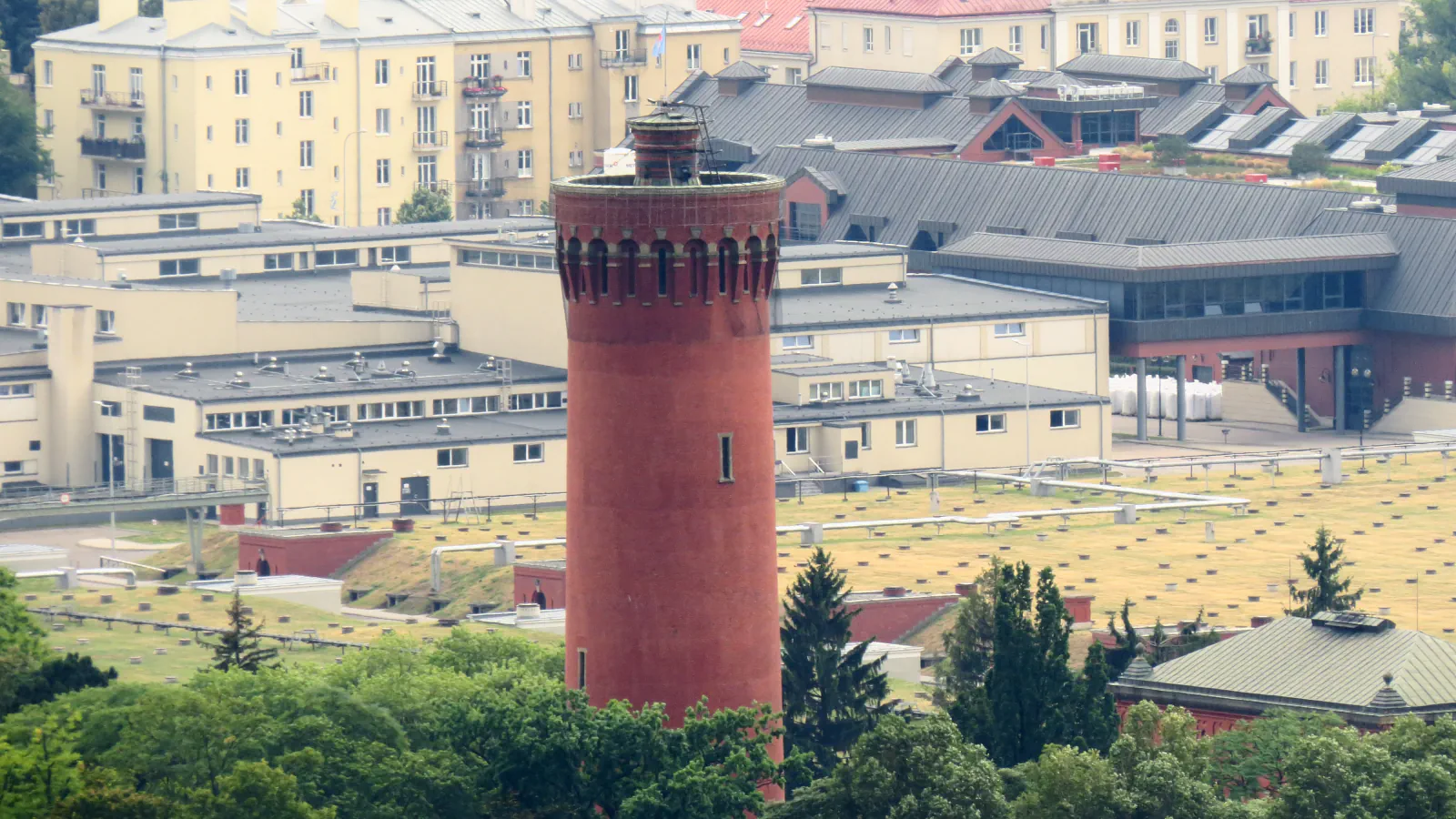
At Filtry, 19th-century slow-filter structures and a 1930s rapid-filter plant with Art Deco elements share a site with later ozone-and-carbon treatment. One newer building has a roof garden.
At a glance
A place worth remembering
An industrial waterworks from 1886
MPWiK says the Filtry station has supplied Warsaw with water since 1886. The slow filters, water tower and pumping buildings are, in its words, typical examples of 19th-century industrial building.[1]
A new treatment building on an old filter site
MPWiK dates the start of ozone and activated-carbon treatment at Filtry to 2010; the newer building stands where the group VII sand filters had been. Clinker brick, sandstone details and a roof garden reflect the operator’s stated aim of fitting the building into the historic complex.[1]
A rapid-filter plant with Art Deco elements
MPWiK says that in the 1930s a rapid-filter plant (Zakład Filtrów Pospiesznych) was built on the station’s grounds, with characteristic architectural elements in the Art Deco style.[1]
Good to know
A few clear answers before you explore.
Which structures does MPWiK identify as 19th-century industrial buildings?
The slow filters, water tower and pumping buildings.[1]
What was on the site of the later ozone-and-carbon treatment building?
A disused group of sand filters (group VII); the newer building was erected there.[1]
Which architectural style does MPWiK mention for the 1930s rapid-filter plant?
Art Deco: it says the plant has characteristic architectural elements in that style.[1]
The WorldStamped community
Every visit becomes part of a story.
- Members with public visits
- 0
- Places with public visits or memories
- 0
- Public memories
- 0
No public visits have been counted here yet. Add this destination to your own map and choose what you want to share.
Members are counted once. Counts include only eligible public activity from profiles that allow search discovery. Private and followers-only content is excluded.