🇨🇿Country
Czechia: a brewery gate, a silver town and a landscape designed by one family
A gateway dated 1842 and 1892 in Plzeň, a silver-mining town with an ossuary church at Kutná Hora and a South Moravian estate laid out by the Liechtenstein family show Czechia through beer, mining and landscape design.
At a glance
- Lednice–Valtice
- Landscape shaped by the Liechtenstein family, 17th–20th century[6]
A place worth remembering
Plzeň: the brewery gateway dated 1842 and 1892
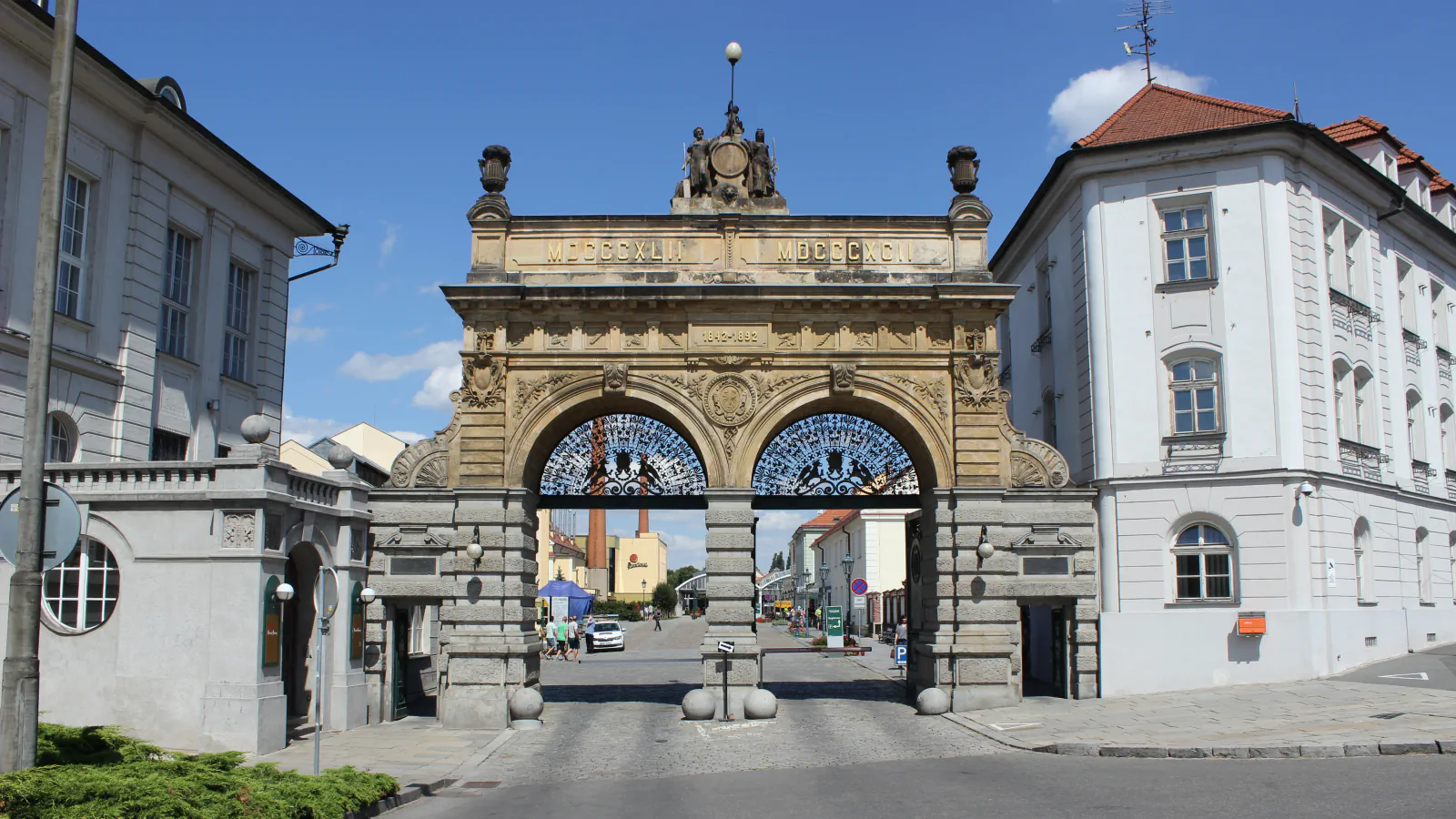
Plzeň was founded in 1295, and King Wenceslaus II then gave some of its houses the right to brew. The beer was top-fermented and uneven in quality, so the brewing burghers decided to found a new brewery and call in a brewmaster. Josef Groll, from Bavaria, arrived in 1842, and on 5 October 1842 the Burghers’ Brewery brewed the first batch of the new Pilsen lager, a bottom-fermented beer. In 1859 the brewery registered “Pilsner Bier” as a trademark, although other Plzeň beers also used the name; the Plzeňský Prazdroj – Pilsner Urquell trademark followed in 1898. The Jubilee Gateway, built for the brewery’s 50th anniversary, became the symbol of the brewery, and the gateway in the photograph carries the years 1842 and 1892 in Roman numerals.[1][2]
Kutná Hora: silver, and the bones of Sedlec
Kutná Hora’s history has been tied to silver-ore mining since the end of the 13th century, and the National Heritage Institute (NPÚ) links its name to kutání, the Czech word for mining. About 1.5 km north-east of the historic centre stands the former Cistercian monastery church at Sedlec; the monastery’s foundation charter dates from 1142. UNESCO notes that the interior of the Church of St Barbara is decorated with frescoes of the secular life of the mining town. At Sedlec, the Gothic Cemetery Church of All Saints dates from the first half of the 14th century, and its lower chapel holds bones from the monastery cemetery, arranged as four pyramids, a chandelier and garlands. The Sedlec parish’s website says the author and date of the skeletal decoration are hard to establish, credits František Rint with the chandelier, the Schwarzenberg coat of arms and the garlands, and calls the coat of arms the only purely secular decoration.[3][4][5]
Lednice and Valtice: a landscape built by one family
Between the 17th and 20th centuries the ruling Liechtenstein family shaped its South Moravian estate into a landscape that links the chateaux of Lednice and Valtice. In the early 19th century Jan Josef I applied the English landscape-park idea; the works included raising the level of Lednice Park and digging a new channel for the Dyje River. The buildings were placed deliberately. UNESCO names the Colonnade (Kolonáda), the Rendezvous and Fishpond Manor (Rybniční zámeček) at high points, the Obelisk at a crossing of routes, and the Border Mansion (Hraniční zámeček) on the boundary between Moravia and Lower Austria, while the Minaret stands in the Lednice park. The Valtice chateau site, run by the National Heritage Institute, also lists the Temple of Apollo, the Belvedere and the Chapel of St Hubert.[6][7]
Good to know
A few clear answers before you explore.
Who brewed the first Pilsner, and when?
The Bavarian brewmaster Josef Groll brewed the first batch of the new Pilsen lager at the Burghers’ Brewery on 5 October 1842. “Pilsner Bier” was registered as a trademark in 1859, and Plzeňský Prazdroj – Pilsner Urquell in 1898.[1][2]
What is the Sedlec Ossuary?
It is the lower chapel of the Cemetery Church of All Saints at Sedlec, by Kutná Hora. The Gothic two-storey church dates from the first half of the 14th century, and the chapel holds bones from the former monastery cemetery. The building remains a working Roman Catholic church.[5]
Where are Lednice and Valtice?
In South Moravia, near the Austrian border. The Lednice–Valtice landscape grew out of the Liechtenstein family’s estates at Lednice and Valtice, which were later joined with the neighbouring Břeclav estate.[6][7]
The WorldStamped community
Every visit becomes part of a story.
- Members with public visits
- 0
- Places with public visits or memories
- 0
- Public memories
- 0
No public visits have been counted here yet. Add this destination to your own map and choose what you want to share.
Members are counted once. Counts include only eligible public activity from profiles that allow search discovery. Private and followers-only content is excluded.