🇻🇳Country
Vietnam: flooded karst, port streets and nested enclosures
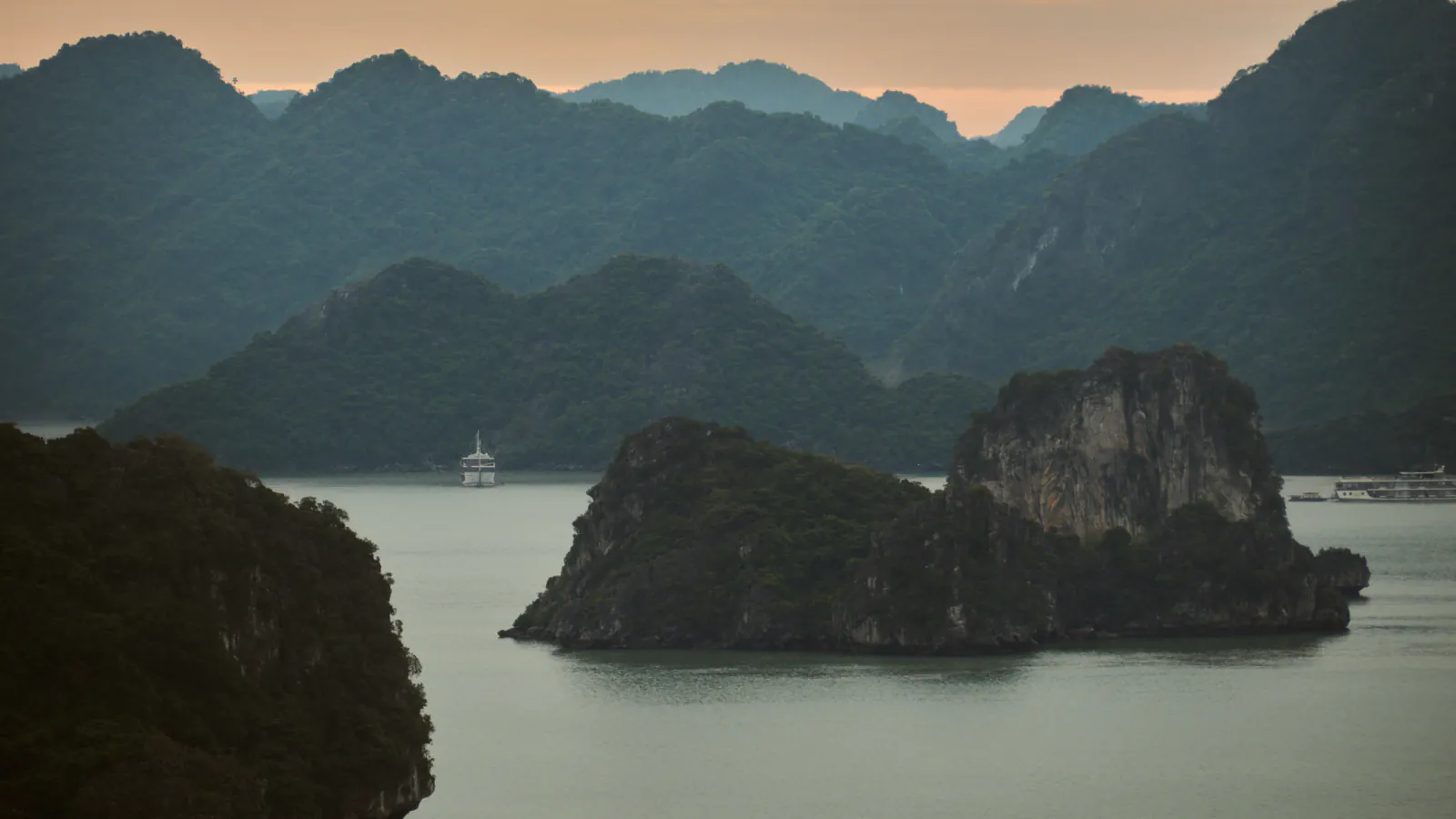
Some Ha Long Bay lakes connect to the sea through caves. UNESCO describes a typical layout for Hoi An’s port buildings: customer access from the street and cargo handling by boats on the river side. Hue’s Kinh Thanh has three nested enclosures on one axis.
At a glance
A place worth remembering
Ha Long Bay: two sea connections in karst
Hoi An: street and river sides of an old port
In UNESCO’s description, the typical layout put customer access on pedestrian streets and cargo handling on the river side, where boats could load and unload goods.[3]
Hue: nested enclosures on one axis
Kinh Thanh stands on the north bank of the Perfume River. The Hue Monuments Conservation Centre describes three walled enclosures arranged one inside another along a north–south line, facing south.[4]
Good to know
A few clear answers before you explore.
Which examples does the Ha Long Bay board give for ang and tung?
It gives Ba Ham Lake as an ang and Tung Sau as a tung.[2]
What arrangement does UNESCO describe as typical for Hoi An’s port buildings?
Street-facing customer access and river-side cargo handling by boat.[3]
When was Kinh Thanh built?
The Hue Monuments Conservation Centre dates its construction from 1805 to 1832.[4]
The WorldStamped community
Every visit becomes part of a story.
- Members with public visits
- 0
- Places with public visits or memories
- 0
- Public memories
- 0
No public visits have been counted here yet. Add this destination to your own map and choose what you want to share.
Members are counted once. Counts include only eligible public activity from profiles that allow search discovery. Private and followers-only content is excluded.