🇹🇬Country
Togo: Koutammakou tower-houses and the Bassar ironworking sites
Northern Togo’s heritage takes two forms here: the Batammariba tower-house tradition at Koutammakou and paired archaeological sites near Bassar that preserve evidence of smithing and smelting.
At a glance
- Koutammakou houses
- UNESCO uses takienta for a single Batammariba tower-house and sikien for the plural.[1]
- Bassar sites
- The 2020 article describes six mainly smithing zones at BAS-252 and a smaller early smelting site, BAS-273.[2]
- Bassar dating
- Thirteen radiocarbon dates place the Early Iron Age phase at BAS-252 between 545 cal. BC and cal. AD 132.[2]
A place worth remembering
Koutammakou’s tower-house joins daily and sacred use
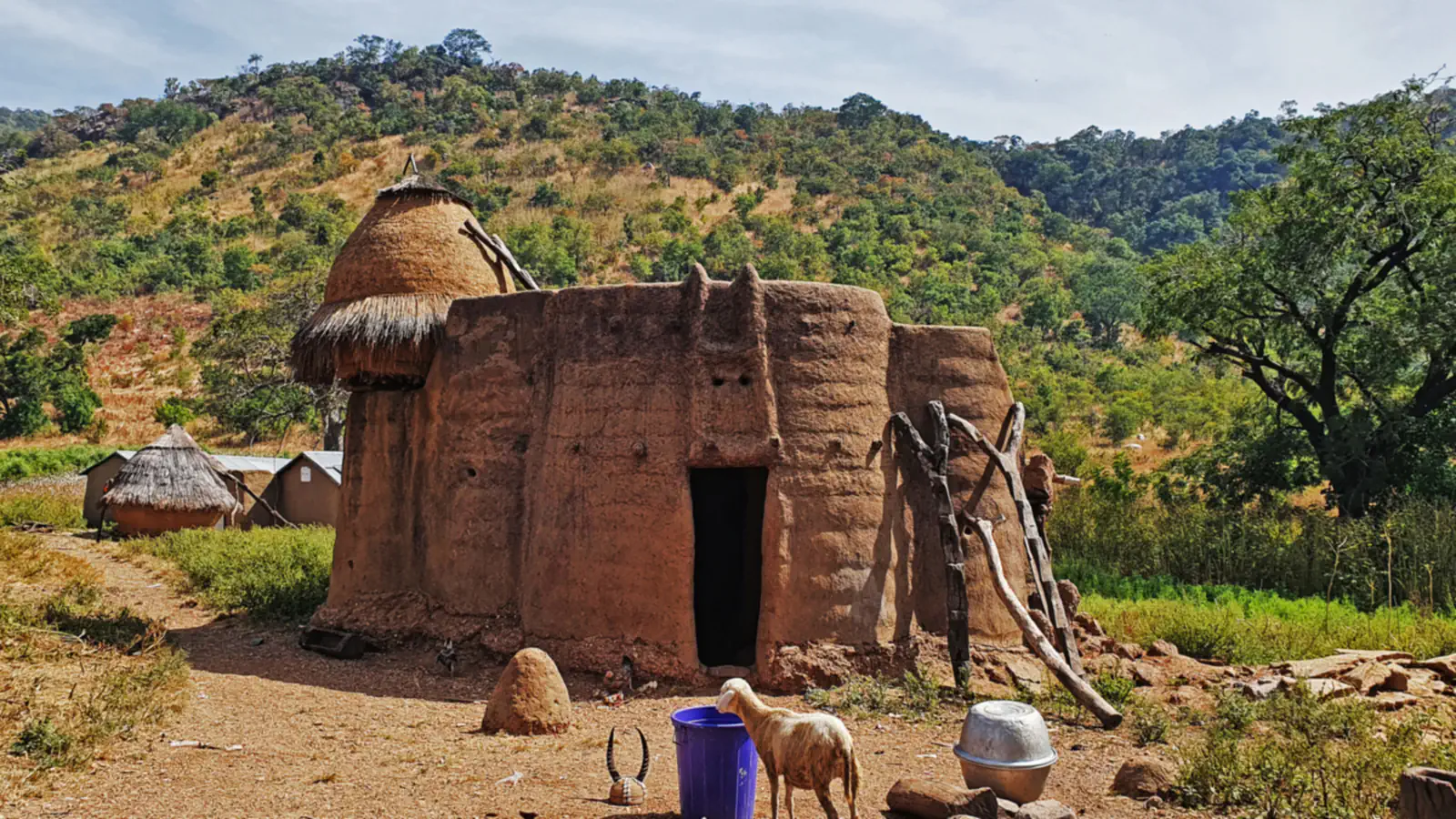
In UNESCO’s account, a Batammariba tower-house brings household life and ancestor worship into the same structure. Animals have space at ground level, while grain stores sit on the terrace. The practical layout and the building’s symbolic role are parts of one architectural form.[1]
Bassar’s paired archaeological record
A 2020 study distinguishes the larger ironworking village BAS-252 from nearby BAS-273, a smaller Early Iron Age smelting site. BAS-252 has six areas devoted mainly to smithing. Considered together, the sites let researchers examine different operations in Bassar’s early iron production.[2]
Houses rebuilt on their own remains
UNESCO describes a continuing cycle in which Koutammakou’s houses are built, left empty, fall down and are raised again on the same remains. It reports several thousand sikien across the landscape, including 1,716 still inhabited in Togo and 1,400 in Benin.[1]
Good to know
A few clear answers before you explore.
What is a takienta?
UNESCO uses takienta for one Batammariba tower-house and sikien for the plural. Its account connects the house’s everyday uses with ancestor worship.[1]
How do the Bassar sites differ?
BAS-252 is a larger ironworking village with six mainly smithing zones; nearby BAS-273 is a smaller site linked to early smelting. The pairing lets researchers consider distinct steps in iron production.[2]
How old is the ironworking at BAS-252?
Thirteen radiocarbon dates, tied to ironworking artefacts, indicate an Early Iron Age phase from 545 cal. BC to cal. AD 132. The authors judge that this occupation fell mostly, if not entirely, after 401 cal. BC.[2]
The WorldStamped community
Every visit becomes part of a story.
- Members with public visits
- 0
- Places with public visits or memories
- 0
- Public memories
- 0
No public visits have been counted here yet. Add this destination to your own map and choose what you want to share.
Members are counted once. Counts include only eligible public activity from profiles that allow search discovery. Private and followers-only content is excluded.