🇸🇾Country
Syria: Palmyra’s avenue, Ugarit’s alphabet and Aleppo ghar soap
At Palmyra, a 1.1 km colonnade linked public monuments; Ugarit used thirty cuneiform signs as an alphabet; Aleppo ghar soap follows a seasonal cycle.
At a glance
A place worth remembering
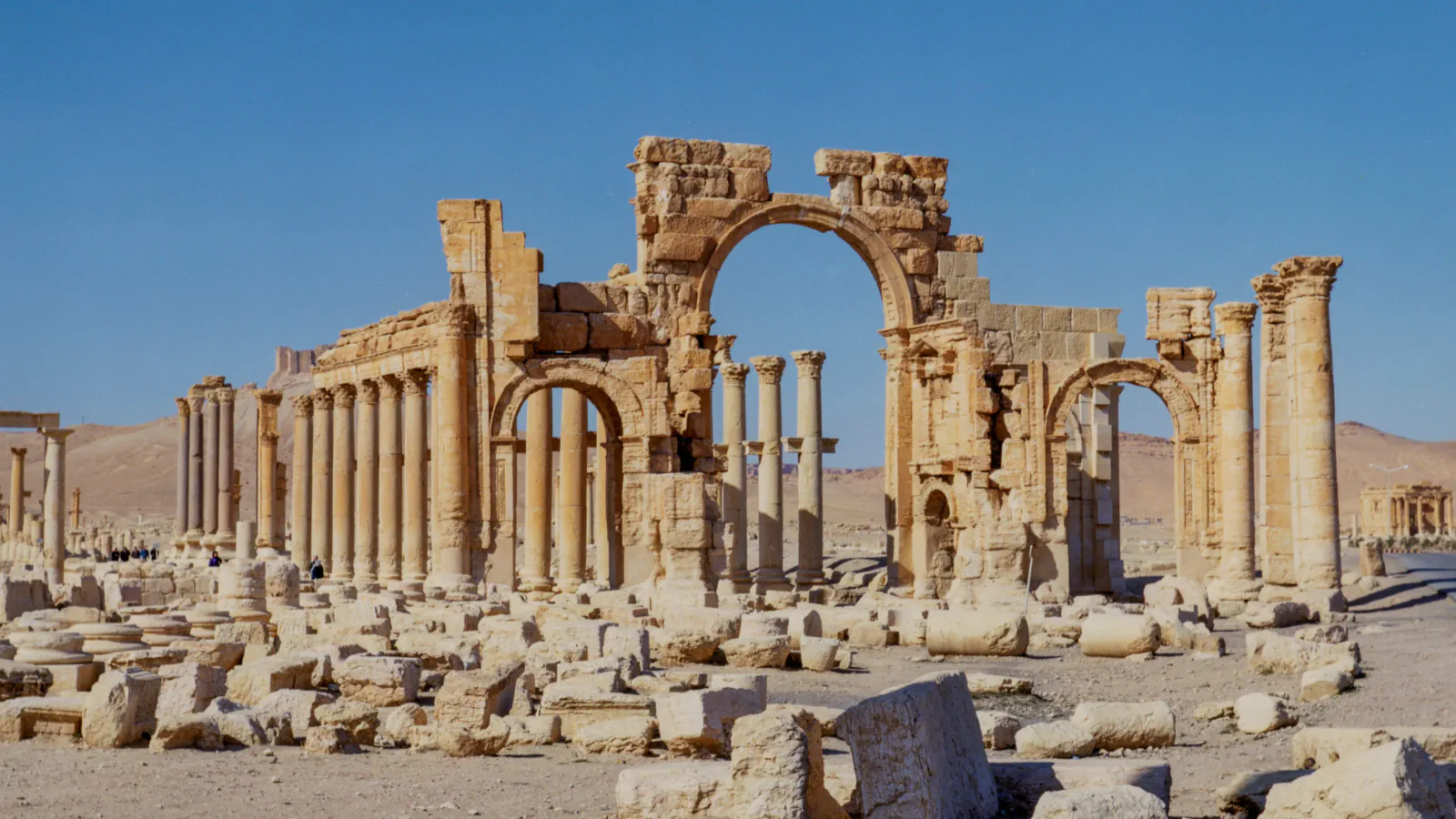
Palmyra: a long avenue and its side streets
UNESCO describes a street network with one main colonnaded avenue and secondary crossings. The avenue is 1.1 km long, with an open centre between covered side passages; cross streets link it with the principal public monuments.[2]
Ugarit: an alphabet written in cuneiform form
Aleppo: ghar soap across the seasons
UNESCO describes a family-taught craft with a seasonal rhythm: wild laurel berries are gathered in autumn, while soap-making starts in winter.[5]
Good to know
A few clear answers before you explore.
How did scholars decipher Palmyrene?
A bilingual Greek–Palmyrene inscription offered a comparison: Barthélemy matched a proper name across the two texts and used that clue to work out the script.[1]
What makes Ugaritic an alphabetic form of cuneiform?
Its thirty wedge-shaped characters were used alphabetically. The Biblical Archaeology Society contrasts this compact system with ordinary cuneiform scripts that use hundreds of signs.[3][4]
When are the berries gathered, and when does soap-making begin?
The berries are gathered in autumn; soap-making begins in winter.[5]
The WorldStamped community
Every visit becomes part of a story.
- Members with public visits
- 0
- Places with public visits or memories
- 0
- Public memories
- 0
No public visits have been counted here yet. Add this destination to your own map and choose what you want to share.
Members are counted once. Counts include only eligible public activity from profiles that allow search discovery. Private and followers-only content is excluded.