🇸🇪Country
Sweden: glacial terrain and Vasa’s staged lift
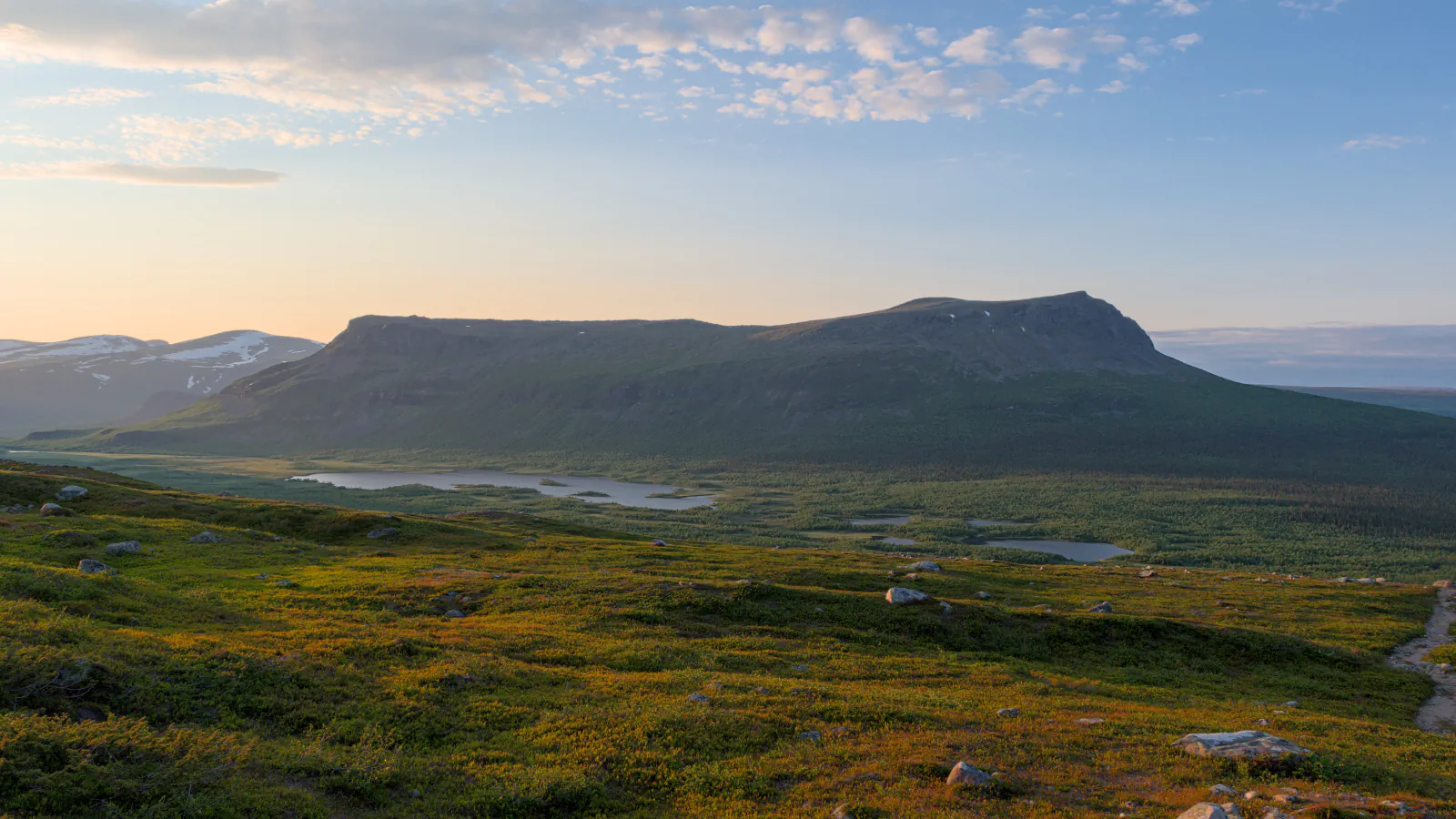
Laponia bears traces of glaciation, rivers from its snowfields continue to erode bedrock, and UNESCO also describes the Sámi herding of reindeer there. In Stockholm, divers routed cables beneath Vasa through six tunnels, enabling the ship’s staged lift from the mud.
At a glance
A place worth remembering
Laponia: an ice-shaped landscape still changing
The UNESCO account links Laponia’s glacial landforms with an active process: rivers fed by snowfields keep wearing down bedrock. The area is both a record of past ice and a landscape still being shaped by flowing water. UNESCO’s list of glacial features includes U-shaped valleys, moraines, drumlins and large erratics, and it calls the snowy mountains of Sarek and Sulidälbmá a “textbook” of glacial geomorphology.[1]
Vasa: a lift supported from below
Vasa’s recovery was a slow lift from below. Divers routed steel cables beneath the hull through six tunnels and connected them to two floating pontoons; pumping water out of those platforms freed the ship from the mud and moved it toward shallower water in stages. According to the Vasa Museum, each lift gained just under a metre, and after 18 such stages the ship lay in the lee of Kastellholmen. It surfaced on 24 April 1961.[2]
Laponia: reindeer herding and summer camps
UNESCO adds a cultural layer to the landscape: every summer the Sámi lead their reindeer herds towards the mountains, a seasonal movement it calls pastoral transhumance. The account says the Sámi spend summers in the mountains, mostly in the west of the property beside the large lakes, where family groups stay in cabins that replaced traditional dwellings. The east has no summer camps; its reindeer owners live in neighbouring villages and municipalities. UNESCO dates the start of reindeer domestication to about two thousand years ago and says the annual migration with the herds was fully established in the 16th and 17th centuries.[1]
Good to know
A few clear answers before you explore.
What ongoing process does UNESCO note in Laponia?
Rivers fed from the snowfields continue to erode the bedrock.[1]
When did Vasa reach the surface?
The Vasa Museum records the date as 24 April 1961.[2]
Where do the Sámi spend the summer in Laponia, according to UNESCO?
UNESCO places their summer stays in the mountains, mainly in the west of the property beside the large lakes, in family cabins. The east has no summer camps; its reindeer owners live in nearby villages and municipalities.[1]
The WorldStamped community
Every visit becomes part of a story.
- Members with public visits
- 0
- Places with public visits or memories
- 0
- Public memories
- 0
No public visits have been counted here yet. Add this destination to your own map and choose what you want to share.
Members are counted once. Counts include only eligible public activity from profiles that allow search discovery. Private and followers-only content is excluded.