City
A rotating observatory and a botanical record
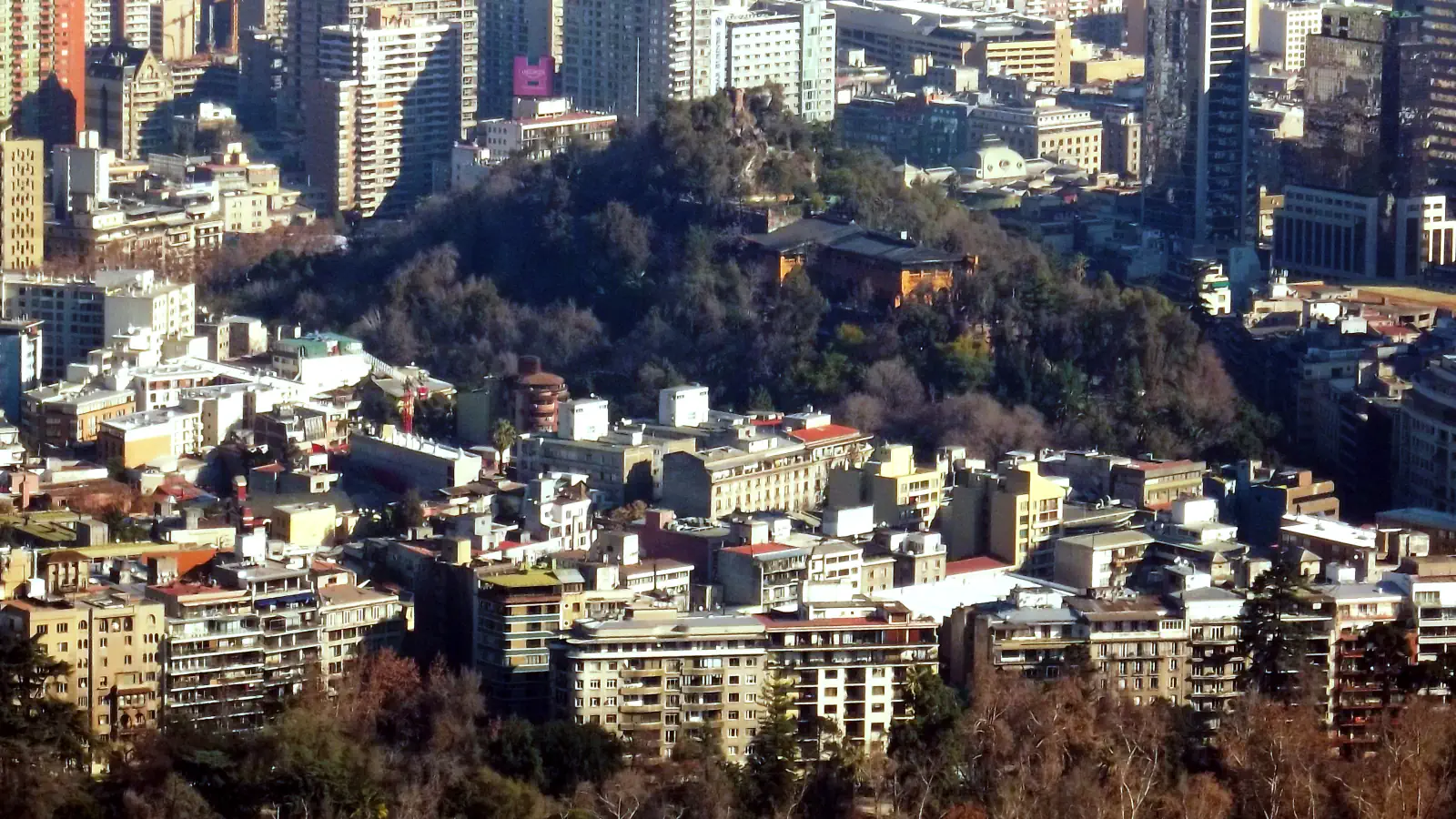
In 1849, a circular observatory on Santa Lucía could turn on iron rails while its floor stayed fixed. A 1991 account of Santiago’s natural-history museum documents labelled specimens from Claudio Gay’s collections.
At a glance
A place worth remembering
A room that turned on rails
Gilliss described the smaller observatory as circular: balls beneath it ran between grooved cast-iron rails, moving the building while the floor stayed fixed. The structure was made in Washington, packed for shipment and assembled on the hill; he recorded his first view through its telescope there on 6 December 1849.[1][2]
A 1991 record from the herbarium
A 1991 history of the museum’s botanical section reports about 1,500 duplicate specimens from Claudio Gay’s collections in the herbarium, with handwritten labels. It identifies them as isotypes of new species described by Gay and his collaborators.[3]
Evening crowds at the telescope
Gilliss wrote that a crowd gathered at the observatory every evening to see Saturn, and that he or Lieutenant MacRae attended visitors for nearly three hours each evening for three months. He also recorded a rumour that the two buildings were flour mills.[1]
Good to know
A few clear answers before you explore.
Did the floor rotate with the observatory?
No. Gilliss describes balls beneath the circular building running between grooved cast-iron rails, so the observatory turned while its floor stayed in place.[1]
What does the 1991 article report about Gay’s collections?
It reports about 1,500 labelled duplicate specimens from Gay’s collections in the museum herbarium and identifies them as isotypes of new species described by Gay and his collaborators.[3]
What drew evening crowds to Gilliss’s observatory?
Saturn. Gilliss wrote that the planet drew a crowd every evening, and that visitors had to be limited to one object.[1]
The WorldStamped community
Every visit becomes part of a story.
- Members with public visits
- 0
- Places with public visits or memories
- 0
- Public memories
- 0
No public visits have been counted here yet. Add this destination to your own map and choose what you want to share.
Members are counted once. Counts include only eligible public activity from profiles that allow search discovery. Private and followers-only content is excluded.