City
San José: Teatro Nacional, a heritage-listed iron school and a jade museum
Iron, stone and jade tell different material stories in San José: Teatro Nacional combines Belgian iron with Costa Rican stone and brick; Edificio Metálico is a heritage-listed school assembled from numbered European metal pieces; Museo del Jade traces jade working and exchange.
At a glance
A place worth remembering
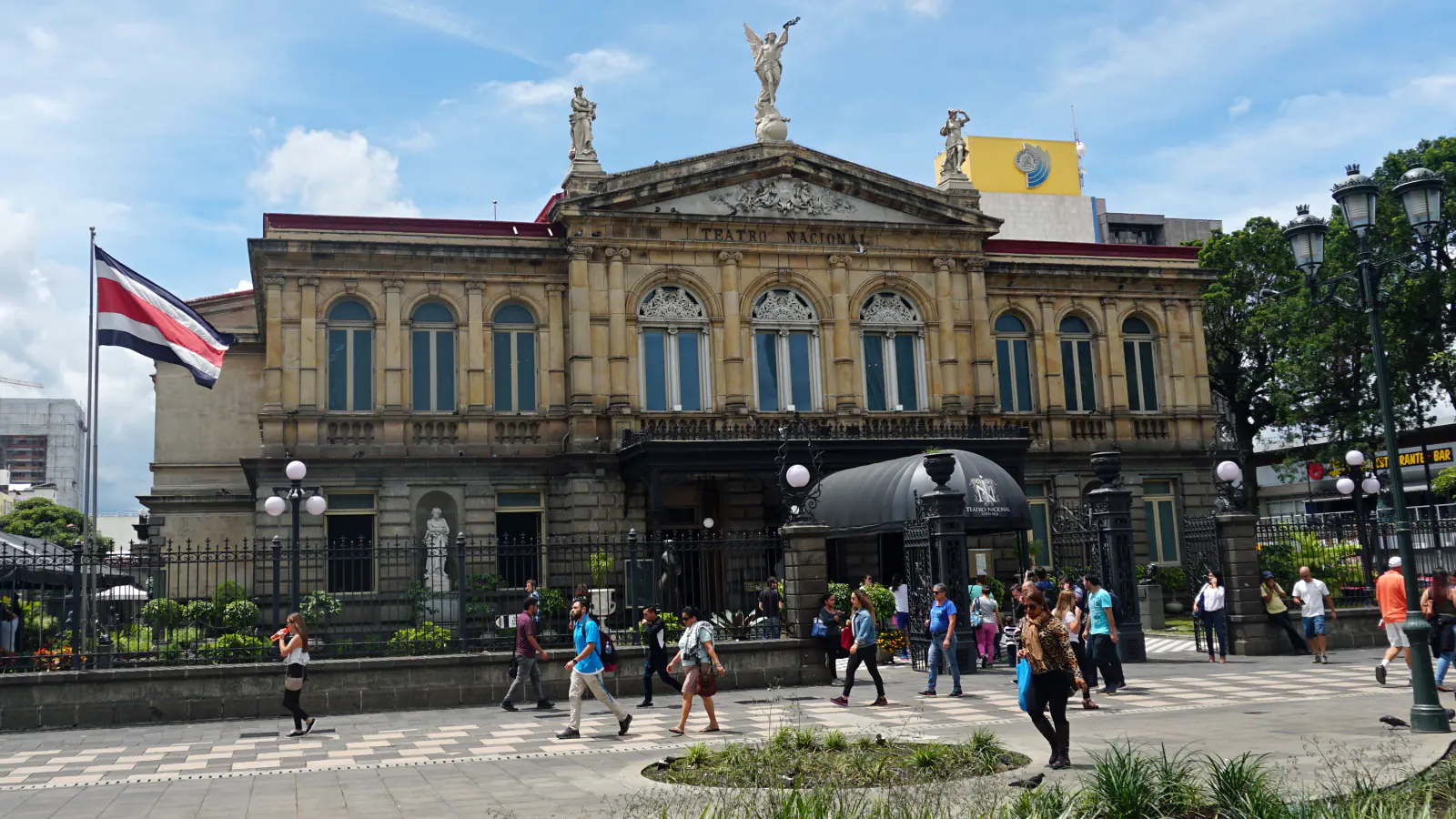
Teatro Nacional: Belgian iron, Cartago stone
The theatre was built between 1890 and 1897. A summary of Astrid Fischel’s history, published by the theatre itself, says that many key parts were ordered abroad, among them the dome, the metal structures, the mechanism for raising the floor and the marble stairs. Each part arrived with plans, which fed a rumour that the theatre had been designed in Europe; the summary says the plans were prepared in Costa Rica by local engineers and architects trained in Europe and by foreign professionals living in the country. The metal frame uses iron pieces brought from Belgium. The walls are of stone and granite from quarries in Cartago and of bricks made in Costa Rica, and the precious and semi-precious woods, among them cedar, mahogany and cocobolo, came mostly from Alajuela. Imported materials entered at Puerto Limón and travelled to San José by train. The construction system was designed with earthquakes in mind; a series of earthquakes on 29 and 30 December 1888 had put an end to the earlier Teatro Municipal.[1][2]
Edificio Metálico: a school assembled from numbered parts
Edificio Metálico, also known as Escuela Buenaventura Corrales, is a heritage-listed school in San José’s Carmen district. The Ministry of Culture registry confirms its name, location and heritage status. A 2021 CFIA account says the school’s earlier name was Escuelas Graduadas and that its doors opened in March 1892. The same account notes that the European metal pieces were numbered, which sped up assembly.[3][4]
Museo del Jade: where Costa Rican jade came from
The Museo del Jade stands on Avenida Central, at calles 13 and 13 bis. The museum presents axe-shaped and stylised bird pendants as examples of locally worked jade dating to around 500 BCE. It traces raw material to transportable blocks exchanged with Mesoamerican groups in the Motagua River drainage between Guatemala and Honduras. The page locates workshops in Guanacaste, including Nicoya and Bagaces, and on the Caribbean plains. Artisans also carved ornaments from stones found in Costa Rica, such as serpentine, sandstone, shale, quartz and chalcedony, which the museum says archaeologists call “piedras verdes”, green stones.[5]
Good to know
A few clear answers before you explore.
Were the Teatro Nacional’s plans drawn in Europe?
The theatre’s own summary says no. Many parts were ordered abroad and arrived with plans, but the plans were prepared in Costa Rica by local engineers and architects trained in Europe and by foreign professionals living in the country.[1]
What does the CFIA account say about the school’s assembly?
It says European metal pieces were numbered to speed assembly and records that the school opened in March 1892 under the name Escuelas Graduadas.[4]
Where did Costa Rica’s pre-Columbian jade come from?
The museum says the raw jade arrived in transportable blocks, traded with Mesoamerican groups from the Motagua River and its tributaries between Guatemala and Honduras. Local workshops carved it, mainly in Guanacaste and on the Caribbean plains.[5]
The WorldStamped community
Every visit becomes part of a story.
- Members with public visits
- 0
- Places with public visits or memories
- 0
- Public memories
- 0
No public visits have been counted here yet. Add this destination to your own map and choose what you want to share.
Members are counted once. Counts include only eligible public activity from profiles that allow search discovery. Private and followers-only content is excluded.