🇼🇸Country
Samoa: a crater lake, Pulemelei’s settlement and Vailima
Lake Lanoto’o sits in Upolu’s central highlands at the upper end of the Fuluasou system, an important source for Apia’s water. On Savai’i, a survey around Pulemelei recorded more than 3,000 features of an ancient settlement. Above Apia, the Stevenson family moved into Vailima’s main house on 13 April 1891.
At a glance
A place worth remembering
Lake Lanoto’o: a 17.5 m crater lake
Lake Lanoto’o is one of three small crater lakes in Upolu’s central highlands, about 15.8 km south-west of Apia. The 2012 Ramsar Information Sheet reports a maximum depth of 17.5 m, based on hydrological profiling in 2011. It identifies the Fuluasou as a river system rising at the lake and an important source for Apia’s water; the city’s exact share from Lanoto’o had not been measured. The Ramsar site also includes Lanoata’ata and Lanoanea and covers 469.9 ha.[1][2]
Pulemelei: a mound within a surveyed settlement
Pulemelei is a rectangular stone mound in Vailoa, in the Palauli district on Savai’i. The Centre for Samoan Studies reports its base as about 61 by 65 m and its height as 12 m. The Centre for Samoan Studies attributes the May 1977–August 1978 survey of most of Letolo Plantation to Greg Jackmond. It says Jackmond and a young Samoan assistant logged more than 3,000 built traces, including house platforms, walls, paths, ovens and stone heaps. It also reports that carbon samples from excavations in 2002–2004 indicate human activity near the mound about 2,000 years ago. Oral histories link it to the Lilomaiava title and describe different possible uses, but who built it and what it was for remain unknown.[3][4]
Vailima: the Stevensons move into the main house
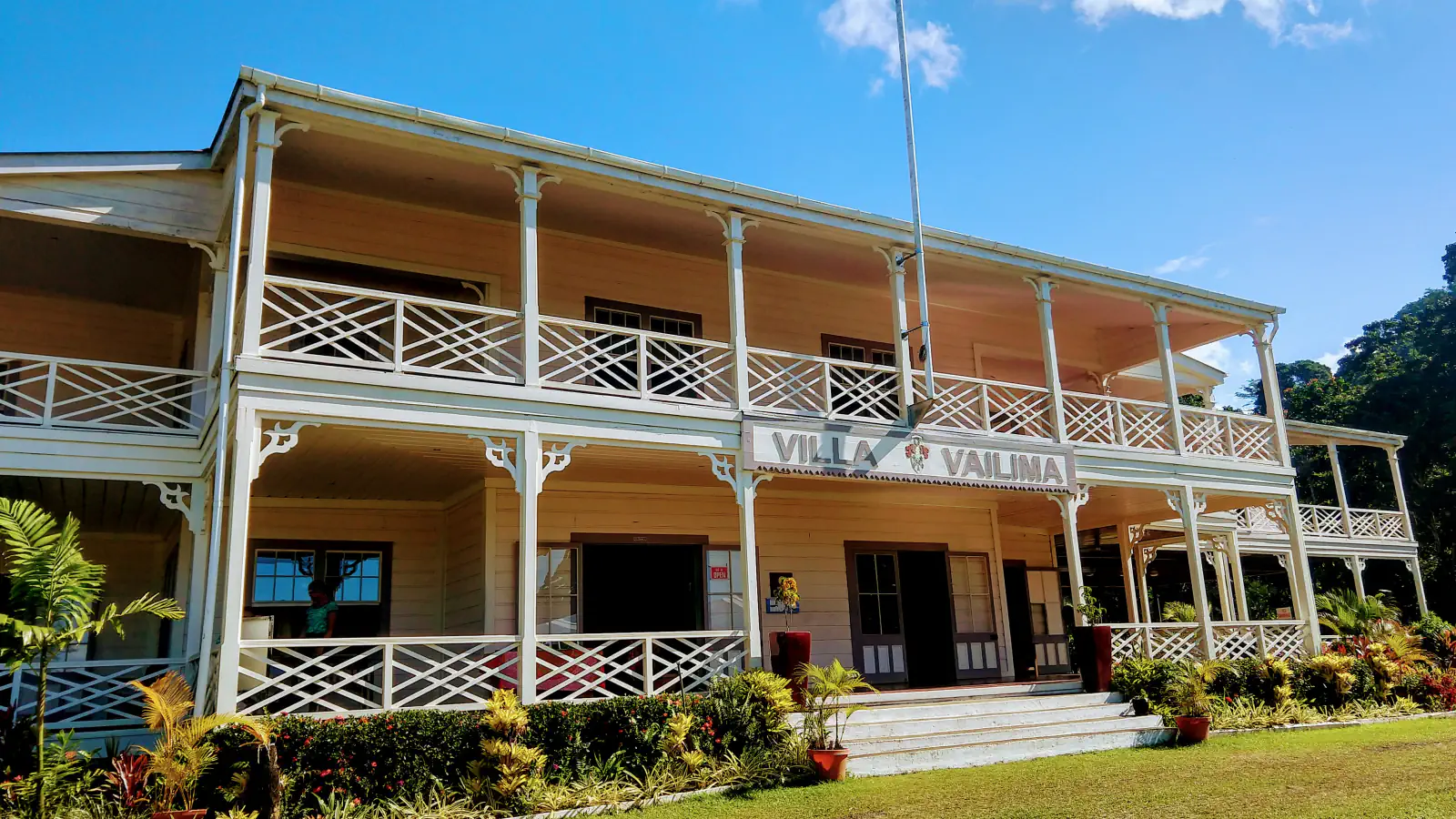
Vailima lies above Apia and was Robert Louis Stevenson’s home during his final years in Samoa. A chronology by Richard Dury on the RLS Website dates Stevenson’s arrival in Apia to December 1889 and his purchase of the Vailima estate to January 1890. After a small cottage served as accommodation during construction, Stevenson, his wife Fanny and stepson Lloyd moved into the main house on 13 April 1891. The RLS history dates the museum’s public opening in the restored Vailima house to 5 December 1994, a century after Stevenson’s death and burial.[5][6]
Good to know
A few clear answers before you explore.
How much of Apia’s water comes from Lake Lanoto’o?
The 2012 Ramsar Information Sheet says Lanoto’o feeds the Fuluasou river system, an important water source for Apia, but the lake’s share of the city supply had not been determined.[2]
What was Pulemelei used for?
That is not known. The Centre for Samoan Studies reports oral histories that describe it as a house foundation linked to the Lilomaiava title, a meeting place for district chiefs or a burial ground.[3]
When did the Stevenson family move into Vailima?
Richard Dury’s chronology of Stevenson’s Samoa years dates the move into the main house to 13 April 1891.[5]
The WorldStamped community
Every visit becomes part of a story.
- Members with public visits
- 0
- Places with public visits or memories
- 0
- Public memories
- 0
No public visits have been counted here yet. Add this destination to your own map and choose what you want to share.
Members are counted once. Counts include only eligible public activity from profiles that allow search discovery. Private and followers-only content is excluded.