City
Ottawa’s hydro hall, observatory and experimental farm
Ottawa’s scientific record is reflected in three settings: a generator hall beside water, an observatory located for astronomy and seismology, and an urban farm where experimental plots share space with an arboretum.
At a glance
A place worth remembering
Chaudière: a generator hall designed to manage heat
Ottawa Hydro Generating Station No. 2 dates to 1891 and stands on an island among the Chaudière channels. The heritage statement says the limestone generator hall was designed to control heat without artificial cooling; the features it lists include the room sitting two-thirds below ground, thick masonry and concrete building and its siting next to the water-filled penstock.[1]
Dominion Observatory: one site for astronomy and seismology
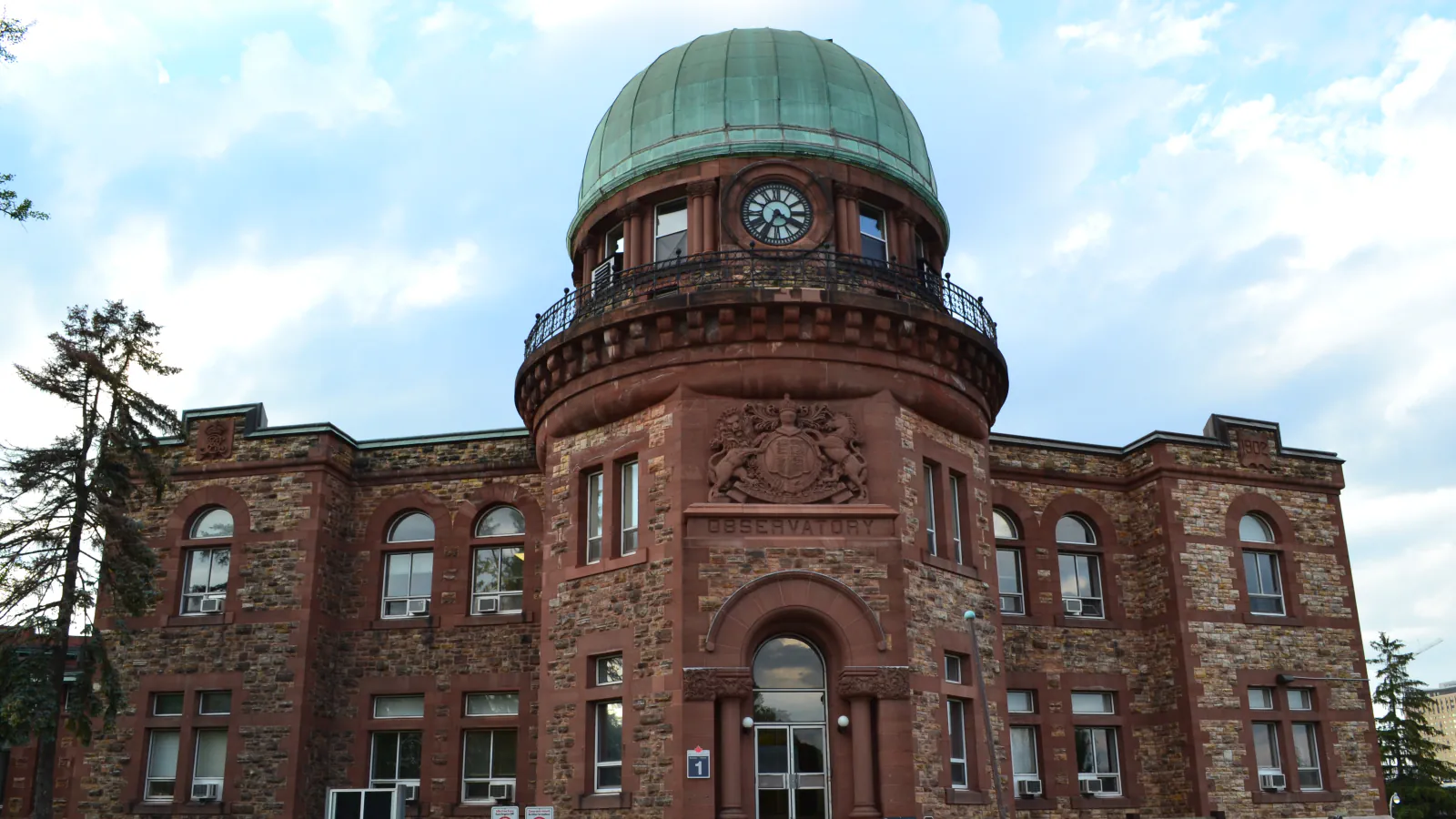
Selected in 1901, the northeastern Farm site offered higher ground and distance from city lights for astronomy, with a nearby fault for seismology. Parks Canada dates the main observatory to 1902–05 and the wider scientific complex through 1954; the original master clock was installed in the observatory base.[2]
Central Experimental Farm: research fields and gardens in one landscape
The Central Experimental Farm brings scientific work and landscape design together across 426 hectares: experimental fields and working buildings share the site with an arboretum and ornamental gardens. Cereal research in Building 75 dates to 1889; Parks Canada names Marquis among varieties developed there, and a Canadian Register entry dates that wheat’s development to 1903.[3][4][5]
Good to know
A few clear answers before you explore.
How did the generator hall manage heat without artificial cooling?
The heritage statement lists several features, among them the hall sitting two-thirds below ground, thick masonry and concrete building, and its siting next to the water-filled penstock.[1]
What was installed in the base of the new observatory?
The original master clock. Parks Canada says its position let it keep government buildings on accurate national time.[2]
Which wheat variety is associated with the Central Experimental Farm?
Marquis wheat. Parks Canada names it among varieties developed by staff in Building 75; a separate Canadian Register entry dates its development to 1903.[4][5]
The WorldStamped community
Every visit becomes part of a story.
- Members with public visits
- 0
- Places with public visits or memories
- 0
- Public memories
- 0
No public visits have been counted here yet. Add this destination to your own map and choose what you want to share.
Members are counted once. Counts include only eligible public activity from profiles that allow search discovery. Private and followers-only content is excluded.