🇳🇪Country
Niger: a tooth-replacing dinosaur, giraffe genetics and Agadez’s mud-brick minaret
A 2007 fossil study connects Nigersaurus’s unusual teeth with low browsing; a 2022 paper compares Kouré giraffe samples; UNESCO describes Agadez’s 27 m earthen minaret.
At a glance
A place worth remembering
Gadoufaoua: a skull built for replacing teeth
The Nigersaurus study links dental structure to feeding close to the ground. Researchers counted over 500 teeth in one skull, including teeth in use and those in the replacement sequence; they estimated that a tooth was replaced about once a month. A broad muzzle and downward head posture inferred from the inner ear support the authors’ interpretation that the animal cropped relatively soft plants near ground level.[1]
Kouré: a population history alongside genetic evidence
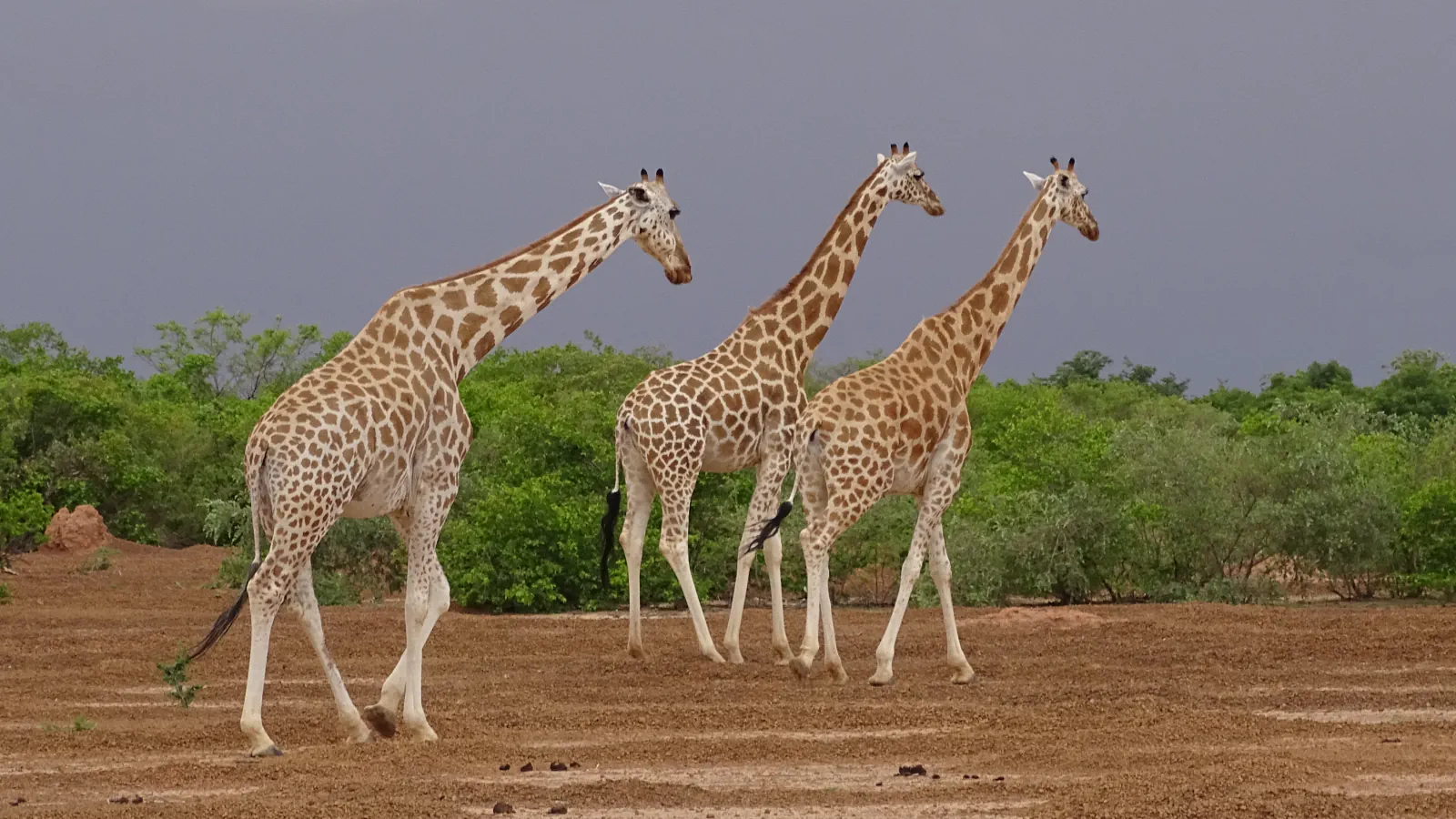
A 2022 study analysed skin samples from 20 West African giraffes on the Kouré plateau. Its authors compare their genetic results with other northern giraffe subspecies and report that the West African giraffe, along with Kordofan giraffe sampled at Garamba, shows higher levels of recent inbreeding, and they recommend close genetic monitoring. For context, the paper cites a population decline to 49 by 1996 and a later estimate above 600 after conservation efforts; those are figures reported by the paper, not a new census in this study.[2]
Agadez: earth-built quarters and a tall minaret
UNESCO describes Agadez’s old centre as 11 irregular quarters with many earthen dwellings. Among its landmarks, UNESCO’s statement names the Grand Mosque, whose 27 m minaret is built wholly from mud brick, and describes the town’s mud-brick ensemble as specific to the Aïr region.[3]
Good to know
A few clear answers before you explore.
How did researchers infer Nigersaurus’s feeding posture?
Computed tomography let the team examine the inner ear and infer a habitual downward head position. Combined with skeletal and dental evidence, the authors interpret Nigersaurus as a low-level browser that gathered and cut relatively soft vegetation.[1]
What did the 2022 giraffe study examine?
The study reports recent inbreeding in the sampled West African giraffes and recommends close genetic monitoring. Its historic population figures are cited context, not a new population census.[2]
What is distinctive about Agadez’s Grand Mosque minaret?
UNESCO gives its height as 27 m and describes it as made entirely of mud brick, within a mud-brick ensemble it calls specific to the Aïr region.[3]
The WorldStamped community
Every visit becomes part of a story.
- Members with public visits
- 0
- Places with public visits or memories
- 0
- Public memories
- 0
No public visits have been counted here yet. Add this destination to your own map and choose what you want to share.
Members are counted once. Counts include only eligible public activity from profiles that allow search discovery. Private and followers-only content is excluded.