🇧🇫Country
Burkina Faso: Loropéni’s dates, iron furnaces and Tiébélé’s mural tradition
At Loropéni, UNESCO’s radiocarbon evidence suggests an 11th-century-or-earlier date for the enclosure; CNRS gives an 11th–15th-century range for the earliest inhabited layers it describes. Douroula provides evidence of ironworking in the 8th century BCE. At Tiébélé, women pass on symbolic wall-decoration knowledge through observation and practice.
At a glance
- Loropéni dates
- UNESCO dates the enclosure; the CNRS Images caption gives a range for earliest inhabited layers, so the figures refer to different evidence.[1][2]
- Ironmaking
- Douroula preserves 8th-century-BCE evidence of ironworking; around fifteen natural-draught furnaces remain across the five-part property.[3]
- Tiébélé
- Men build the houses; women create the symbolic wall decorations.[4]
A place worth remembering
Loropéni: what the dates refer to
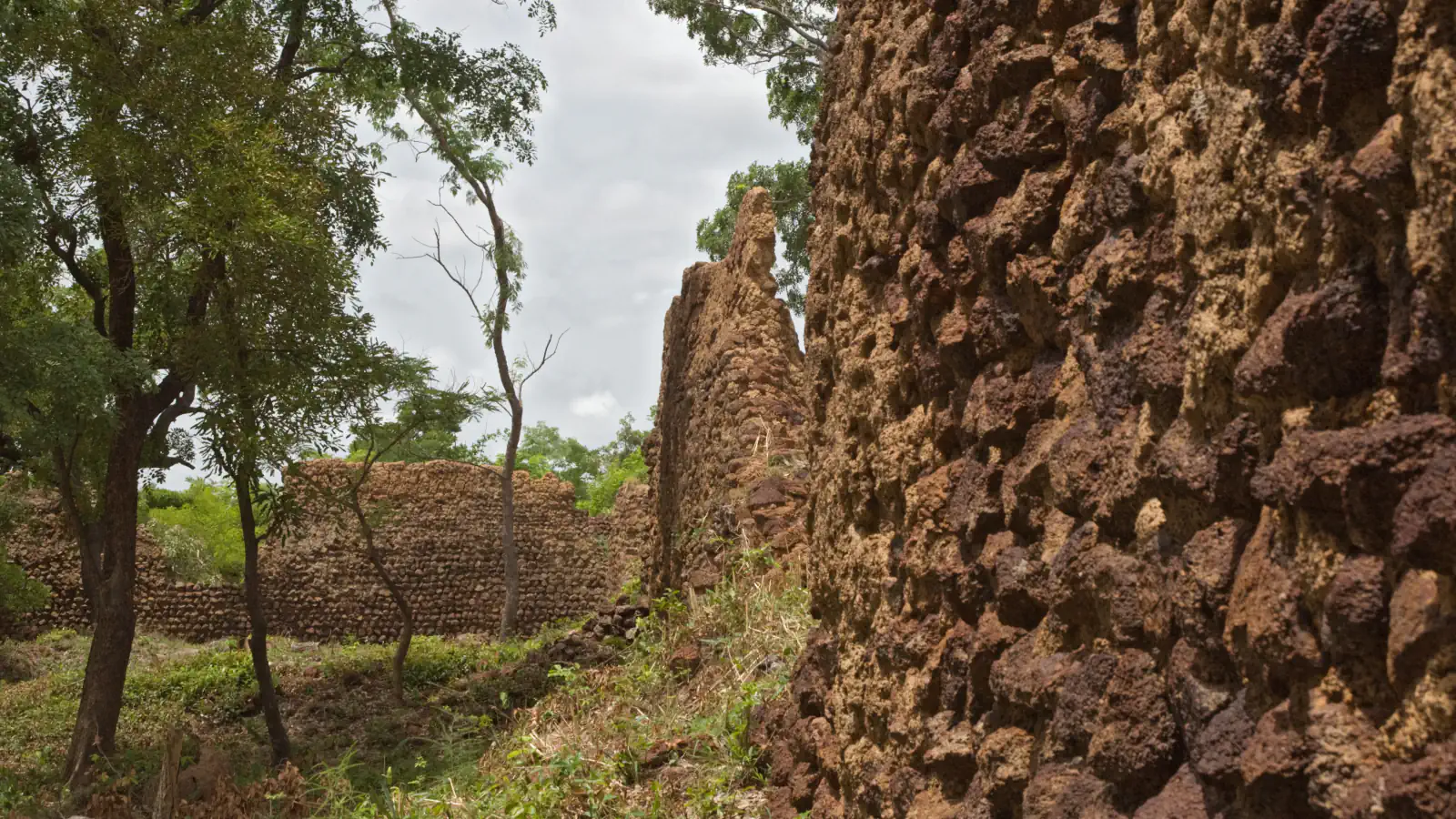
The dates concern different evidence: UNESCO’s radiocarbon results suggest the walled enclosure was already present by the 11th century AD and associate its flourishing with the 14th–17th centuries. A CNRS Images photo caption gives a broad 11th–15th-century range for earliest inhabited layers and says the ruins’ purpose is not fully understood; it suggests a possible connection to regional gold mines worked since around AD 1000. UNESCO describes laterite-stone perimeter walls rising to six metres around the abandoned settlement.[1][2]
Ironmaking: evidence from different periods
About fifteen natural-draught furnaces remain across the five-part property. Douroula provides evidence of ironworking in the 8th century BCE. UNESCO says iron ore reduction is no longer practised today, even as village blacksmiths still make tools and take part in rituals. The furnaces are archaeological remains; smithing is an ongoing village craft.[3]
Tiébélé: a living tradition of wall decoration
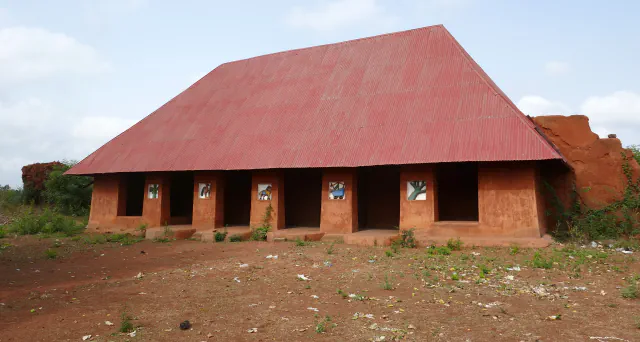
UNESCO describes a walled earthen complex where buildings are arranged in distinct concessions divided by walls, with passageways leading on to ceremonial and gathering spaces beyond its walls. It distinguishes the roles in the court’s building practice: men build the houses, while women create their symbolic wall decorations. UNESCO says observation and practice, ceremonies and competitions help pass this knowledge on.[4]
Good to know
A few clear answers before you explore.
What do sources date at Loropéni?
UNESCO’s radiocarbon evidence concerns the walled enclosure and suggests an 11th-century-or-earlier date. A CNRS Images caption gives an estimated 11th–15th-century range for earliest inhabited layers. These are dates for different evidence; the caption also says the site’s purpose remains uncertain.[1][2]
Does village smithing continue today?
Yes. UNESCO says village blacksmiths still make tools and take part in rituals, while iron ore reduction is no longer practised today. The continuing craft is distinct from the archaeological furnace record.[3]
How is Tiébélé’s wall-decoration knowledge passed on?
UNESCO says women create the symbolic decorations, with the tradition carried through observation and practice as well as ceremonies and competitions.[4]
The WorldStamped community
Every visit becomes part of a story.
- Members with public visits
- 0
- Places with public visits or memories
- 0
- Public memories
- 0
No public visits have been counted here yet. Add this destination to your own map and choose what you want to share.
Members are counted once. Counts include only eligible public activity from profiles that allow search discovery. Private and followers-only content is excluded.