🇳🇵Country
Nepal: timber beneath Lumbini’s brick shrines, valley heritage and glacier lakes
At Lumbini, researchers found timber below successive brick shrines; UNESCO groups Kathmandu Valley heritage into seven monument zones, while four Gokyo lakes lie along Ngozumpa Glacier’s western edge.
At a glance
A place worth remembering
Lumbini: a timber shrine below the brick layers
Excavations inside Maya Devi Temple revealed a sequence reaching beneath the brick shrines. UNESCO’s 2013 news item quotes co-director Robin Coningham: the dig found a brick temple predating Ashoka, itself raised above an earlier timber one. The University of Stirling reports that tests found ancient tree roots in the timber structure’s central open space, and says the excavation team dates the structure to the sixth century BCE.[1][2]
Kathmandu Valley: seven zones across a living architectural landscape
UNESCO’s property covers 167.37 hectares in seven monument zones. Together they group historic urban squares, Buddhist stupas and Hindu temple precincts rather than a single walled site. UNESCO credits Newar artisans with craftsmanship in bronze, timber, stone and brick, and notes that the tiered temples are mostly built of fired brick laid in mud mortar, with timber, under terracotta-tiled roofs.[3]
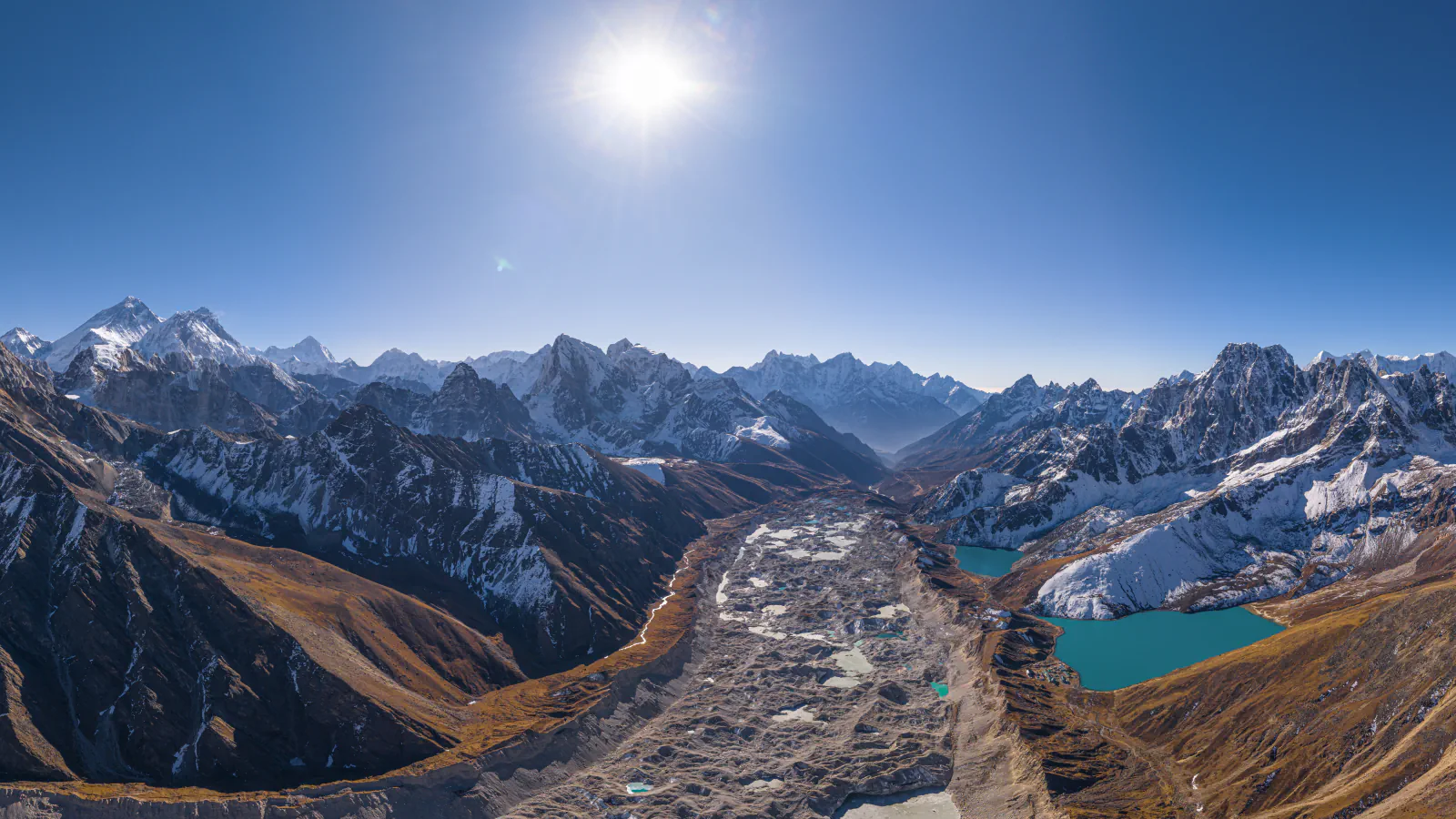
Sagarmatha: lakes held behind the glacier’s western moraine
The Sagarmatha National Park Office describes the 20 km Ngozumpa Glacier as bordered on its western side by four Gokyo lakes, held back behind the glacier’s lateral moraine. This count and location refer to those western lakes, not every lake in the wider mountain region.[4]
Good to know
A few clear answers before you explore.
What did the Lumbini excavation reveal below the brick shrines?
UNESCO’s 2013 news item quotes co-director Robin Coningham on a brick temple predating Ashoka, itself raised above a timber one. Stirling’s geoarchaeologist reports tree roots in the timber structure’s central open space and says the excavation team dated it to the sixth century BCE.[1][2]
How are Kathmandu Valley’s seven monument zones grouped?
UNESCO groups them as historic urban squares, Buddhist stupas and Hindu temple precincts. The listed zones together cover 167.37 hectares.[3]
What holds the four western Gokyo lakes in place?
The Sagarmatha National Park Office says they lie behind the lateral moraine along the western side of the 20 km Ngozumpa Glacier.[4]
The WorldStamped community
Every visit becomes part of a story.
- Members with public visits
- 0
- Places with public visits or memories
- 0
- Public memories
- 0
No public visits have been counted here yet. Add this destination to your own map and choose what you want to share.
Members are counted once. Counts include only eligible public activity from profiles that allow search discovery. Private and followers-only content is excluded.