🇲🇩Country
Moldova: a survey mark, reused mines and limestone caves
At Rudi, a survey mark lies beneath a mound. In the Răut cliffs, caves sheltered monks; evidence points to some being used for prayer, while former quarries elsewhere became wine galleries.
At a glance
A place worth remembering
Rudi: a survey mark beneath a mound
Quarry galleries reused for wine
Cricova says its underground galleries began as limestone workings; stone from them went into buildings in Cricova, Chișinău and Bălți, and extraction continues in some branches. The winery reports 120 km of galleries. A 2025 Tentative List submission dates stone extraction at Mileștii Mici to 1886 and the establishment of a wine-storage department in its galleries to 1969.[3][4]
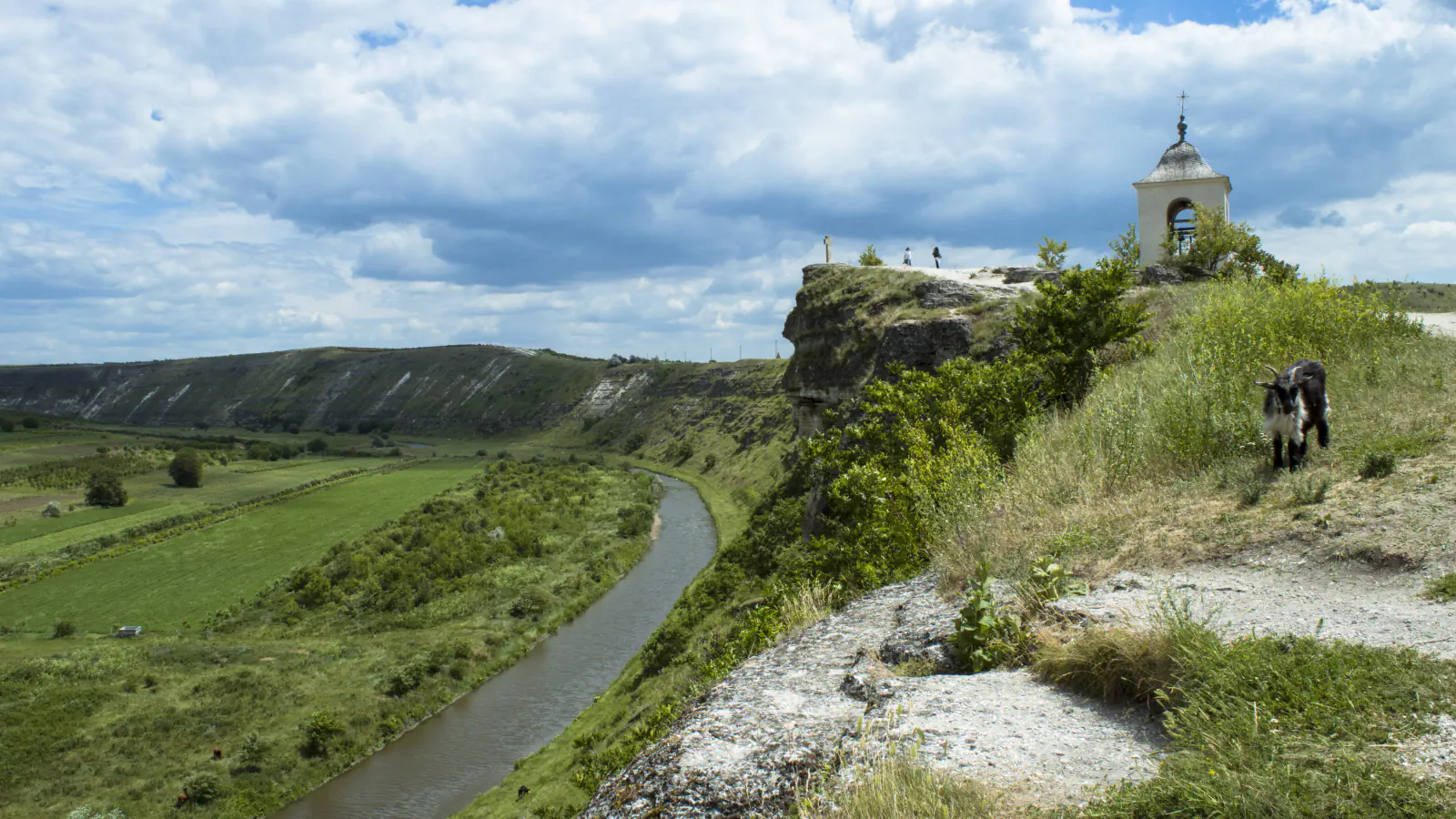
Orheiul Vechi: limestone cliffs and cave shelters
At Orheiul Vechi, the Răut winds between limestone promontories. A 2017 Ministry of Culture submission describes about 200 caves in the cliffs, including monk shelters; it says evidence in some suggests churches or places of prayer. Moldova Tourism separately identifies a rock-hewn monastery at Butuceni that remains active.[5][6]
Good to know
A few clear answers before you explore.
What marks the Rudi point of the Struve Arc?
The 2004 nomination identifies a drilled hole in the Rudi pillar as the reference mark. It gives the brick pillar’s sides as 40 cm and the pit beneath the mound as 1 m deep.[2]
Are the Cricova and Mileștii Mici cellars natural caves?
No. Cricova says its galleries began as limestone workings; a separate 2025 Tentative List submission dates extraction at Mileștii Mici to 1886 and the establishment of a wine-storage department there to 1969.[3][4]
Is the rock-hewn monastery at Butuceni still active?
Yes. Moldova Tourism describes a monastery carved into the cliffs there and identifies it as still active.[6]
The WorldStamped community
Every visit becomes part of a story.
- Members with public visits
- 0
- Places with public visits or memories
- 0
- Public memories
- 0
No public visits have been counted here yet. Add this destination to your own map and choose what you want to share.
Members are counted once. Counts include only eligible public activity from profiles that allow search discovery. Private and followers-only content is excluded.