City
The Mogadishu lighthouse and Hamarweyne’s coral architecture
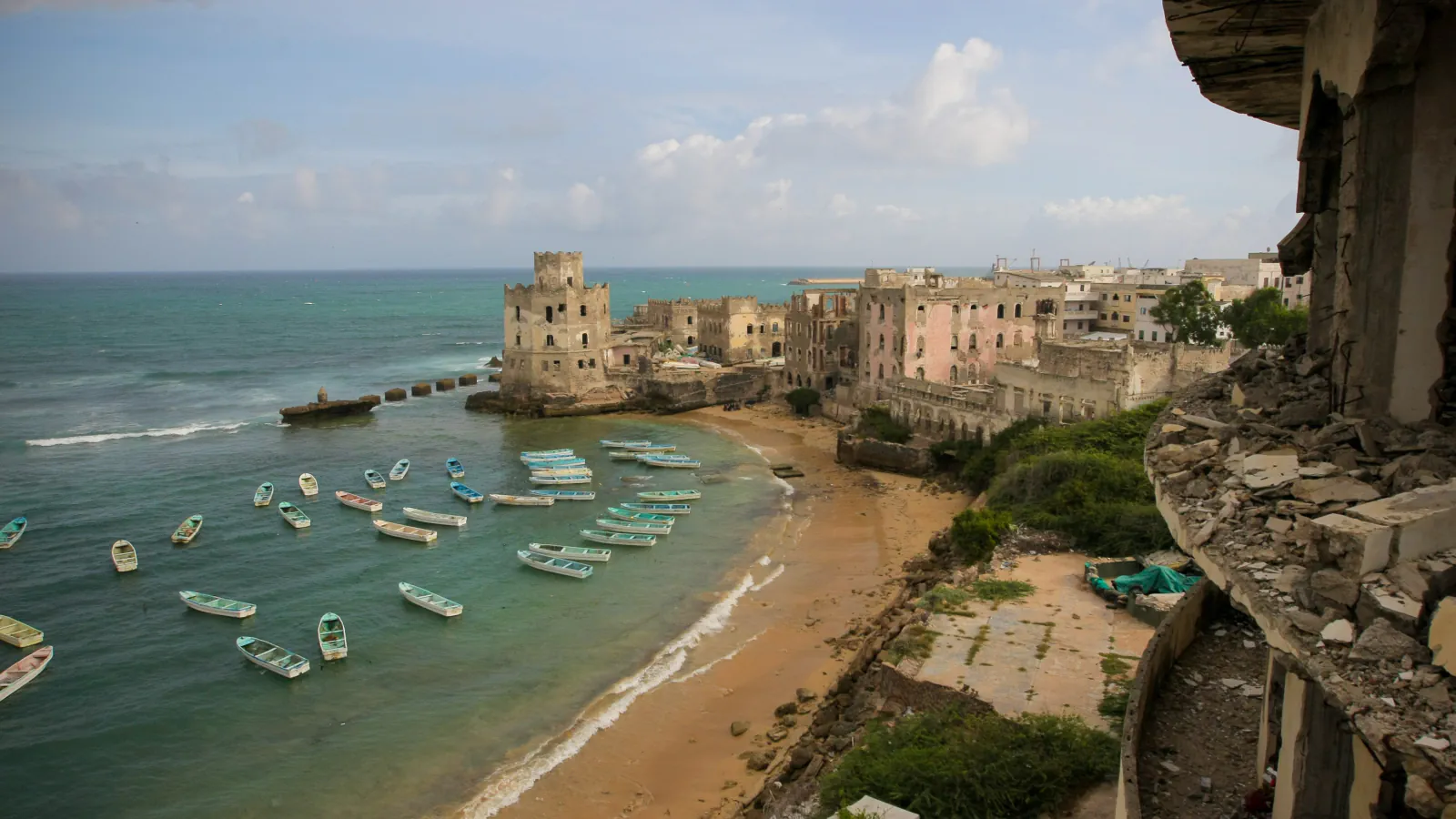
The Lido Secondo lighthouse combines coral stone and reinforced concrete. In Hamarweyne, a field account describes a spiral stair cut into coastal coral rock beside the old harbour and a sabatt-like passage joining houses across a street.
At a glance
A place worth remembering
Coral stone and reinforced concrete
UNESCO’s November 2025 account identifies the Lido Secondo lighthouse as an early-20th-century coastal structure whose fabric combines coral stone with reinforced concrete.[1]
A coral-cut stair by the old harbour
At Fiinta, Shikei records a spiral stair cut into the coral beside the old harbour, with a basin and cuttings nearby that he reads as docks for mooring small boats. He asks why so demanding a piece of work was done at this spot and says only a closer study of the seabed would clarify it.[2]
A cross-street passage in Hamarweyne
In one alley, Shikei cautiously describes something like a sabatt: a raised link between two houses facing each other across the street. A walled-up doorway below it retains carved motifs on its weathered frame.[2]
Good to know
A few clear answers before you explore.
Which two materials does UNESCO’s 2025 article name for the lighthouse structure?
Coral stone and reinforced concrete.[1]
What did the Hamarweyne author describe at Fiinta?
A spiral stair carved into coastal coral rock.[2]
How does the field account describe the passage across the street?
The author compares it to a sabatt: a raised link between two houses that face each other across a street.[2]
The WorldStamped community
Every visit becomes part of a story.
- Members with public visits
- 0
- Places with public visits or memories
- 0
- Public memories
- 0
No public visits have been counted here yet. Add this destination to your own map and choose what you want to share.
Members are counted once. Counts include only eligible public activity from profiles that allow search discovery. Private and followers-only content is excluded.