🇲🇷Country
Mauritania: waterbirds, Saharan ksour and the Richat rings
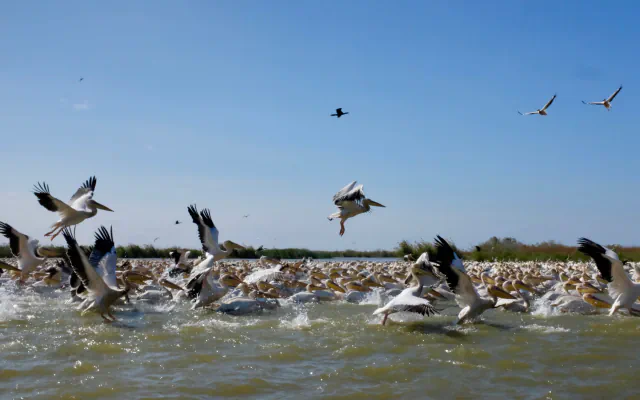
A Ramsar sheet updated in 2023 records 1,707,178 waterbirds counted at Banc d’Arguin in 2020. UNESCO describes the four Saharan ksour through their narrow lanes and courtyard homes, while HMML dates its Mauritania manuscript initiative to November 2023. In the Adrar, IUGS interprets the roughly 40 km Richat Structure as an intrusive complex, not an impact crater.
At a glance
- Waterbird count
- The 2023 Ramsar sheet cites an IWC/PNBA January 2020 count of 1,707,178 waterbirds at Banc d’Arguin.[2]
- Ancient ksour
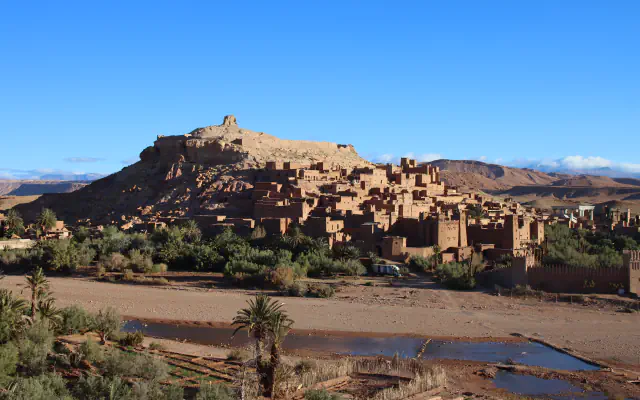
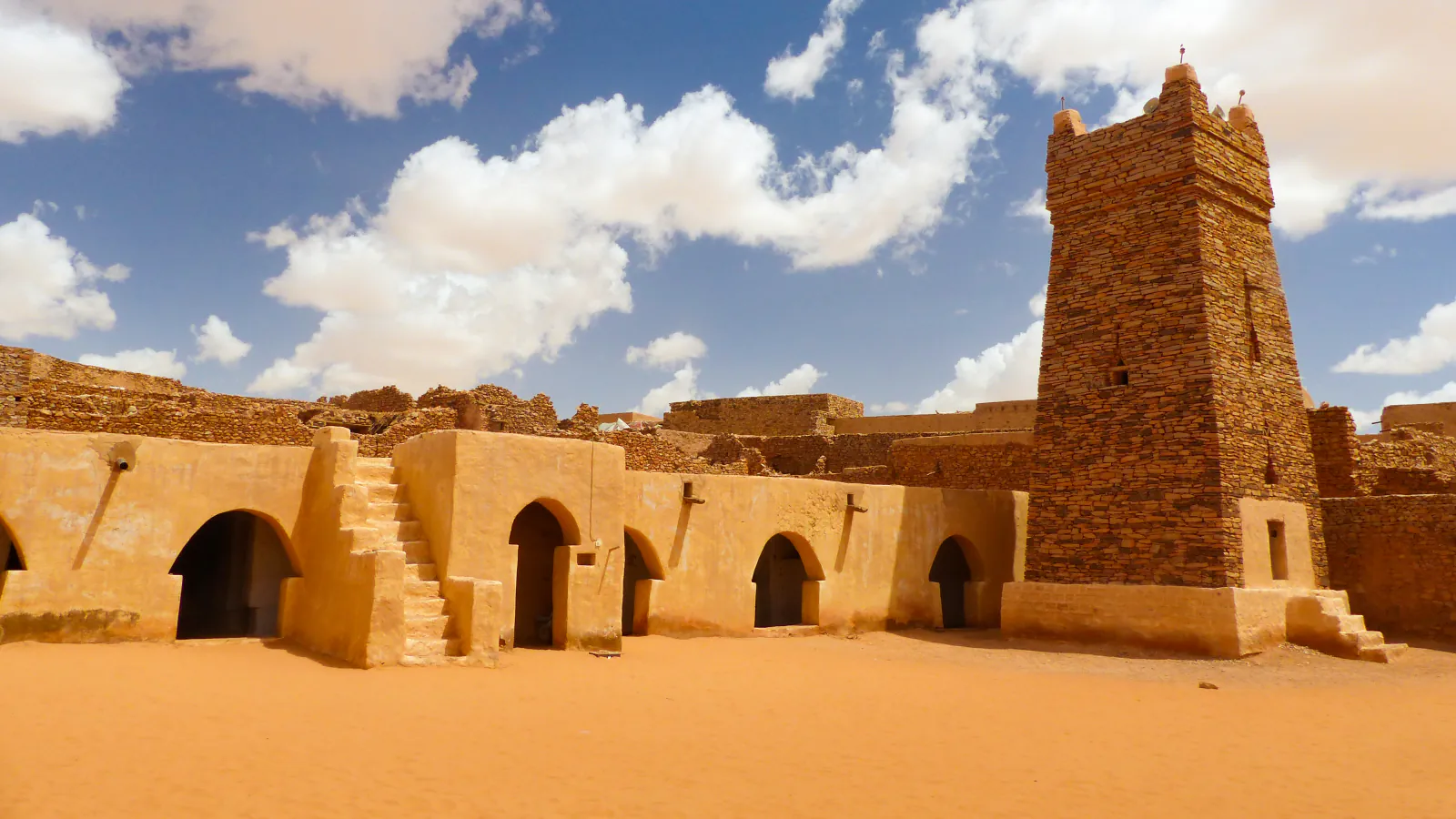
- The UNESCO property comprises four towns: Ouadane, Chinguetti, Tichitt and Oualata.[4]
- Richat Structure
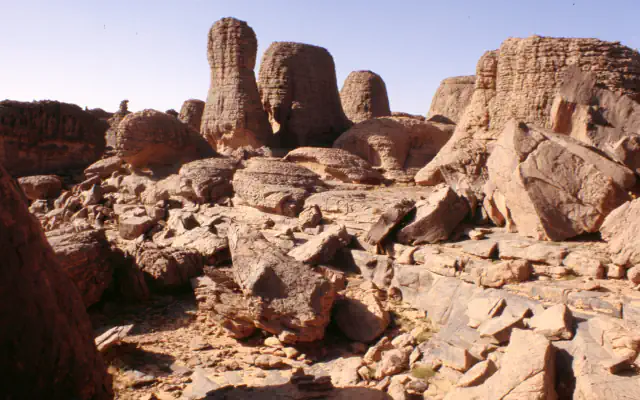
- About 40 km across, with three outward-dipping rings; IUGS classifies it as an intrusive alkaline complex.[6]
A place worth remembering
Banc d’Arguin: a dated count and a fishery tradition
The Ramsar sheet updated in 2023 credits IWC/PNBA with a January 2020 waterbird count of 1,707,178. That is a historical survey result, not a current population estimate. A 2015 Slow Food account describes Imraguen women’s role in processing mullet roe and says knowledge of the technique was being lost at that time. UNESCO records another coastal relationship: fishers use dolphins to help attract shoals of fish.[2][3][1]
Saharan ksour: lanes, courtyards and manuscripts
Ouadane, Chinguetti, Tichitt and Oualata are historic towns shaped by the trans-Saharan caravan network. UNESCO describes a dense plan of courtyard houses set along narrow, winding lanes, with each town focused on a mosque and its square minaret. It says the towns developed from the 12th to the 16th century. HMML says its Mauritania manuscript initiative began in November 2023, with initial studios in Nouakchott.[4][5]
Richat: a crater-like outline, an intrusive origin
Researchers once debated whether Richat was an impact feature or an intrusion. The IUGS Geoheritage entry says the impact interpretation was disproved and classifies the roughly 40 km structure as a Cretaceous alkaline intrusive complex with three outward-dipping rings.[6]
Good to know
A few clear answers before you explore.
How many waterbirds were counted at Banc d’Arguin in 2020?
The Ramsar sheet updated in 2023 cites an IWC/PNBA count of 1,707,178. It is a dated survey result, not a current population estimate.[2]
What is distinctive about the layout of the ancient ksour?
UNESCO describes courtyard houses packed along narrow, winding lanes, gathered about a mosque and its square minaret.[4]
Is Richat a meteorite crater?
The IUGS Geoheritage entry says the impact interpretation was disproved and describes Richat as an intrusive Cretaceous alkaline complex.[6]
The WorldStamped community
Every visit becomes part of a story.
- Members with public visits
- 0
- Places with public visits or memories
- 0
- Public memories
- 0
No public visits have been counted here yet. Add this destination to your own map and choose what you want to share.
Members are counted once. Counts include only eligible public activity from profiles that allow search discovery. Private and followers-only content is excluded.