🇱🇺Country
Luxembourg: a named rock, two kinds of Moselle slope and a restored castle
Rock links three far-apart places: the Bock promontory in Luxembourg City, the vineyards along the Moselle between Schengen and Wasserbillig, and Vianden Castle on the River Our in the north-east. One is a fortified promontory, one a valley of marl and limestone, one a castle on a rocky height. Other parts of the country are not covered.
At a glance
A place worth remembering
Luxembourg City: the Bock and the name
The old city stands at the meeting of the Alzette and Pétrusse on a steep rocky outcrop. According to the city tourist office, Count Siegfried acquired the promontory above the Alzette valley in 963; the deed records a small stronghold there called Lucilinburhuc, where the name Luxembourg first appears. The promontory is now called the Bock. Austrian engineers began the Bock Casemates in the middle of the 18th century: the main casemate is 110 m long and 7 m wide, and the complex could have housed about 50 cannons and 1,200 soldiers. An archaeological crypt shows remains of the first count’s castle, uncovered in 1993. When the fortress was dismantled after the Treaty of London in 1867, the casemates were among the remains left standing.[1][2][3]
Moselle: where the valley changes rock
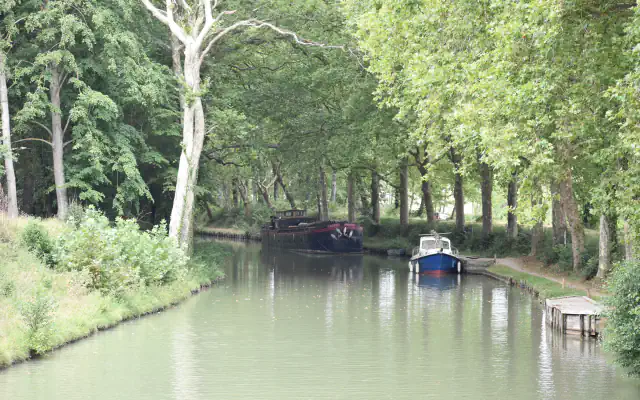
A wine route 42 km long follows the Moselle between Schengen and Wasserbillig, with vineyards at 150 to 250 m above sea level, steep and craggy in places. In the canton of Remich, from Schengen to Greiveldingen, the valley is wide and open, the vines grow on keuper with marl clay, and the slopes are rounded and gentle. Further downstream, fissured shell limestone predominates in the canton of Grevenmacher, and erosion between Greiveldingen and Grevenmacher has produced a narrow valley with steep, precipitous dolomitic slopes. Both stretches belong to the same wine region, but the rock beneath the vines differs.[4][5]
Vianden: a castle sold piece by piece
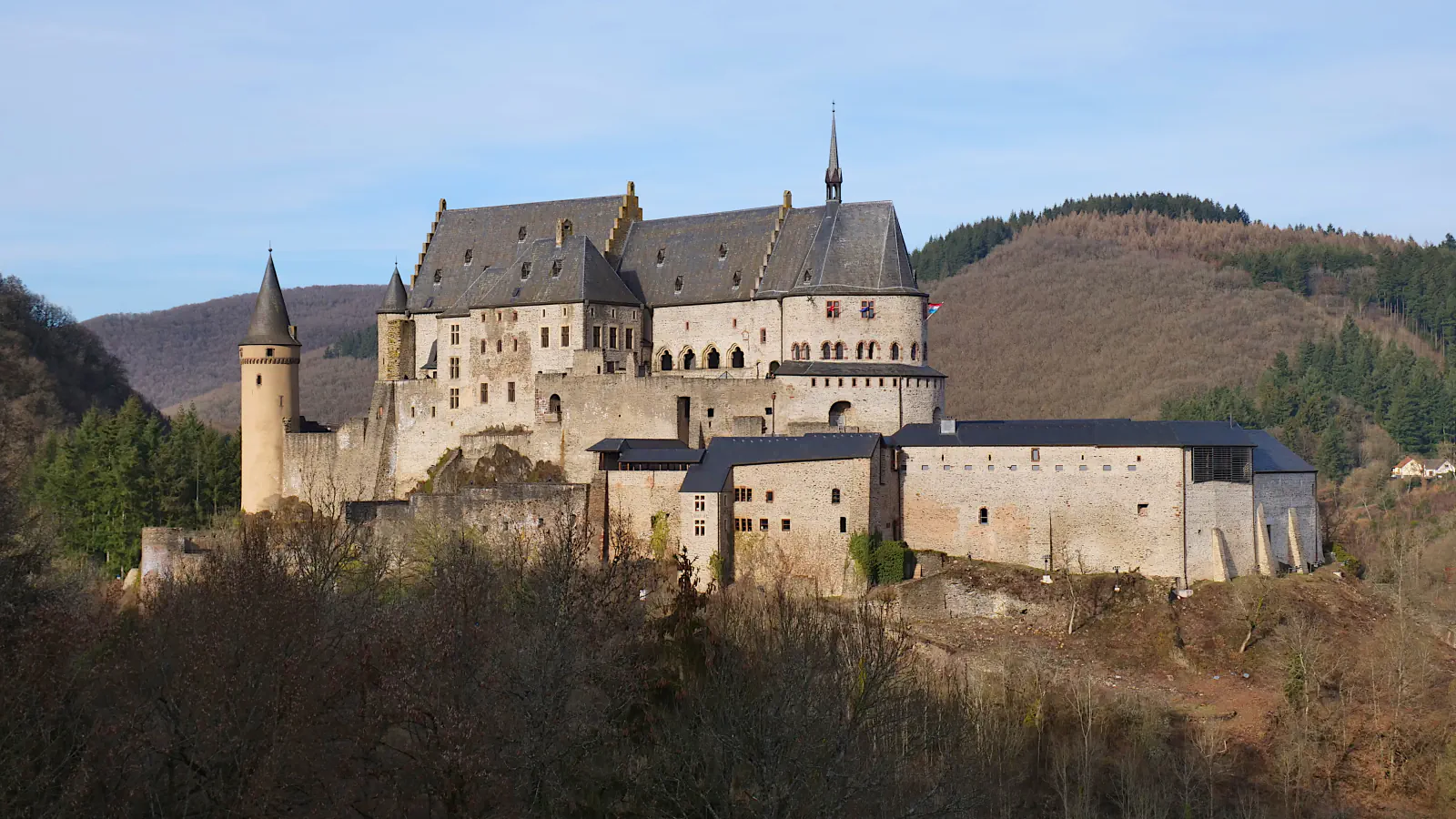
Vianden Castle stands on a rocky promontory above the town of Vianden and the River Our in the north-east of the country. It was built between the 11th and 14th centuries on the foundations of a Roman castellum and a Carolingian refuge, and its chapel and the small and large palaces date from the end of the 12th century and the first half of the 13th. The counts of Vianden held it until the early 15th century, when it passed to the House of Nassau. In 1820 it was sold piece by piece and fell into ruin; it has been restored since 1977, when it passed into State ownership.[6][7]
Good to know
A few clear answers before you explore.
Where does the name Luxembourg come from?
From Lucilinburhuc, the small stronghold on a rocky promontory above the Alzette that Count Siegfried acquired in 963. The tourist office’s history page says the name first appears there and then passed to the city that grew around it and to the country. The promontory is now known as the Bock.[1]
Is the Moselle wine route one kind of landscape?
No. In the canton of Remich the valley is wide with rounded, gentle slopes on keuper and marl clay, while in the canton of Grevenmacher shell limestone has left a narrow valley with steep dolomitic slopes. The change is placed at Greiveldingen.[5]
Is Vianden Castle a ruin?
Not now. It fell into ruin after being sold piece by piece in 1820, but it has been restored since it passed into State ownership in 1977. The chapel and the small and large palaces are the main parts that survive from the late 12th and early 13th centuries.[6]
The WorldStamped community
Every visit becomes part of a story.
- Members with public visits
- 0
- Places with public visits or memories
- 0
- Public memories
- 0
No public visits have been counted here yet. Add this destination to your own map and choose what you want to share.
Members are counted once. Counts include only eligible public activity from profiles that allow search discovery. Private and followers-only content is excluded.