🇱🇾Country
Water turns, pottery residues and a reused stele in Libya
A historical water measure paced irrigation in Ghadamès. Pottery from Takarkori carries evidence of dairy processing, while a marble stele from Cyrene was later reused at a Byzantine bath.
At a glance
A place worth remembering
A timed measure for the Ghadamès gardens
The chapter by Passon and colleagues calls the irrigation measures al Quadus. Its account of Rohlfs describes an iron pan with a hole in its base that emptied in about three minutes; seven Gaddus made a Dermissa, roughly 20 minutes of watering. UNESCO connects Ghadamès’s water management with its palm groves and identifies Ain al-Faras, called ghusuf locally, as the spring around which the old settlement developed.[1][6]
Pottery and burials at Takarkori
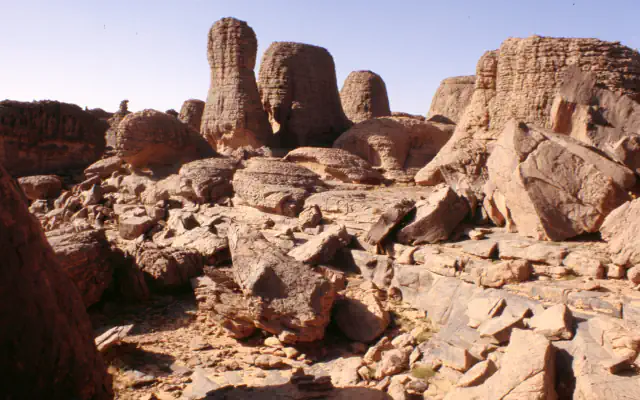
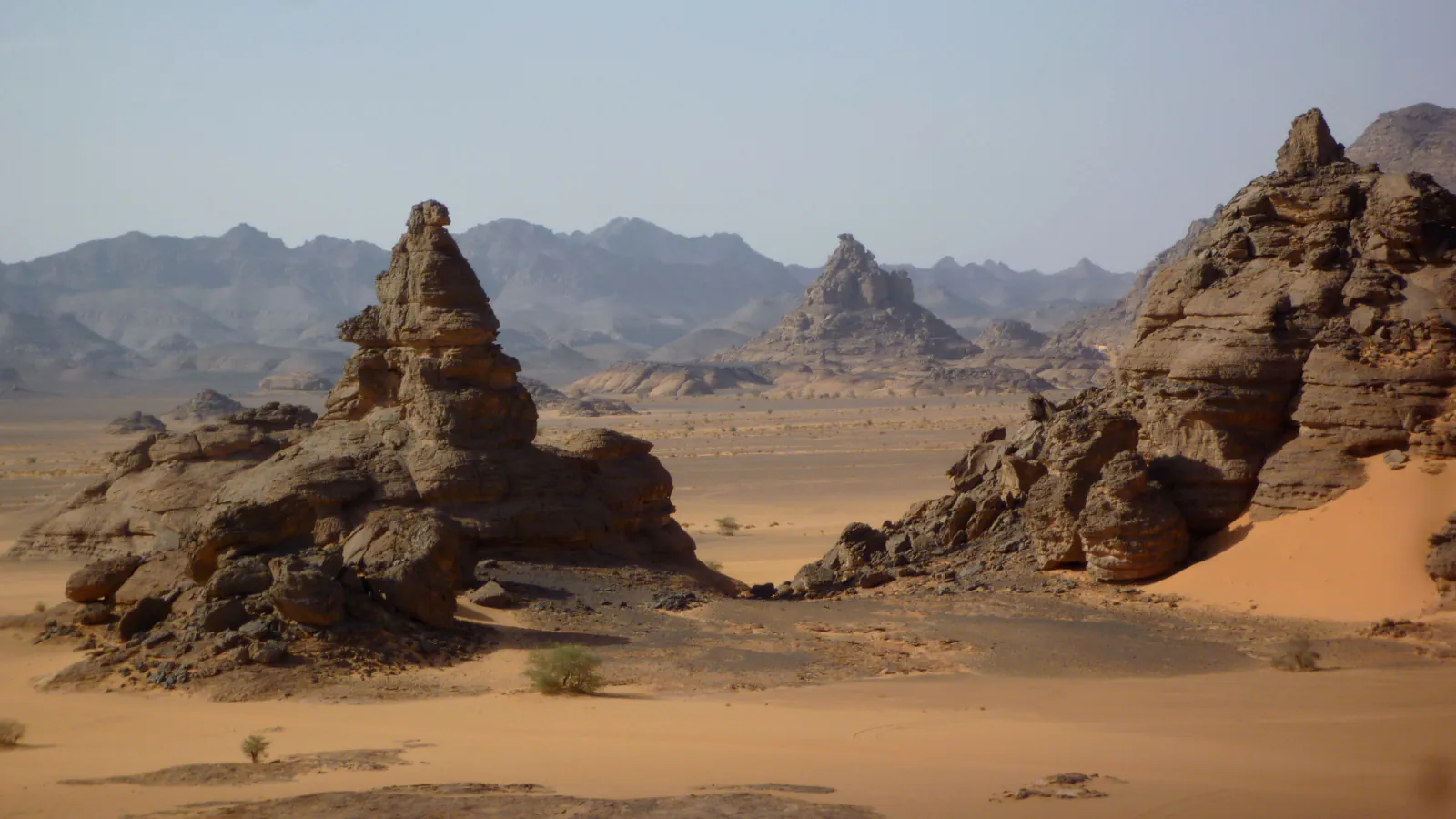
Takarkori offers evidence from both pottery and human remains. Lipid analysis links vessels from its rock shelter with dairy processing in the fifth millennium BC. A separate 2025 genome study examined two women buried there about 7,000 years ago. The researchers assigned the greater part of their ancestry to a North African genetic lineage not previously described; the authors interpret this pattern as pastoral practices spreading through cultural transmission.[2][3][4]
A Cyrene stele reused at the baths
IGCyr places the stele’s earlier setting at the Sanctuary of Apollo and records its later reuse in Cyrene’s Byzantine Baths. Ferri found the 1.53 m inscribed marble in 1922; its editors date it cautiously to 375–360 BC.[5]
Good to know
A few clear answers before you explore.
What did a Dermissa measure?
The chapter by Passon and colleagues reports that seven Gaddus made one, marking an irrigation interval of roughly 20 minutes.[6]
What kinds of evidence come from Takarkori?
The pottery study concerns food processing; the genome paper examines ancestry from two burials and interprets its findings as cultural transmission of pastoral practices.[2][3][4]
What happened to the Cyrene stele after it was inscribed?
IGCyr records its reuse as a bath step and places its probable original setting at the Sanctuary of Apollo.[5]
The WorldStamped community
Every visit becomes part of a story.
- Members with public visits
- 0
- Places with public visits or memories
- 0
- Public memories
- 0
No public visits have been counted here yet. Add this destination to your own map and choose what you want to share.
Members are counted once. Counts include only eligible public activity from profiles that allow search discovery. Private and followers-only content is excluded.