🇱🇻Country
Riga’s Art Nouveau homes, Sietiņiezis sandstone and Rundāle Palace
At Alberta iela 12 in Riga, a 1903 house became an Art Nouveau museum. At Sietiņiezis, the conservation agency links local geology to low-mineral spring water. The palace museum dates Rundāle’s construction to two periods.
At a glance
A place worth remembering
A 1903 home became Riga’s Art Nouveau Centre
The Riga Art Nouveau Centre occupies the house at Alberta iela 12, built in 1903 as the private home of the architect Konstantīns Pēkšēns, who drew up the design in partnership with Eižens Laube. Stylised Latvian plants and animals appear in relief on the façade and again inside.[1]
At Sietiņiezis, geology explains the spring’s low mineral content
The Nature Conservation Agency says the spring water contains few minerals. Its account links this to the source area’s geology: a thin, patchy cover of Quaternary sediments lies above quartz sandstone. The agency identifies the outcrops as the stratotype of the Middle Devonian Sietiņu Formation.[3]
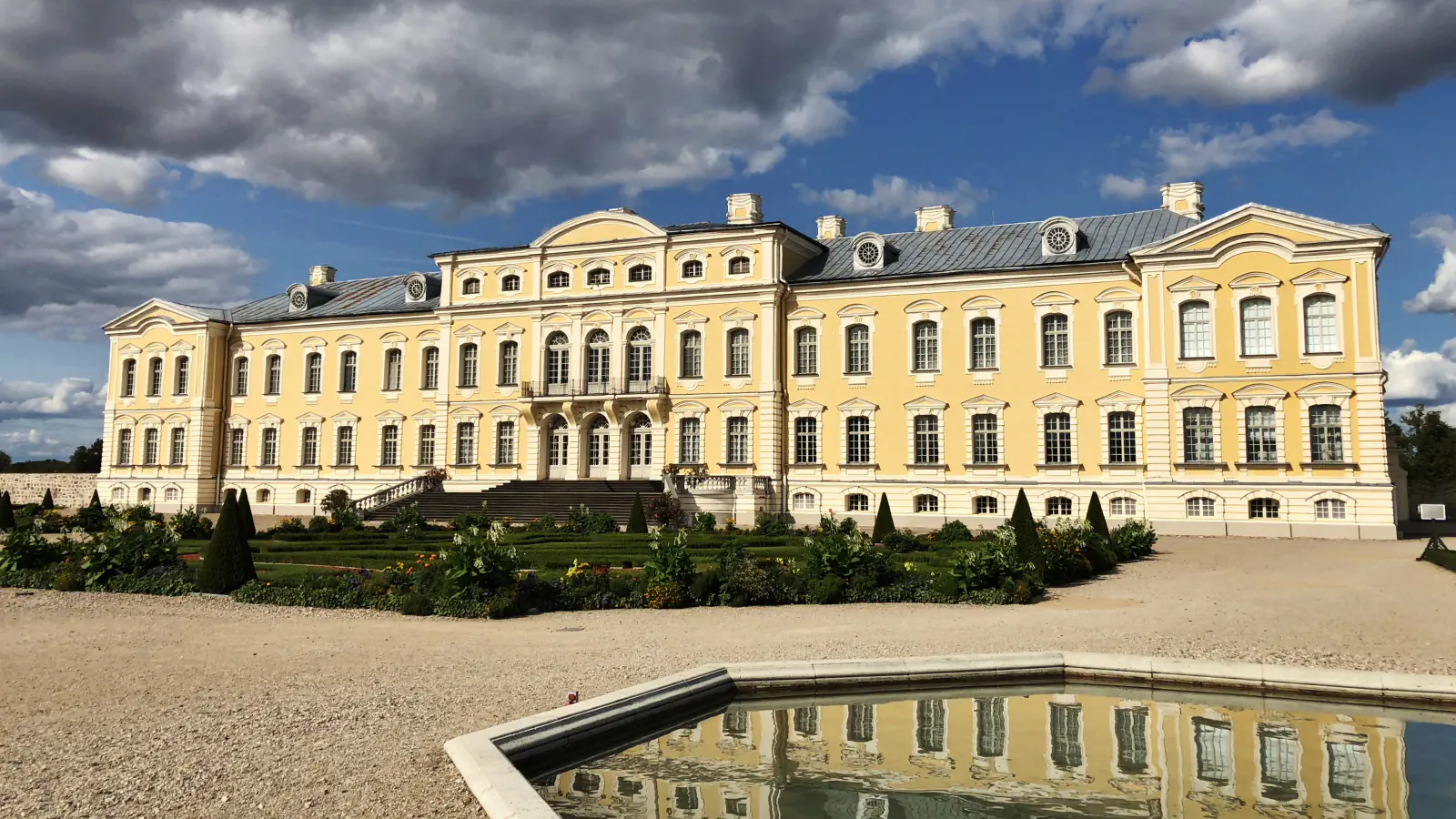
Rundāle Palace took shape in two building periods
The palace museum dates construction to 1736–1740 and 1764–1770. Its history also records that materials from an earlier palace on the estate were reused in the new building.[4]
Good to know
A few clear answers before you explore.
What stands out on the façade at Alberta iela 4?
The Riga Art Nouveau Centre dates the house by Mikhail Eisenstein to 1904. It describes an elliptical second-floor window and balcony as the façade’s centrepiece.[2]
What is the geological feature at Sietiņiezis?
Three larger Middle Devonian sandstone outcrops form the stratotype of the Sietiņu Formation, according to the Nature Conservation Agency.[3]
How was the Grand Gallery formed?
The palace museum records it as the result of combining five smaller rooms.[4]
The WorldStamped community
Every visit becomes part of a story.
- Members with public visits
- 0
- Places with public visits or memories
- 0
- Public memories
- 0
No public visits have been counted here yet. Add this destination to your own map and choose what you want to share.
Members are counted once. Counts include only eligible public activity from profiles that allow search discovery. Private and followers-only content is excluded.