🇰🇿Country
Kazakhstan: canyon fossils, steppe wetlands and an unfinished mausoleum
At Charyn, fossil brachiopods in limestone point to an ancient marine setting. The Korgalzhyn–Tengiz wetlands lie along a migratory route for waterbirds, while the unfinished Yasawi mausoleum in Turkestan records medieval building practice.
At a glance
- Charyn
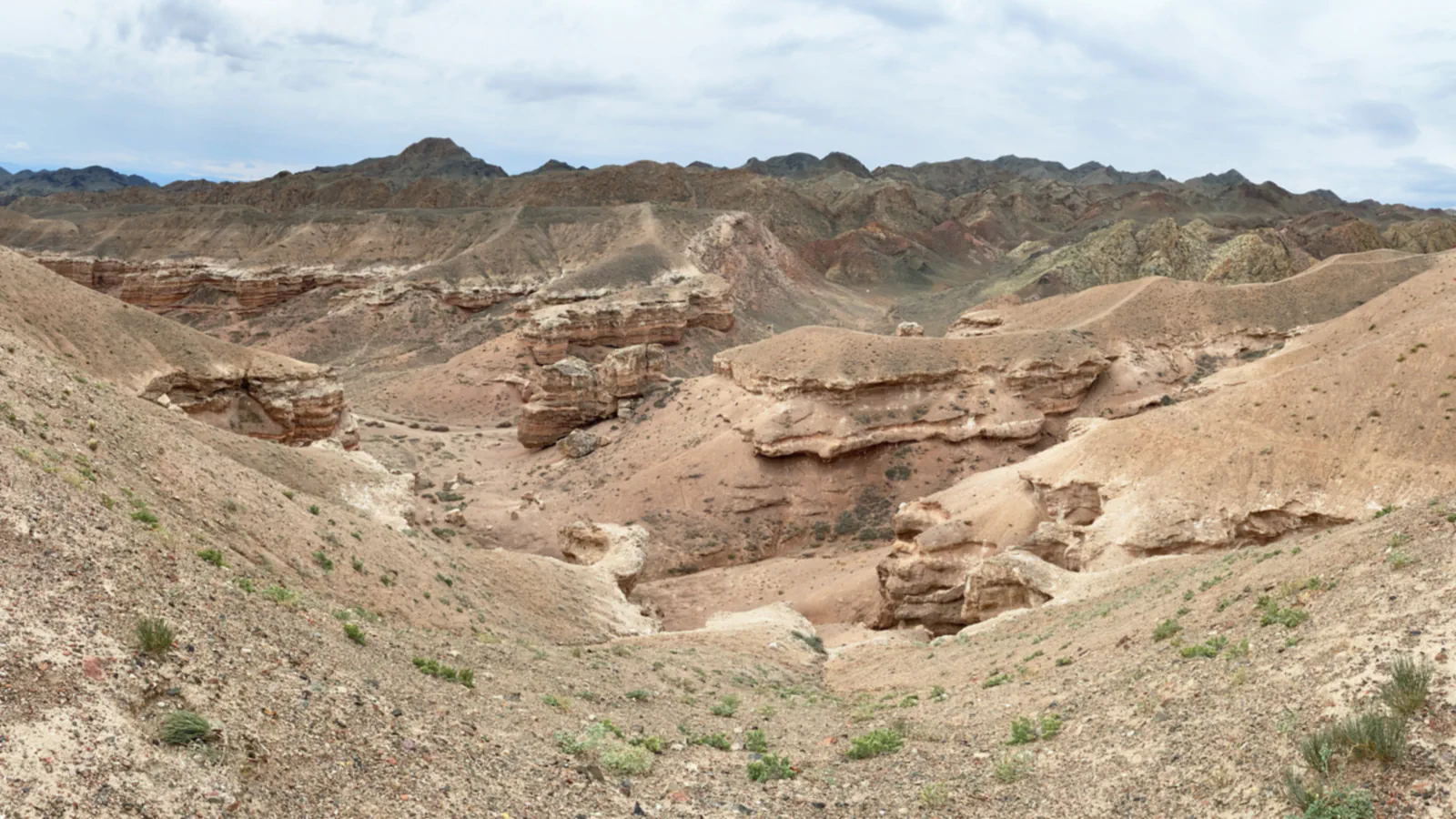
- Carboniferous limestone at Kurtogai contains fossil brachiopods; the 2021 paper, citing earlier studies, says it indicates a warm sea about 300 million years ago.[1]
- Korgalzhyn–Tengiz wetlands
- Shallow lakes 3–4 m deep with no outflow: Tengiz is saltwater and Kourgaldzhin has varying salinity, according to the Ramsar information sheet.[2]
- Turkestan
- UNESCO dates the mausoleum to 1389–1405; its unfinished entrance and some interior spaces record building practice of that period.[4]
A place worth remembering
Charyn: fossils in ancient rock
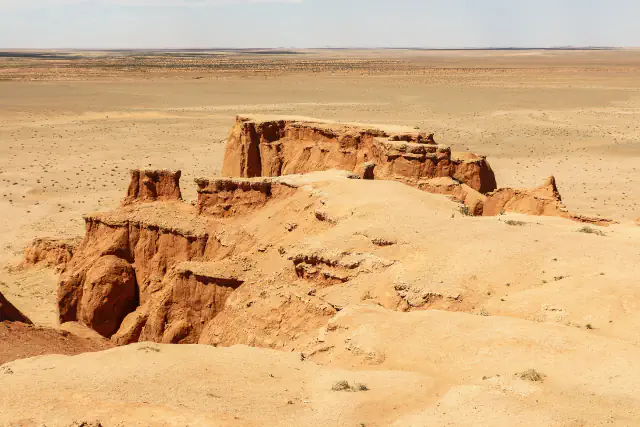
The Charyn valley cuts through Palaeozoic bedrock and younger Cenozoic deposits. A 2021 geological paper describes two fossil sites: a palaeozoology team first found bones of ancient mammals in the Zhalanash depression in 1977, while the Kurtogai gorge exposes dark grey Carboniferous limestone full of fossil brachiopod shells. Citing earlier studies, the paper says that this limestone indicates a warm sea about 300 million years ago.[1]
Korgalzhyn and Tengiz: shallow lakes in the steppe
The Ramsar information sheet describes the Korgalzhyn–Tengiz lakes as shallow lakes 3–4 m deep with a varied mineral composition and no outflow: Tengiz is a saltwater lake, while Kourgaldzhin, the sheet’s spelling, is a network of channels of varying salinity. UNESCO describes Saryarka’s wetlands as key stopover points for migratory waterbirds and names maintaining the lakes’ hydrological regimes, for Lake Tengiz chiefly the water arriving from the Nura River, as a key management priority.[2][3]
Turkestan: an unfinished mausoleum
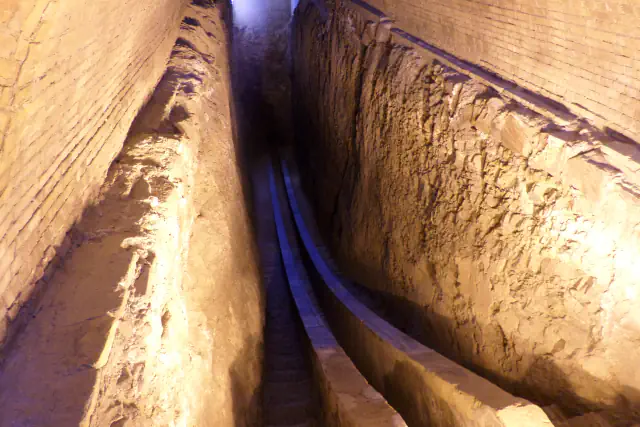
UNESCO dates the Turkestan mausoleum to 1389–1405. The main entrance and some interior spaces remain unfinished; UNESCO points to these gaps as evidence of building practice at the time.[4]
Good to know
A few clear answers before you explore.
What do the Charyn fossils record?
At Kurtogai, fossil brachiopods occur in Carboniferous limestone. The 2021 paper, citing earlier studies, says the limestone indicates a warm sea about 300 million years ago.[1]
What links Korgalzhyn and Tengiz to migratory birds?
UNESCO describes Saryarka’s wetlands as key stopover points for migratory waterbirds. Its text names maintaining the lakes’ hydrological regimes, mainly the Nura River inflows in the case of Lake Tengiz, as a key management priority.[3]
What can the unfinished parts of the Yasawi mausoleum show?
UNESCO says the unfinished entrance and some interior spaces reveal how builders worked at the time; its page dates the mausoleum to 1389–1405.[4]
The WorldStamped community
Every visit becomes part of a story.
- Members with public visits
- 0
- Places with public visits or memories
- 0
- Public memories
- 0
No public visits have been counted here yet. Add this destination to your own map and choose what you want to share.
Members are counted once. Counts include only eligible public activity from profiles that allow search discovery. Private and followers-only content is excluded.