City
Kabul: forty columns, clay bodhisattvas and a double dome
Chihilsitoon means “forty pillars”; excavators found a clay-sculpture chapel at Tepe Narenj; Timur Shah’s octagonal mausoleum rises through six levels beneath a double dome.
At a glance
A place worth remembering
Chihilsitoon: a palace named for its forty columns
Iranica cites a commemorative marble plaque dating the palace cornerstone to 1888, with Prince Habibullah’s residence ready three years on. Iranica traces the name Endaki to a nearby village and says Habibullah later renamed the palace for the columns that had supported its verandah roof. When he later remodelled the building, most of the columns were walled in; only six stayed open at the middle of the north front. AKDN records rehabilitation of Chihilsitoon Palace and its adjoining 12.5-hectare garden between 2015 and 2018.[2][3]
Tepe Narenj: 16 figures from a circular chapel
The excavation record brings together a chapel find and a long occupation span: one circular chapel held 16 clay figures of bodhisattvas on a ring-shaped bench, while coins and ceramics place the monastery’s use from the middle of the 5th century—or probably the beginning of the 6th—through the late 10th. Tepe Narenj lies on Koh-e-Zanbourak’s eastern flank, about 1.75 km south of Kabul’s old citadel in a straight line.[5]
Timur Shah Mausoleum: a double dome over the crypt
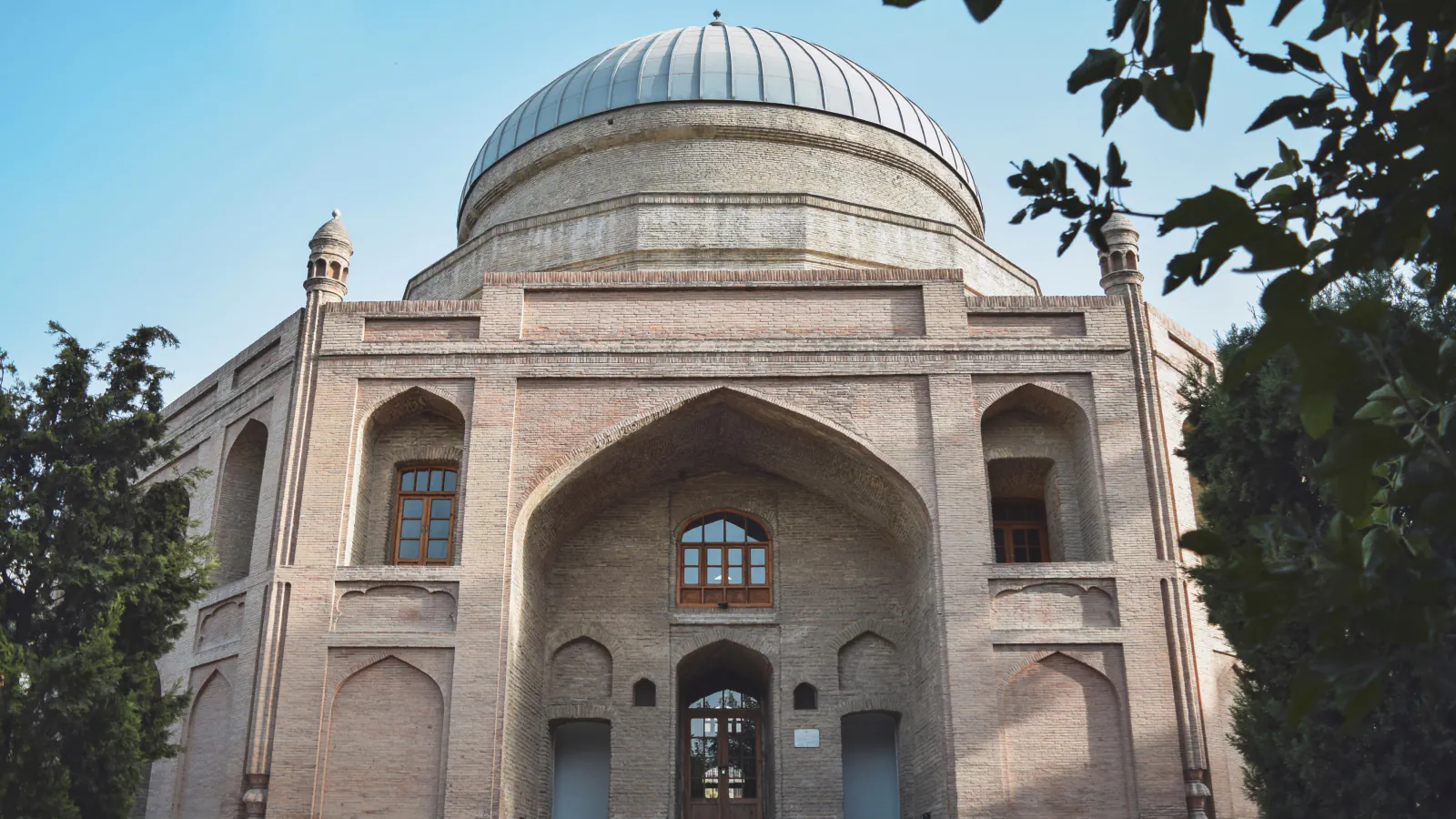
The Aga Khan Trust for Culture’s account describes an octagonal building that rises through six levels. Four iwans, each rising two storeys, occupy the main elevations; the square central chamber lies over the crypt that holds Timur Shah’s grave. A ribbed inner dome lies beneath the high outer dome. Timur Shah was buried in a garden beside the Kabul River in 1793; construction began in 1817. AKDN says conservation started in 2003 and the adjoining park, replanted with mulberry trees, reaches the river.[4][3]
Good to know
A few clear answers before you explore.
What does Chihilsitoon mean?
“Forty pillars.” Iranica says Habibullah chose the name because columns had supported the palace verandah roof. It adds that his remodelling walled in most of the columns; only six stayed open at the middle of the north front.[2]
When was the Timur Shah Mausoleum built?
Timur Shah was buried in a riverside garden in 1793; construction of his mausoleum began in 1817, according to the Aga Khan Trust for Culture’s project account.[4]
Did Buddhist life in Kabul’s hill monasteries end when Islam arrived?
DAFA’s account of the excavations says Buddhist monastic activity at Tepe Narenj and Kol-e Tout continued beyond Islam’s arrival, though only partly.[6]
The WorldStamped community
Every visit becomes part of a story.
- Members with public visits
- 0
- Places with public visits or memories
- 0
- Public memories
- 0
No public visits have been counted here yet. Add this destination to your own map and choose what you want to share.
Members are counted once. Counts include only eligible public activity from profiles that allow search discovery. Private and followers-only content is excluded.