City
Havana’s water: a sixteenth-century aqueduct and the cisterns under its courtyards
Old Havana was founded in 1519 on a promontory between the sea and the bay, and as the town grew it needed water brought from outside, says a 2022 study. Three places in Old Havana show how water reached the town and how it was stored: a branch of the Zanja Real aqueduct on Teniente Rey street, a buried structure at the Casa del Conde Lombillo on Plaza de la Catedral, and two houses on Plaza Vieja, where radar showed a cistern under one courtyard and no sign of one under the other.
At a glance
A place worth remembering
Teniente Rey street: a branch of the Zanja Real
A Spanish public-works history says that in the first years water reached Havana in barrels and jars carried from the Chorrera and Luyanó rivers, and that households also drew on wells and cisterns. According to a 2022 study by archaeologists and geophysicists, the Zanja Real, an aqueduct of 11 km from the Almendares River, supplied the town from 1592; the history adds that the river is also called the Chorrera and that the engineer Juan Bautista Antonelli finished the works that year. The history traces the aqueduct’s route past the Santa Teresa convent, between Teniente Rey and Compostela streets, to the Callejón del Chorro. The study reports that one branch was uncovered in front of the Hostal Los Frailes on Teniente Rey and that its historic course is displayed there. The history also says that the Zanja Real served as the town’s only aqueduct from 1592 to 1835.[2][1]
Plaza de la Catedral: where the water ended
The Spanish history places the end of the Zanja Real in the Callejón del Chorro, beside Plaza de la Catedral, where ships took on water, and says the aqueduct also fed fountains in the Plaza Nueva and the Plazuela de San Francisco, where residents came with carts and empty barrels. On the plaza itself, the Casa del Marqués de Arcos has two fronts: one on Mercaderes street, one of round arches facing the plaza. Inside it connects with the Casa del Conde Lombillo, enlarged in 1741. At the Casa del Conde Lombillo, where the survey covered the courtyard and the corridor on the south side, ground-penetrating radar found a structure six metres by six, which the authors read as possibly a collapsed cistern with only its outer walls left.[2][1]
Plaza Vieja: courtyards with a cistern, and one without
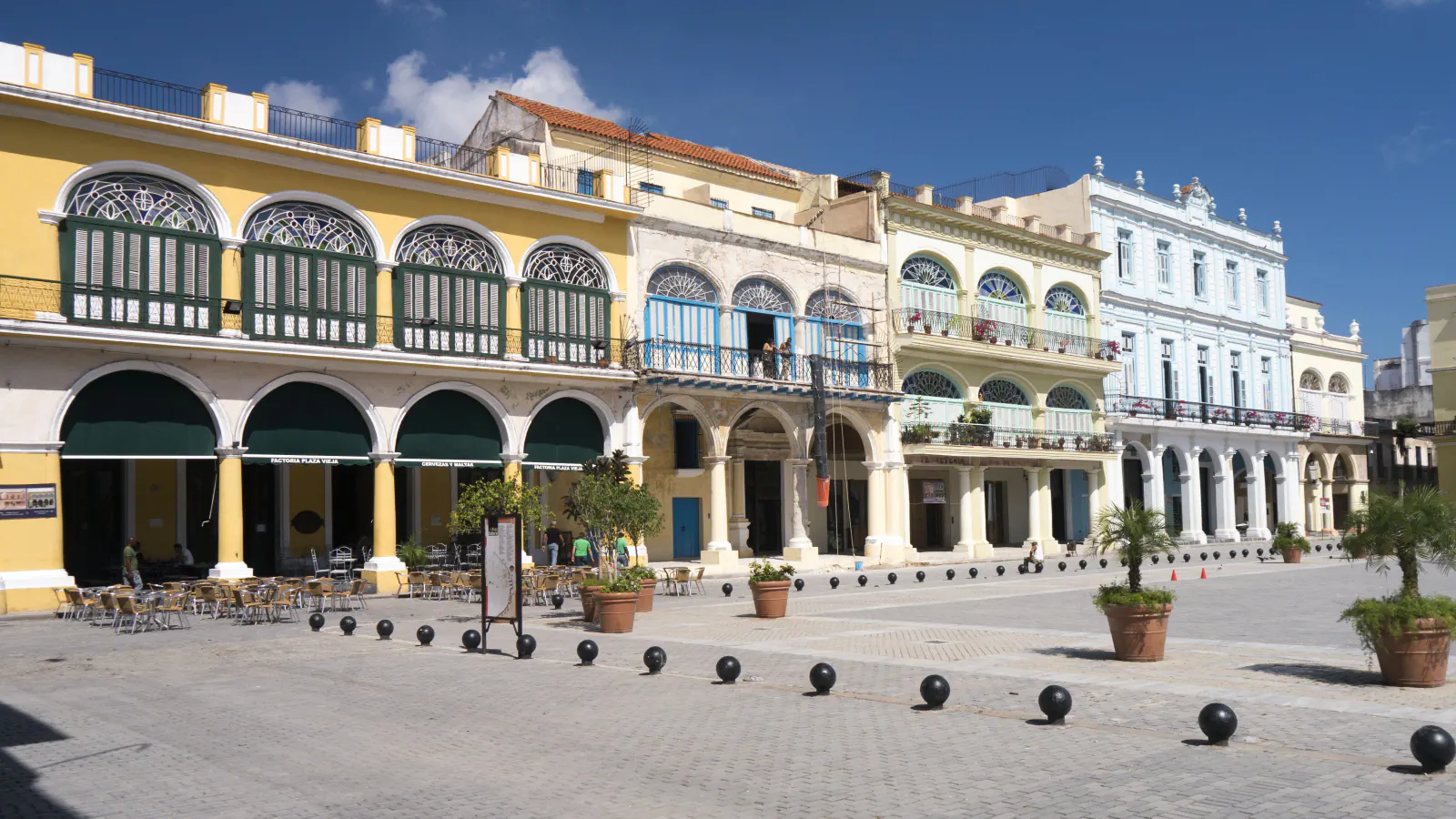
The study says Plaza Vieja began as the Plaza Nueva in the early seventeenth century. From the late seventeenth century, wealthy owners built stone cisterns under their courtyards to hold rain from the roofs, and the study cites a housing census of 1899 as recording cisterns in 46% of Havana’s dwellings. At the Casa de los Condes de San Juan de Jaruco (built in 1737, on Muralla street at San Ignacio), radar showed a stone structure 3 to 4 m wide in the south-west corner of the courtyard, matching a cistern that remains covered under the paving. In the Casa de los Condes de San Esteban de Cañongo (1816, on San Ignacio between Teniente Rey and Muralla) the survey found no sign of one. Earlier archaeological evidence suggests the site lies over remains of the Zanja Real, and the authors ask whether building the house in the nineteenth century had already made a cistern unnecessary.[1]
Good to know
A few clear answers before you explore.
Where did Havana’s water come from before the Zanja Real?
The Spanish public-works history says that in the first years barrels and jars were carried from the Chorrera and Luyanó rivers, by boat or overland, and that households also used wells and cisterns well into the nineteenth century: a statistical table of 1846 that it quotes lists 895 cisterns and 2,976 wells in Havana.[2]
Can any of the Zanja Real still be seen?
According to the 2022 study, one branch was uncovered in front of the Hostal Los Frailes on Teniente Rey street and its historic course is displayed there. The study adds that some of the aqueduct’s pipes are visible thanks to archaeological excavations.[1]
What is a cistern under an Old Havana courtyard?
A stone tank beneath the central patio that filled with rain collected from the roofs. The study says similar tanks exist in Spain and North Africa, and that once piped water arrived they became obsolete and were covered or filled in.[1]
The WorldStamped community
Every visit becomes part of a story.
- Members with public visits
- 0
- Places with public visits or memories
- 0
- Public memories
- 0
No public visits have been counted here yet. Add this destination to your own map and choose what you want to share.
Members are counted once. Counts include only eligible public activity from profiles that allow search discovery. Private and followers-only content is excluded.