City
A 44-part Buddha at Dushanbe’s antiquities museum
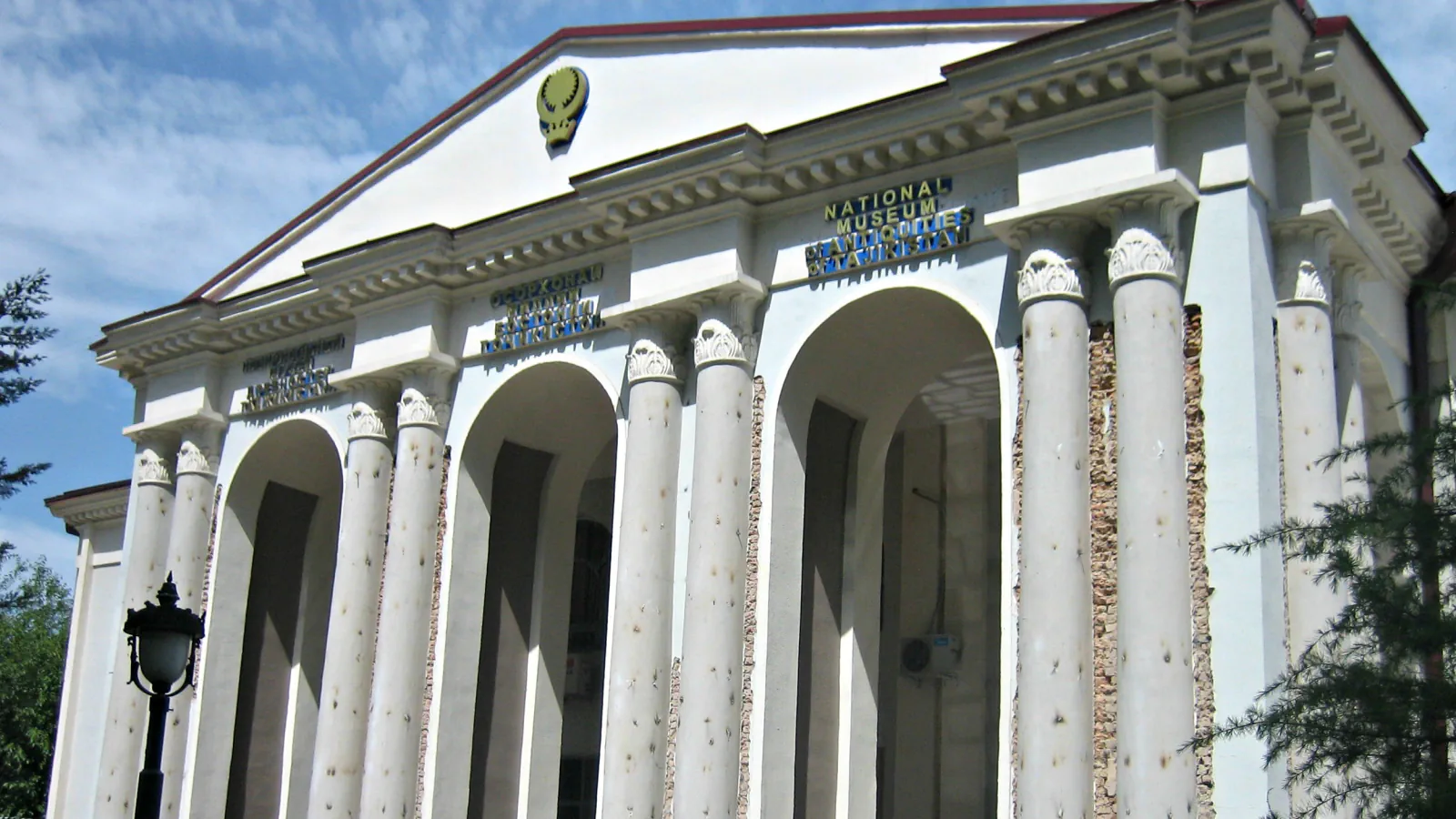
The clay Buddha in Nirvana from Ajina-Teppe reached Dushanbe in 44 parts. Ryukoku University’s account says the completed State Museum building enabled assembly to begin in 2000; restoration was finished for the museum’s September 2001 opening.
At a glance
- The Buddha’s 44 parts
- After excavation and field conservation, the clay sculpture was transferred to a restoration laboratory in Dushanbe in 44 parts.[2]
- Assembly began in 2000
- After the State Museum building was completed, restorers began assembling the statue in 2000; the restoration was finished for the September 2001 opening.[2]
- Penjikent painting
- The museum singles out a harpist among its 5th–7th-century wall paintings from ancient Penjikent.[1]
A place worth remembering
From 44 pieces to the museum
Ryukoku University’s page says the sculpture, excavated and conserved at Ajina-Teppe, was divided into 44 parts and sent to the laboratory of restoration and ethnography at the Academy of Sciences in Dushanbe. It adds that the finished State Museum of Antiquities building made it possible to begin assembling the statue in 2000. The restoration was complete for the museum’s September 2001 opening.[2]
A harpist among Penjikent paintings
The museum dates its wall paintings from ancient Penjikent to the 5th–7th centuries and calls the image of a harpist the gem of that collection.[1]
A Shahnameh tympanum from Bunjikat
The museum identifies a carved tympanum from the ruler’s palace at early-medieval Bunjikat in Sughd; its relief shows scenes from the Shahnameh.[1]
Good to know
A few clear answers before you explore.
When did assembly of the Buddha begin in the museum?
Ryukoku University’s account says the completed State Museum building enabled assembly to begin in 2000. Restoration was completed for the museum’s September 2001 opening.[2]
Where is the harpist image from?
The museum dates its wall paintings from ancient Penjikent to the 5th–7th centuries and singles out the image of a harpist, which it says has been exhibited in major museums abroad.[1]
What does the Bunjikat tympanum show?
The relief depicts scenes from the Shahnameh. The museum says the carved tympanum came from the ruler’s palace at early-medieval Bunjikat in Sughd.[1]
The WorldStamped community
Every visit becomes part of a story.
- Members with public visits
- 0
- Places with public visits or memories
- 0
- Public memories
- 0
No public visits have been counted here yet. Add this destination to your own map and choose what you want to share.
Members are counted once. Counts include only eligible public activity from profiles that allow search discovery. Private and followers-only content is excluded.