City
Buenos Aires: an abandoned river fill became wetland
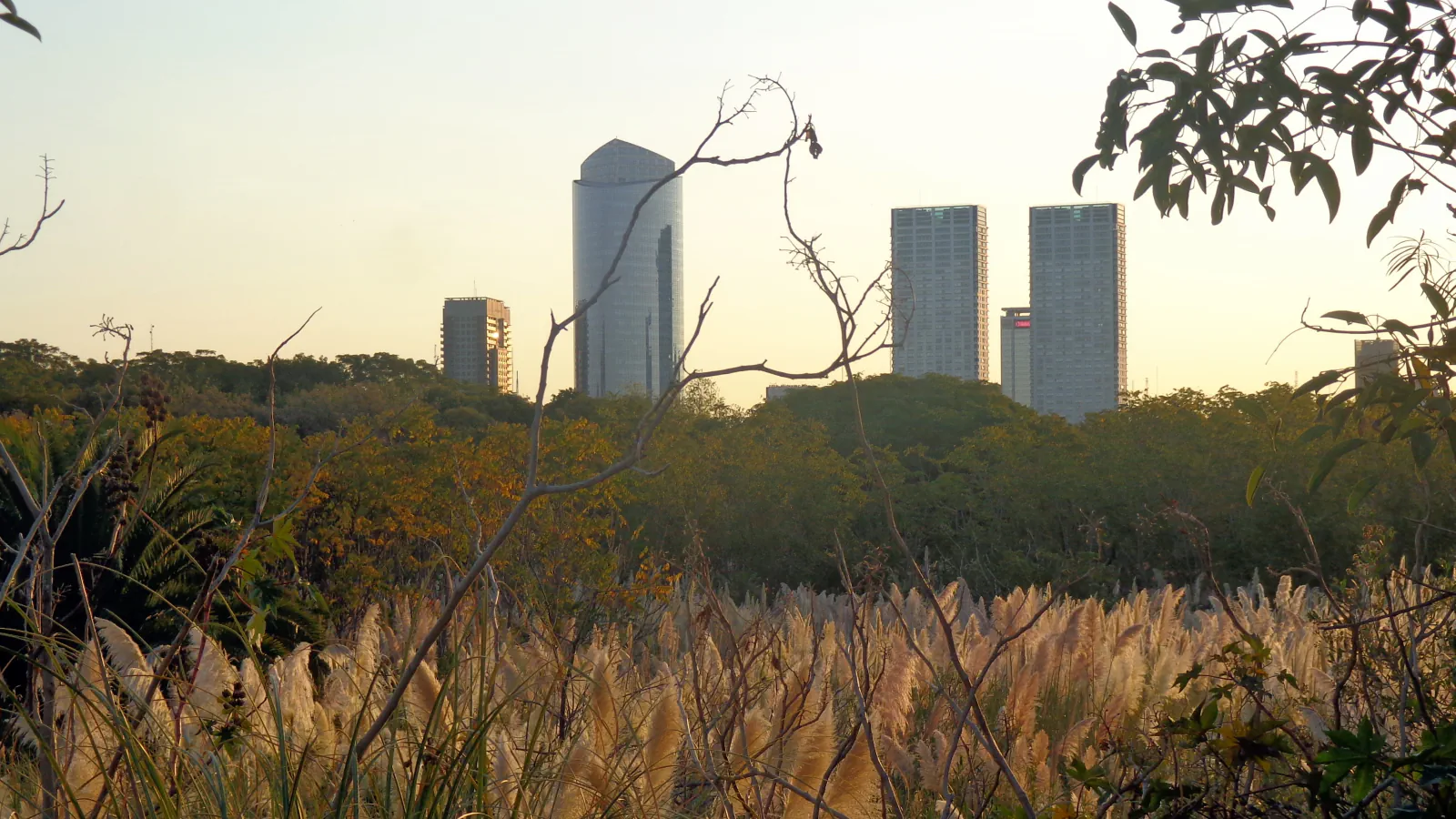
At Costanera Sur, abandoned river fill became wetland habitat shaped by floods and floating plant mats. Palacio de Aguas Corrientes was built for the city’s water supply; Recoleta occupies a former basilica orchard.
At a glance
A place worth remembering
Costanera Sur: wetland on abandoned river fill
Rubble was deposited along the Río de la Plata from 1978, and the city says the project was abandoned in 1984. Wild vegetation then covered the fill. Frequent floods and floating plant mats called camalotales helped shape different habitats. Ramsar’s 2005 site overview lists the wetland at 353 ha.[1][2]
Palacio de Aguas Corrientes: the city’s water works
Palacio de Aguas Corrientes was built as drinking-water storage and distribution infrastructure. Constructed between 1887 and 1894, its metal frame supports twelve tanks across three floors, with a combined capacity of 72 million litres. The façade combines more than 130,000 enamelled bricks and 170,000 ceramic pieces made in Belgium and England.[3][4]
Recoleta: cemetery on a former basilica orchard
Recoleta Cemetery occupies the former orchard of Basílica Nuestra Señora del Pilar. The city dates the cemetery to 1822 and credits its layout to French engineer Próspero Catelin.[5]
Good to know
A few clear answers before you explore.
What helped shape the Costanera Sur wetland?
The city describes wild vegetation spreading over the abandoned rubble fill; frequent floods and floating camalotales helped form different habitats.[1]
How much water could the Palacio de Aguas Corrientes hold?
Twelve tanks on three floors had a combined capacity of 72 million litres, supported by a metal frame.[3][4]
How is Recoleta connected to Basílica Nuestra Señora del Pilar?
The cemetery occupies the basilica’s former orchard; the city credits its layout to Próspero Catelin.[5]
The WorldStamped community
Every visit becomes part of a story.
- Members with public visits
- 0
- Places with public visits or memories
- 0
- Public memories
- 0
No public visits have been counted here yet. Add this destination to your own map and choose what you want to share.
Members are counted once. Counts include only eligible public activity from profiles that allow search discovery. Private and followers-only content is excluded.