🇦🇬Country
Antigua and Barbuda: a harbour offered in 1725, a 3,600 ha lobster-nursery lagoon and a snake back from about 50
Antigua and Barbuda’s islands hold three stories that sources can put numbers on: a naval dockyard at English Harbour on Antigua, listed by UNESCO in 2016; Codrington Lagoon, a protected wetland along the western and north-western side of Barbuda; and the Antiguan racer, a snake whose count has risen from about 50 to over 1,100 on Antigua’s small offshore islands.
At a glance
A place worth remembering
English Harbour, Antigua: a Georgian dockyard built for the climate
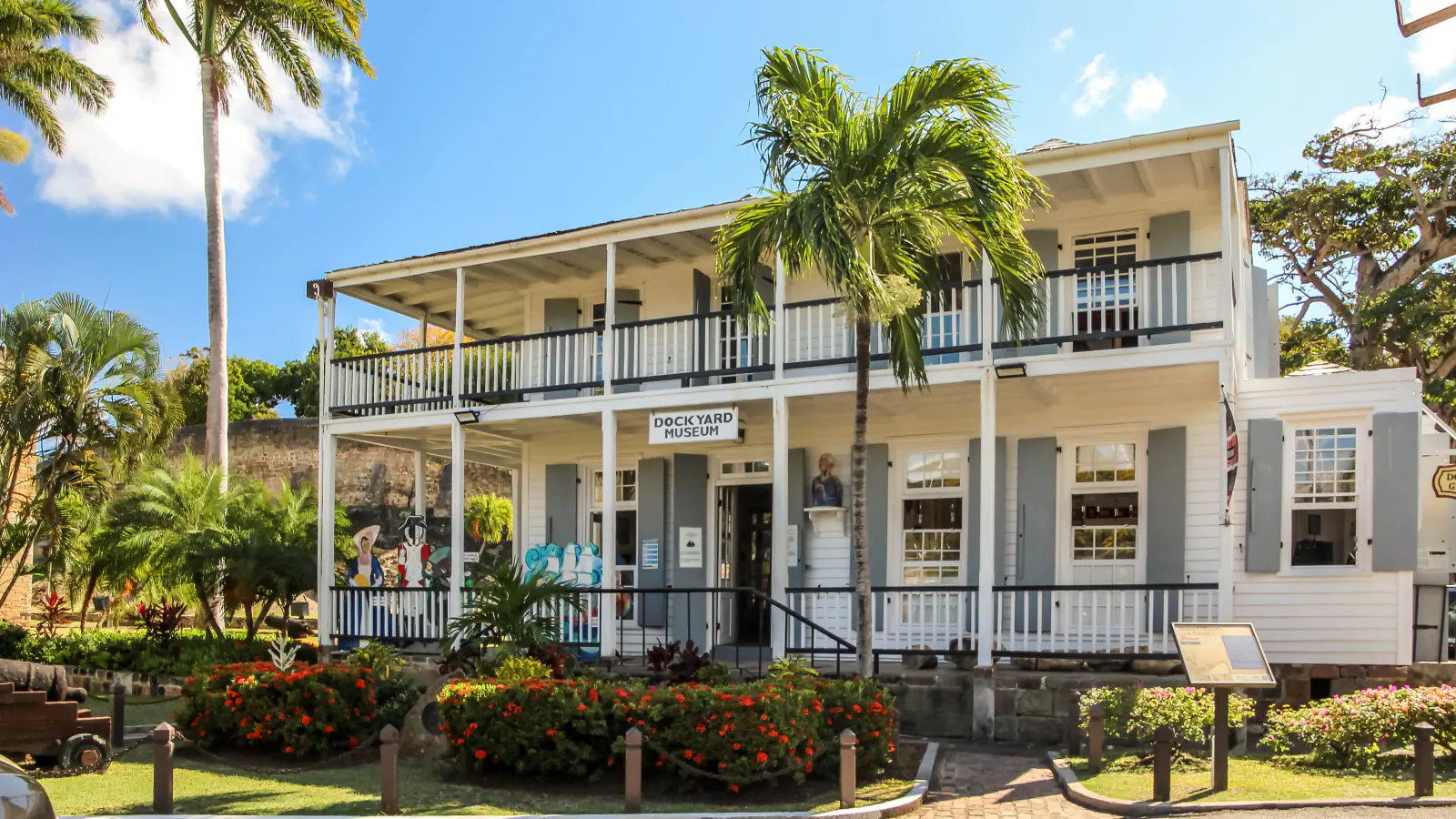
UNESCO inscribed the Antigua Naval Dockyard and Related Archaeological Sites in 2016; the property covers 255 ha, with a buffer zone of 3,873 ha. The Antigua and Barbuda National Parks Authority dates the harbour’s naval story to 1725, when sugar planters offered it to the British Crown, and says most of the Dockyard’s buildings went up between 1780 and 1820. It adds that more than 75 per cent of the Dockyard’s workers were historically enslaved Africans, among them shipwrights, blacksmiths, carpenters, caulkers and sailmakers. UNESCO’s statement singles out how the buildings were adapted: the Officers’ Quarters and the Senior Officer’s House gained features such as storm shutters and verandas to suit the Caribbean climate, and Clarence House shows English Georgian architecture modified for the tropical heat and the threat of disease.[1][2]
Codrington Lagoon, Barbuda: wetland, nursery and fishing ground
The western and north-western side of Barbuda, beside Codrington, the island’s only town, forms Ramsar site no. 1488, designated in 2005 and about 3,600 ha in size. The 2006 Ramsar Information Sheet, compiled by the national Fisheries Division, describes mangroves, seagrass beds, algal mats, tidal and mud flats, beaches and coral reefs, and says the lagoon is known as a primary nursery site for the Caribbean spiny lobster, Panulirus argus: larvae can be carried for thousands of kilometres by currents before settling among seagrass and algae, and the lobsters move to offshore reefs as they mature. It reports that more than half of the working population regularly used the lagoon for some part of their fishing, that hawksbill, green and leatherback turtles nest on beaches within the site, and that tourism there is largely centred on the frigate bird nesting colony. The lagoon was declared the Lagoon National Park in 2004; the sheet notes that management plans had yet to be developed.[3][4]
The Antiguan racer: from about 50 snakes to over 1,100 on four islets
Fauna & Flora says the Antiguan racer, Alsophis antiguae, is found only in Antigua and Barbuda, and that after rats and mongooses were introduced it declined until, by 1995, only about 50 survived on one offshore islet. A 2001 paper in the journal Oryx places those survivors on Great Bird Island, off Antigua’s north-east coast, and reports that the number of racers aged a year or more had fluctuated between 51 and 114 over five years. Fauna & Flora then describes the removal of rats from Great Bird Island and from 14 other islands around Antigua, followed by reintroductions to Rabbit, Green and York islands, and puts the wild population today at over 1,100 across four sites. It lists the snake as Critically Endangered, says it feeds on lizards and is harmless to people, and notes that it has twice been wrongly declared extinct, in 1936 and 2009.[5][6]
Good to know
A few clear answers before you explore.
Which island is each of the three places on?
The Dockyard is on Antigua, at English Harbour, and Codrington Lagoon is on Barbuda. The Antiguan racer now lives on four small islets off Antigua: Great Bird, Rabbit, Green and York.[1][3][5][6]
Why is it called Nelson’s Dockyard if UNESCO lists it as the Antigua Naval Dockyard?
The National Parks Authority says the yard was historically called His Majesty’s Yard in English Harbour or the Antigua Naval Dockyard, and after it was abandoned it became known as the Old Dockyard. The name Nelson’s Dockyard was adopted only after the site was identified as a possible heritage site; Horatio Nelson served in Antigua from 1784 to 1787.[2][1]
What still threatens the Antiguan racer?
Fauna & Flora names the rising number of visitors to the offshore islands where it lives, the constant threat of invasive alien species and coastal development, and says it still supports monitoring for rats re-invading the islands cleared of them.[5]
The WorldStamped community
Every visit becomes part of a story.
- Members with public visits
- 0
- Places with public visits or memories
- 0
- Public memories
- 0
No public visits have been counted here yet. Add this destination to your own map and choose what you want to share.
Members are counted once. Counts include only eligible public activity from profiles that allow search discovery. Private and followers-only content is excluded.