🇸🇱Country
Bunce archaeology, Gola nests and Loma flora
A shell-mortar floor found on Bunce Island in 2013 suggests another building. Studies of Picathartes gymnocephalus colonies in Gola and Jaeger’s inventory of Loma Mountains flora add two other forms of field evidence.
At a glance
- Bunce Island, 2013 test excavations
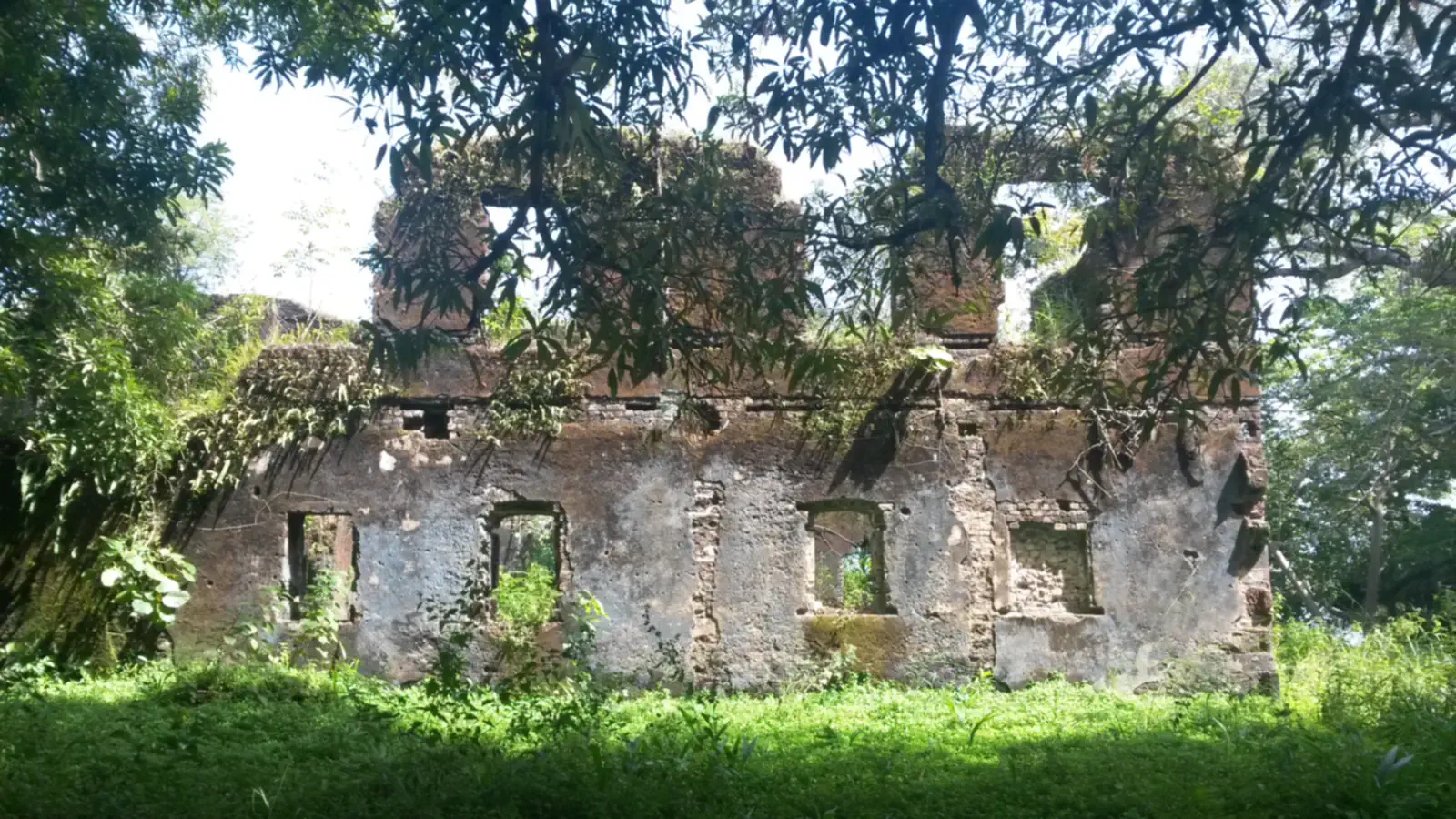
- Test excavations at the Men’s Slave Yard revealed a floor made with mortar containing shells; DeCorse reads associated traces as signs of a possible counterpart to the Women’s Yard building (2014).[1]
- Gola–Tiwai primate surveys
- UNESCO’s 2025 decision says surveys begun in 2012 indicate that primate populations, even of heavily hunted taxa, had returned to levels similar to those of the 1980s.[2]
- Loma Mountains angiosperm inventory
- 1,576 angiosperm species, subspecies or varieties in the Loma Mountains and foothill inventory (Jaeger, 1983 abstract).[4]
A place worth remembering
Bunce Island: a floor that points to another structure
Test excavations behind Bunce Island’s Men’s Slave Yard revealed a shell-mortar floor in 2013. DeCorse reads it, with other features, as a sign that a building once stood there that mirrored the masonry building behind the Women’s Slave Yard.[1]
Gola–Tiwai: survey comparisons and nesting colonies
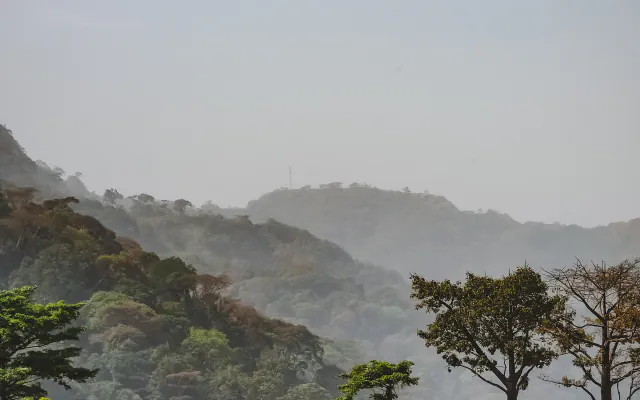
UNESCO’s 2025 decision compares primate survey findings in the Gola–Tiwai Complex with levels recorded in the 1980s. It presents the comparison as an indication that populations, even of taxa that had been heavily hunted, returned to similar levels; the surveys cited began in 2012. Monticelli’s separate 2006–10 study followed Picathartes gymnocephalus colonies in the Gola area. The reserve colonies it tracked remained active in each survey year; monitored colonies outside the reserve had a higher chance of an inactive year.[2][3]
Loma Mountains: what Jaeger’s inventory counted
Jaeger’s 1983 abstract covers the Loma Mountains and foothill country. It counts 1,576 angiosperm taxa, including species, subspecies and varieties, and reports no gymnosperms in the recorded flora.[4]
Good to know
A few clear answers before you explore.
Is the possible building behind Bunce Island’s Men’s Slave Yard confirmed?
DeCorse treats it as a possibility: the 2013 excavation found a floor made with mortar containing shells, along with other clues. In his account, the evidence points to a building like the masonry one behind the Women’s Slave Yard.[1]
How does the Picathartes nest count compare with the model?
During 2006–10 fieldwork, observers recorded 157 active nests across 40 colonies. A separate predictive distribution model estimated that the survey region could contain as many as 234 nests.[3]
What is included in Jaeger’s 1,576 total?
The 1983 abstract counts species, subspecies and varieties of angiosperms from the Loma Mountains and foothills; it also reports no gymnosperms.[4]
The WorldStamped community
Every visit becomes part of a story.
- Members with public visits
- 0
- Places with public visits or memories
- 0
- Public memories
- 0
No public visits have been counted here yet. Add this destination to your own map and choose what you want to share.
Members are counted once. Counts include only eligible public activity from profiles that allow search discovery. Private and followers-only content is excluded.