🇵🇭Country
Philippines: terraces, tidal river and bamboo organ
In Ifugao, woodlots above the rice terraces retain rainfall; Palawan’s underground river opens to the sea; Las Piñas’ organ has 902 bamboo pipes among 1,031.
At a glance
- Function of the upper woodlots (muyung)
- They retain rainfall and nutrients, then release them gradually to terraces below.[2]
- Puerto-Princesa river and park watershed
- The brackish lower river is tide-influenced; the park boundary includes its full watershed.[3]
- Bamboo pipes in the Las Piñas organ
- 902 of 1,031[4]
A place worth remembering
Ifugao: forests above the terraces
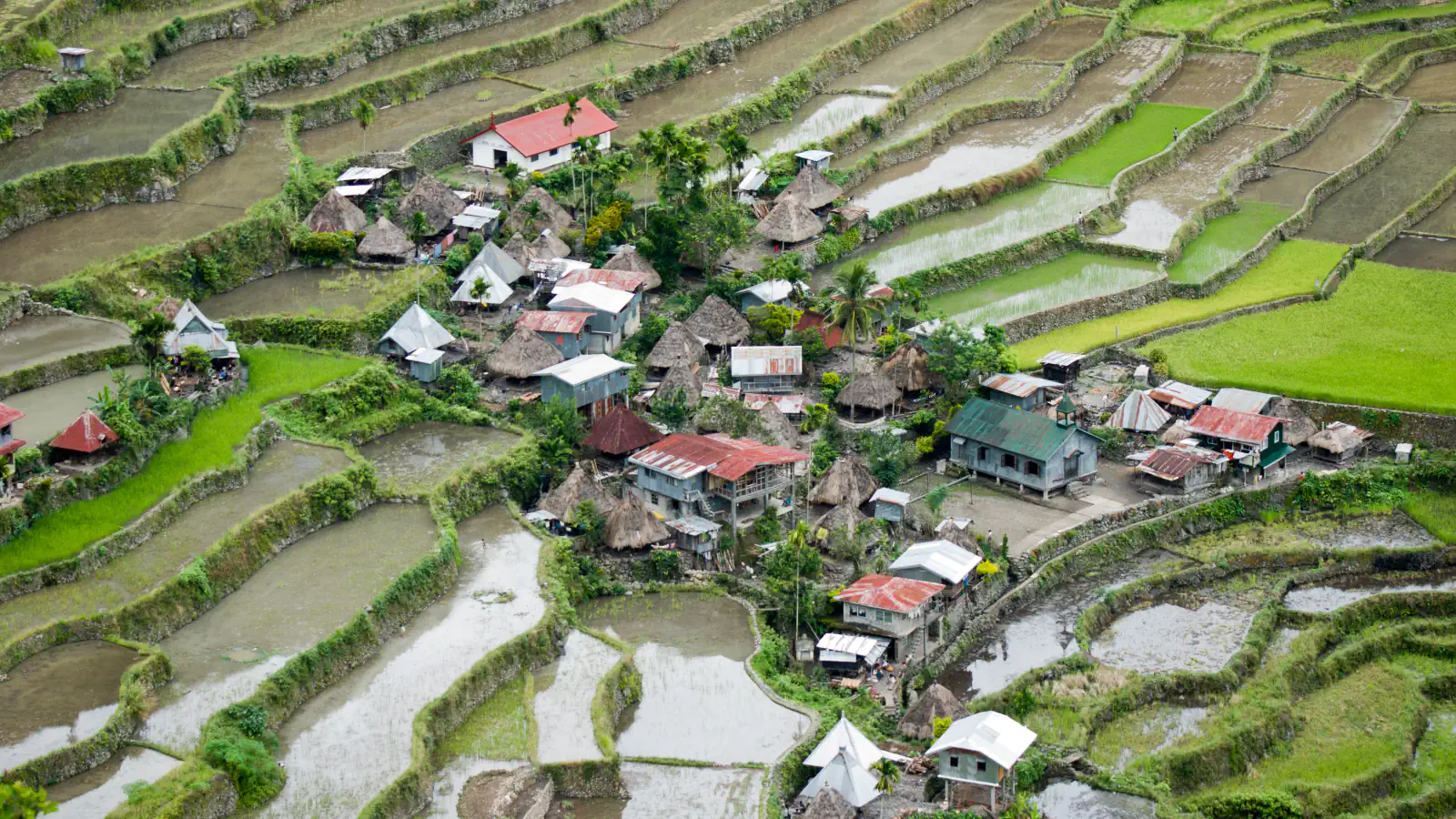
The terraces are part of a wider agroecosystem. In the DENR framework, upper woodlots (muyung) retain rainwater and nutrients, then release them gradually to the rice fields below.[2]
Palawan: a river connected to its watershed
At Puerto-Princesa, the underground river reaches the sea. UNESCO describes its lower half as brackish and influenced by tides.[3]
Las Piñas: bamboo among the organ pipes
The organ is housed at St. Joseph Parish Church. A Las Piñas City Government account counts 902 bamboo pipes within the instrument’s total of 1,031; the remaining pipes are metal.[4]
Good to know
A few clear answers before you explore.
Are the UNESCO-listed terraces only in Banaue?
No. UNESCO also names the Hungduan and Mayoyao terrace clusters, and Nagacadan in Kiangan; Batad and Bangaan are in Banaue.[1]
What does the park include beyond the underground river?
Its boundary includes the river’s full watershed. UNESCO says this helps protect water quality and quantity.[3]
What happened to the Las Piñas organ in the 1880s?
The city government says a typhoon and an earthquake damaged the church roof, letting rainwater and stones into the organ case and leaving it unplayable for years. Restoration began in 1972 with Johannes Klais Orgelbau; the organ went to Bonn in 1973 and returned in 1975.[4]
The WorldStamped community
Every visit becomes part of a story.
- Members with public visits
- 0
- Places with public visits or memories
- 0
- Public memories
- 0
No public visits have been counted here yet. Add this destination to your own map and choose what you want to share.
Members are counted once. Counts include only eligible public activity from profiles that allow search discovery. Private and followers-only content is excluded.