🇲🇨Country
The Oceanographic Museum and Larvotto’s seabed
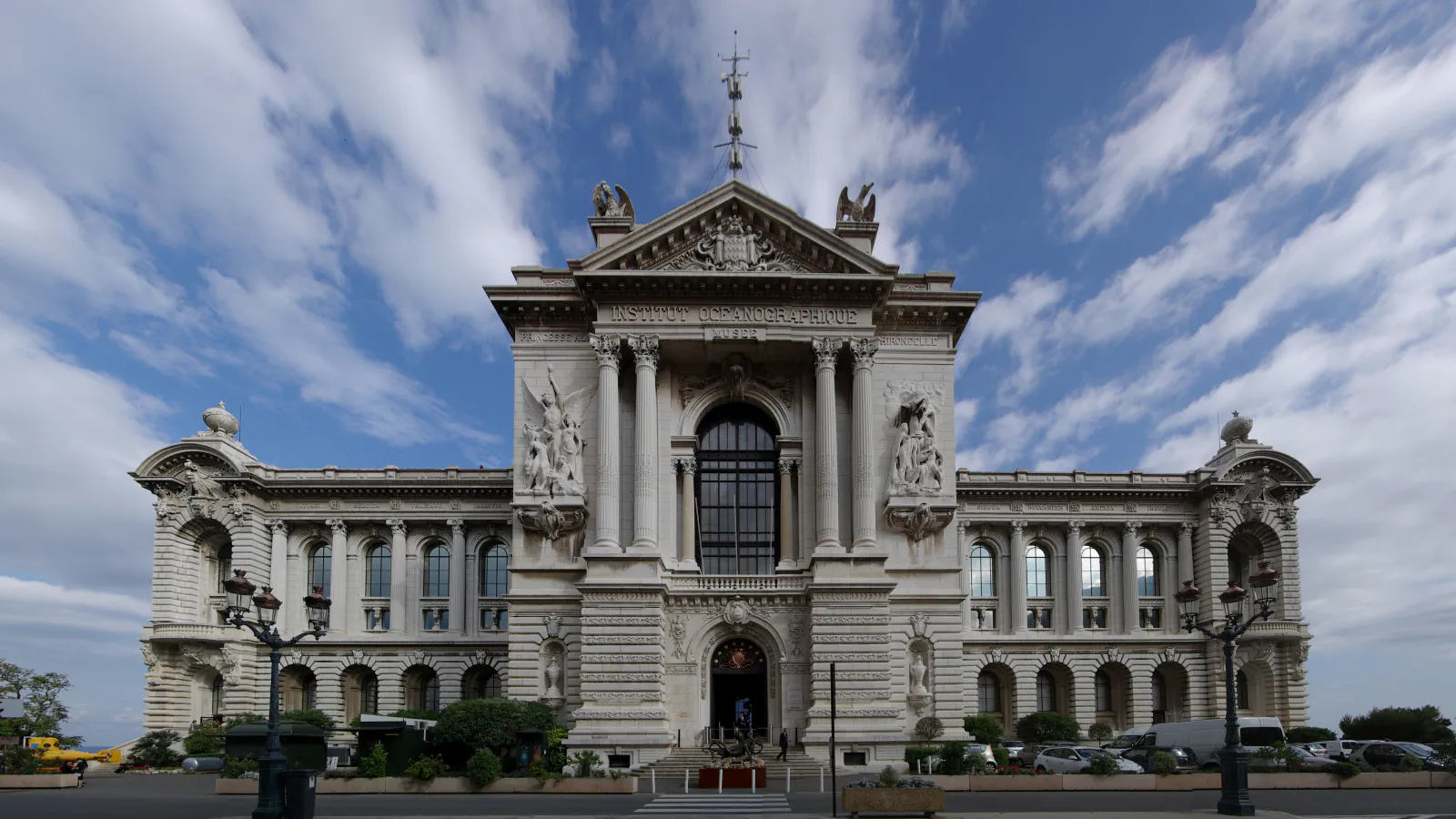
The Oceanographic Museum uses its façade as a record of marine science: its cornice bears 20 ship names selected by Prince Albert I, while the museum says most historical objects came from his 28 oceanographic campaigns. A 2008 account of Larvotto describes a Posidonia meadow and artificial reefs installed between 1977 and 1992.
At a glance
A place worth remembering
A façade tied to scientific voyages
The Oceanographic Museum’s 100-metre façade is built of La Turbie limestone and carries marine ornament. Its cornice bears 20 scientific ship names selected by Albert I from a list by Jules Richard, the first director. The museum says most historical objects came from Albert I’s 28 oceanographic campaigns between 1884 and 1915.[1][2]
A Spitsbergen canvas and Albert I Land
A large canvas by Louis Tinayre, made in 1906, shows the Isachsen mission crossing a glacier. The museum says that in the 1906 and 1907 campaigns Prince Albert I paid for a number of overland expeditions; Captain Gunnar Isachsen led two of them, and his team surveyed and mapped a previously unexplored part of north-western Spitsbergen, now called Albert I Land.[1]
Larvotto’s reef structures as habitat
A 2008 account describes Larvotto’s coastal habitat through both seagrass and built reef structures: a Posidonia oceanica meadow lies 8–25 metres deep, and 32 artificial reefs were installed between 1977 and 1992. The report says their rough surfaces support attached organisms while cavities shelter fish and invertebrates.[3]
Good to know
A few clear answers before you explore.
What links the museum façade to scientific voyages?
Its cornice carries 20 scientific ship names chosen by Albert I from a list prepared by Jules Richard, the first director.[1]
What does the museum say about the origin of its historical collection?
Most of those objects came from 28 oceanographic campaigns Albert I conducted between 1884 and 1915; the museum also retains campaign-instrument prototypes.[2]
How do the Larvotto reefs provide habitat?
The 2008 account says their rough surfaces can support attached organisms, while cavities shelter fish and invertebrates. It also records 32 reefs installed from 1977 to 1992.[3]
The WorldStamped community
Every visit becomes part of a story.
- Members with public visits
- 0
- Places with public visits or memories
- 0
- Public memories
- 0
No public visits have been counted here yet. Add this destination to your own map and choose what you want to share.
Members are counted once. Counts include only eligible public activity from profiles that allow search discovery. Private and followers-only content is excluded.