City
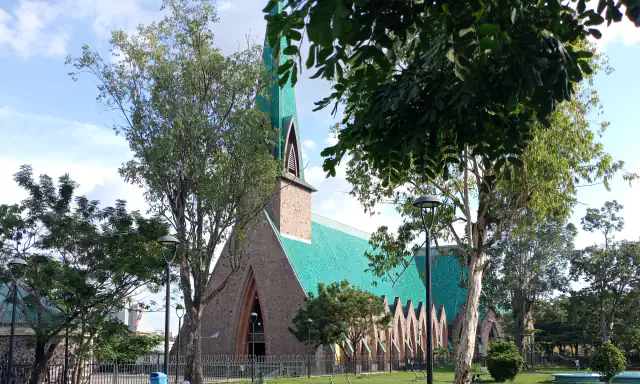
Libreville, where a church tower was framed with a liner’s yards
At Sainte-Marie, the 1900 tower’s metal frame is formed from four sail-carrying yards of a liner. Nearby, Saint-Michel’s carved pillars bear Bible scenes; the arts museum began in an ethnomusicologist’s villa.
At a glance
A place worth remembering
Sainte-Marie: a tower framed with ship spars
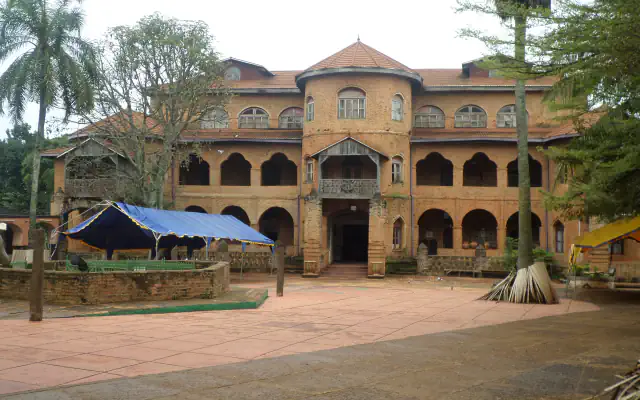
Saint-Michel de Nkembo: biblical scenes in carved wood
L’Union describes the church’s carved supports as a biblical program: Old Testament scenes appear on the porch’s double row of columns, while New Testament scenes run along the left side. The paper names Gabonese carver Zéphyrin Lendogno for the pillars and credits Juan Ndong with the main altar.[3][4]
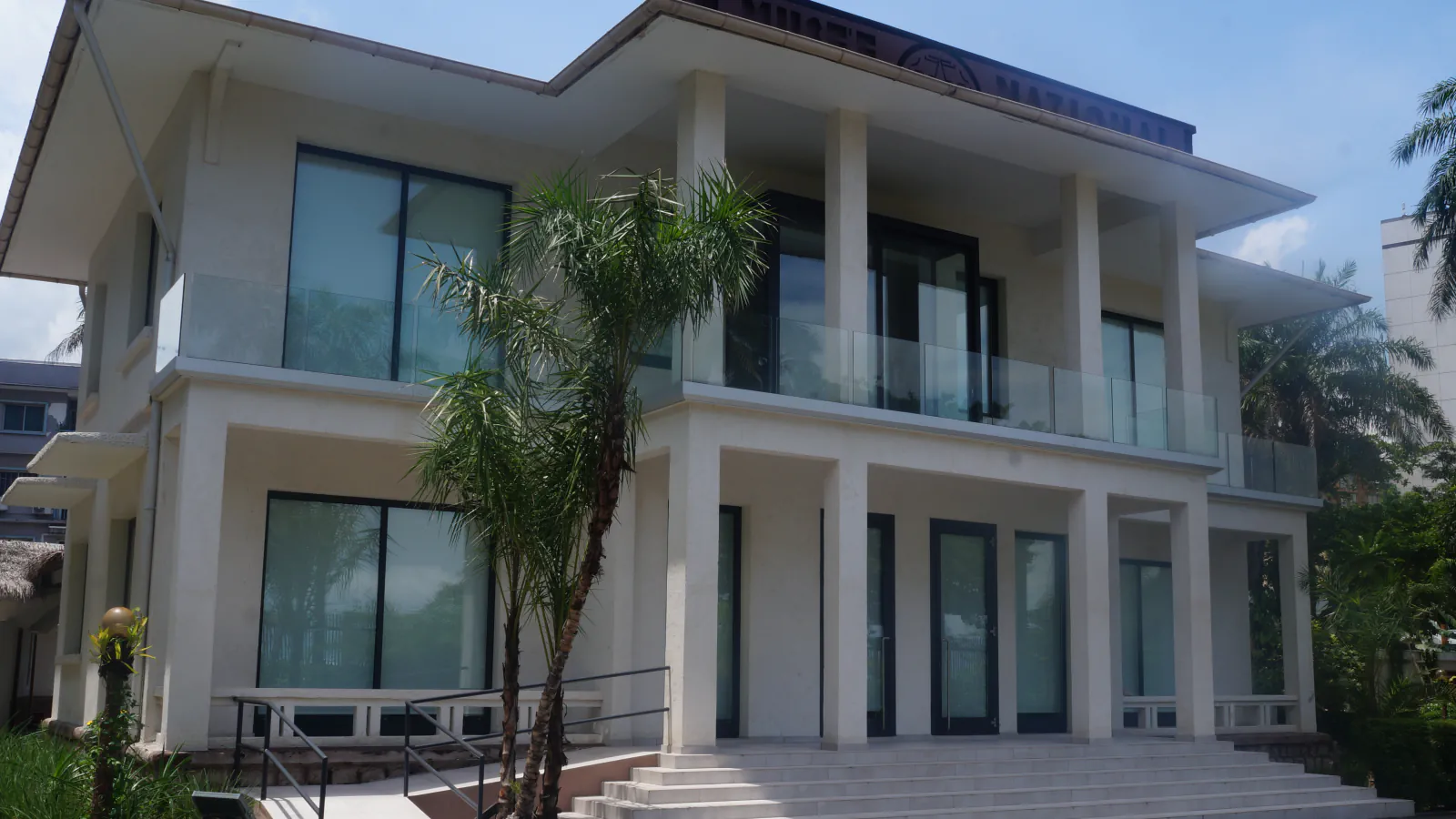
The arts museum: an exhibition that began in a villa
Good to know
A few clear answers before you explore.
What supports the Sainte-Marie tower?
The archdiocese says the 1900 metal framework was formed from the four large yards of the liner Ville-de-Maceió; yards are a ship’s sail-carrying spars.[1]
Which artists did L’Union credit at Saint-Michel?
The paper names Zéphyrin Lendogno for the carved pillars and credits Juan Ndong with the main altar.[3]
Where did Libreville’s museum collection begin?
Perrois records that Herbert Pepper housed the small collection in his villa at Montagne-Sainte, where the museum opened in 1963.[5]
The WorldStamped community
Every visit becomes part of a story.
- Members with public visits
- 0
- Places with public visits or memories
- 0
- Public memories
- 0
No public visits have been counted here yet. Add this destination to your own map and choose what you want to share.
Members are counted once. Counts include only eligible public activity from profiles that allow search discovery. Private and followers-only content is excluded.