🇮🇲Country
Isle of Man: two waterwheels, a peat wetland and a crofting village
The waterwheels of Laxey on the east coast, the Ballaugh Curragh wetland in the north and the village of Cregneash in the south each sit in a different part of the Isle of Man. The island and the sea around it together form a UNESCO biosphere reserve. Other places are not covered here.
At a glance
A place worth remembering
Laxey: two waterwheels, one mining valley
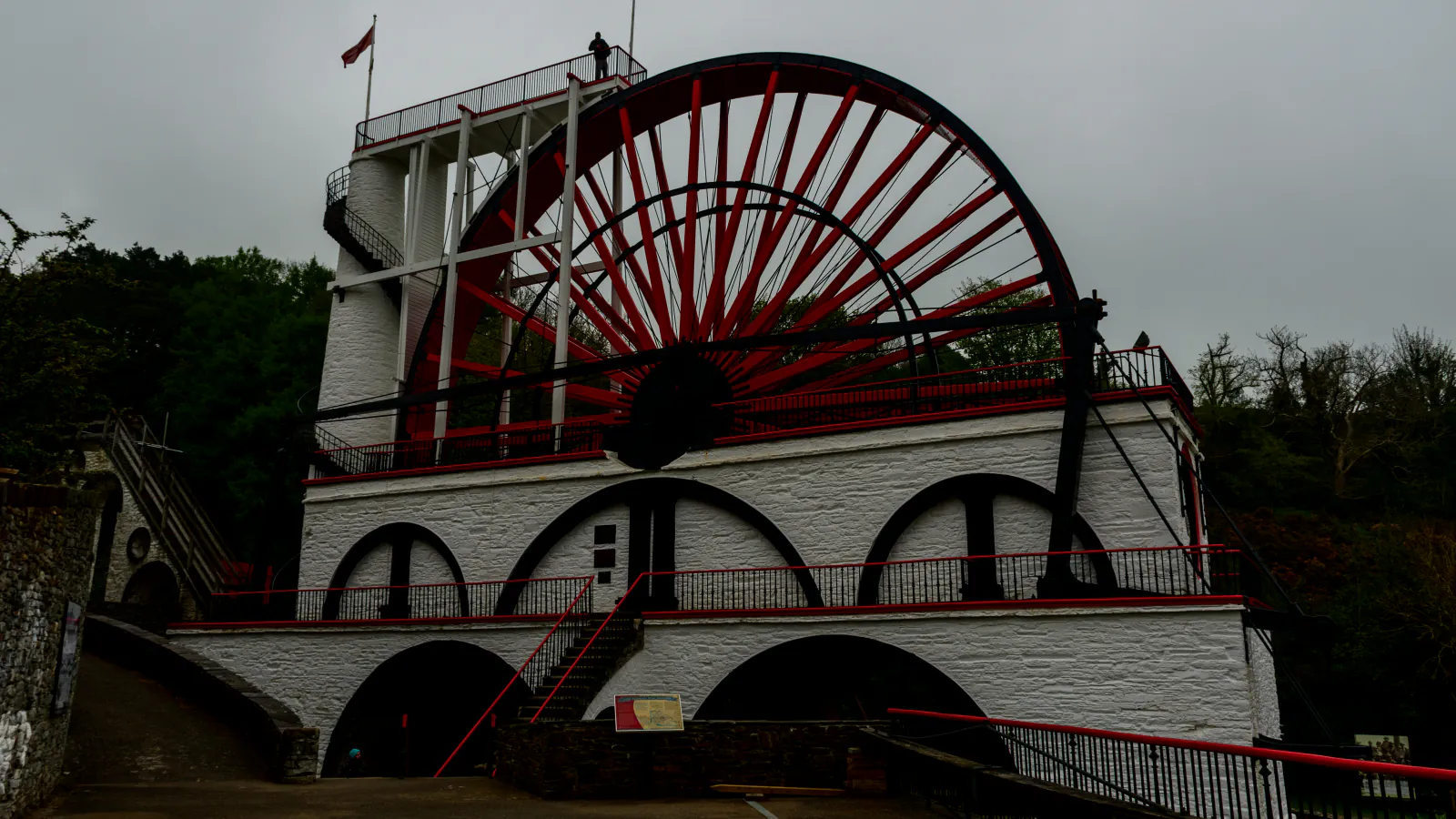
The Great Laxey Wheel, known as Lady Isabella, was designed by the engineer Robert Casement and first opened in 1854. It pumped water out of the Laxey mines and was driven by water from Glen Mooar; Manx National Heritage gives its diameter as 72 ft 6 in, over 22 m. The mine closed for the last time in 1929 and the wheel stopped. In December 1937 Edwin Kneale of Lonan leased it to save it from demolition, in October 1946 he bought it before a planned auction, and in 1965 he passed it into public ownership. A second, smaller wheel stands in Laxey village. The Snaefell Mining Company ordered a 50-ft wheel in 1865 for its mine 4 km north-west of Laxey. By 1910 the mine and its wheel were redundant; the wheel went to a Cornish mining firm, which used it until 1950, and it later lay in pieces on a Welsh hillside. The Laxey Mines Research Group brought it home, and in 2006 it was completed on the site of the Great Laxey Mine’s old washing floors and named Lady Evelyn.[1][2][3]
Ballaugh Curragh: willow scrub on peat
In the north of the island, about 8 km west of Ramsey, Ballaugh Curragh is a mosaic of peatland habitats dominated by grey willow and birch scrub that is known locally as curragh. The Ramsar information sheet of 2006 puts its area at about 193 ha, at 10 to 20 m above sea level. It describes the curragh as a once-plentiful source of fish, waterfowl and willow, and its peat as a record of historical pollen that also holds archaeological value. Birds named in the sheet include a winter roost of hen harriers, with a five-year mean peak count of 82 in 1996/97 to 2000/01, and the corncrake, which settled at Close Sartfield Nature Reserve in 1999 and bred there in 2000. In summer the traditionally managed meadows show thousands of orchids.[4][5]
Cregneash: a crofting village above the Calf of Man
Cregneash lies on a plateau in the south with a view across to the Calf of Man. Manx National Heritage calls it one of the last strongholds of the Manx language and runs it as an open-air folk museum, where traditional Manx cottages show how crofters lived and worked; some are thatched in a style the museum calls traditional Manx. Loaghtan sheep are among the animals kept there, and paths lead to Meayll Hill, a megalithic chambered tomb, and to the rock formations known as the Chasms. UNESCO’s biosphere page counts Manx Gaelic among the six Celtic languages, together with Irish, Scottish Gaelic, Welsh, Breton and Cornish.[6][7]
Good to know
A few clear answers before you explore.
Are there other waterwheels in Laxey?
Yes. Besides Lady Isabella, a smaller 50-ft wheel named Lady Evelyn stands in Laxey village. The Snaefell Mining Company ordered it in 1865 for the Snaefell Mine, it later worked in Cornwall until 1950, and the Laxey Mines Research Group had it reinstalled in 2006.[3]
What does “curragh” mean at Ballaugh?
The Ramsar information sheet uses it as the local name for a habitat of grey willow and birch scrub on peat. The sheet calls it a once-typical but now increasingly rare and fragmented habitat, and says it was historically a plentiful source of fish, waterfowl and willow.[4][5]
Which language is Cregneash linked with?
Manx Gaelic. Manx National Heritage describes the village as one of the last strongholds of the Manx language, and UNESCO lists Manx Gaelic as one of the six Celtic languages.[6][7]
The WorldStamped community
Every visit becomes part of a story.
- Members with public visits
- 0
- Places with public visits or memories
- 0
- Public memories
- 0
No public visits have been counted here yet. Add this destination to your own map and choose what you want to share.
Members are counted once. Counts include only eligible public activity from profiles that allow search discovery. Private and followers-only content is excluded.