🇮🇪Country
Ireland: solstice light, Clare’s changing rock layers and Skellig Michael
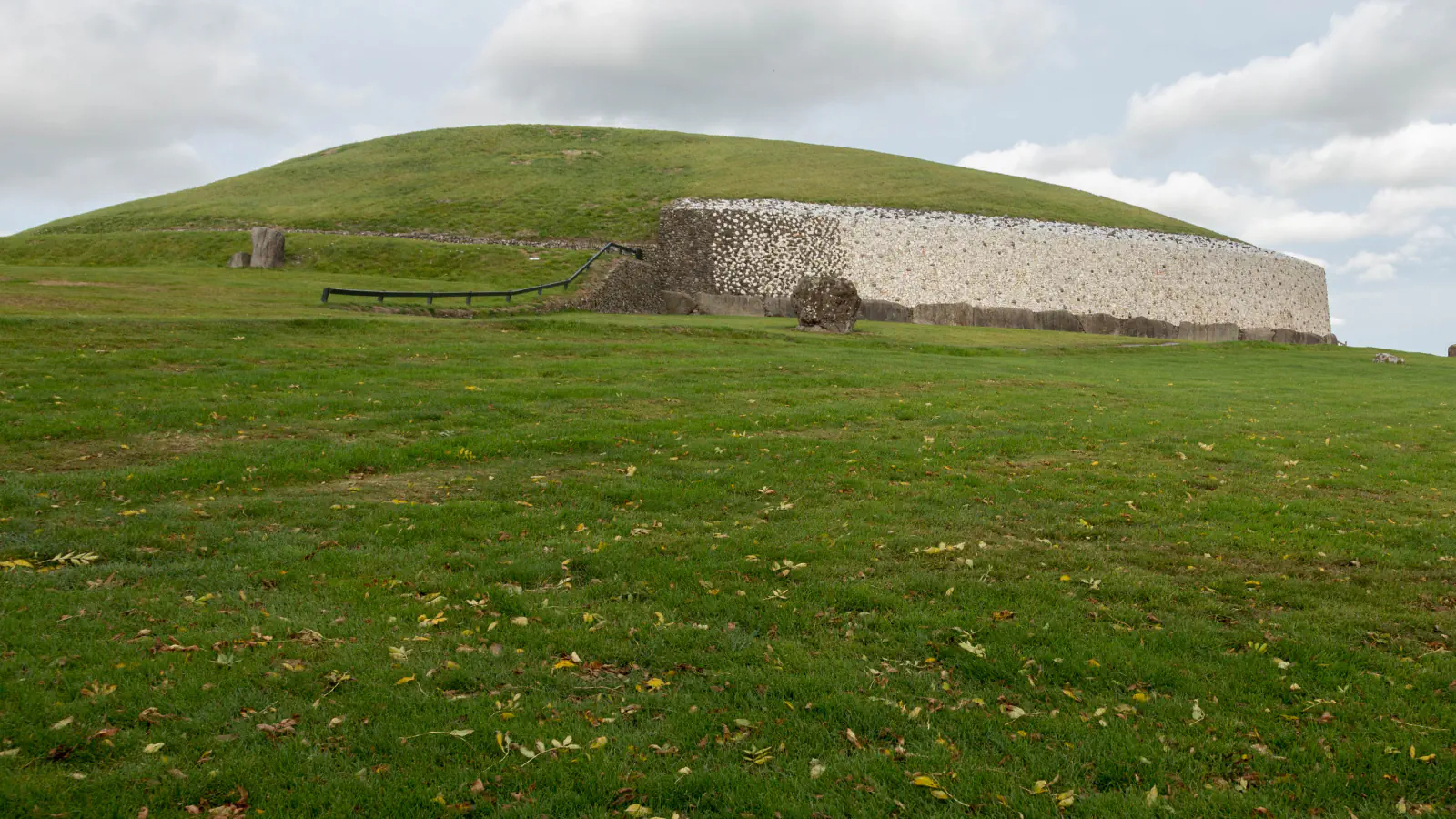
At Newgrange, a roof box admits midwinter sunlight to the chamber. Along County Clare, the Cliffs of Moher and the Burren preserve different chapters of an ancient landscape; on Skellig Michael, a monastery and hermitage occupy distinct slopes above the Atlantic.
At a glance
A place worth remembering
Newgrange: the roof box and the solstice beam
At the winter-solstice sunrise, the roof box—a small opening above Newgrange’s entrance—can bring light into the chamber. Its duration depends on the weather and can reach 17 minutes. Heritage Ireland’s 2018 magazine dates Michael J. O’Kelly’s rediscovery of the phenomenon to 21 December 1967.[1][6]
Cliffs of Moher: a shift from sea to delta
An INFOMAR seabed-survey update from 2023 dates the shale and sandstone of the Cliffs of Moher to 313–326 million years ago, while the Burren limestone to the north is older, dating to 330–346 million years ago. The limestone formed in shallow, warm tropical seas; the transition to shale marks a shift to delta conditions. The cliffs also fall within a geopark recognised by UNESCO.[2][3]
Skellig Michael: monastery and hermitage on steep ground
UNESCO places the monastery on a sloping ledge of Skellig Michael’s north-eastern ridge, while the hermitage occupies South Peak, the island’s steeper high ground. Its listing gives no foundation year but dates the monastery’s dedication to St Michael to 950–1050. Heritage Ireland places the monks’ departure in the thirteenth century.[4][5]
Good to know
A few clear answers before you explore.
Does the winter sun enter Newgrange through its doorway?
No—the chamber’s solstice light comes through the separate roof box above the entrance. In suitable weather, the beam can remain visible for as long as 17 minutes.[1]
What change do the cliffs’ rock layers record?
The older Burren limestone formed in warm, shallow tropical seas. INFOMAR interprets the transition into the younger Moher shale as a shift to delta conditions.[3]
What is known about the monastery’s dates?
UNESCO gives no founding year; its listing dates the monastery’s dedication to St Michael to 950–1050. Heritage Ireland places the monks’ departure in the thirteenth century.[4][5]
The WorldStamped community
Every visit becomes part of a story.
- Members with public visits
- 0
- Places with public visits or memories
- 0
- Public memories
- 0
No public visits have been counted here yet. Add this destination to your own map and choose what you want to share.
Members are counted once. Counts include only eligible public activity from profiles that allow search discovery. Private and followers-only content is excluded.