🇬🇶Country
Equatorial Guinea: a Bioko timber church, Annobón’s volcanic past and a Monte Alén camera-trap pilot
A 2026 Equatorial Guinea submission to UNESCO describes Bioko’s neo-Gothic church at Batete as almost entirely tropical timber. A 1994 geology paper compares volcanic-rock ages on islands in the Cameroon line; a 2019 camera-trap pilot reported by Bristol Zoological Society at Monte Alén detected chimpanzees and western lowland gorillas.
At a glance
- Annobón (Pagalu)
- Lee et al. (1994) give exposed volcanic-rock ages of 31 Ma on Príncipe, 13 Ma on São Tomé and 4.8 Ma on Pagalu; their abstract says the sequence becomes younger oceanward.[1]
- Batete
- Equatorial Guinea’s 2026 state submission dates construction to 1922–26. WMF says its 2020–21 campaign replaced a temporary roof that had remained on the church since 2003.[4][5]
- Monte Alén
- In a 2019 pilot, six camera traps detected chimpanzees on four cameras and western lowland gorillas on two, according to the June 2020 programme report.[6]
A place worth remembering
Batete on Bioko: a neo-Gothic timber church
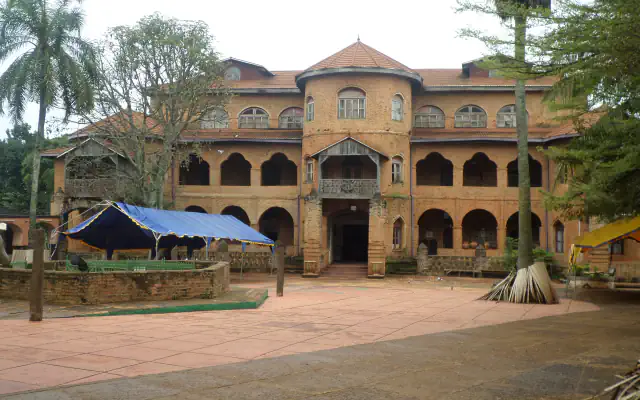
World Monuments Fund’s account of the church before restoration notes leaning timber posts and roof leaks. It says a stopgap roof put up in 2003 was still there 15 years later. WMF’s 2020–21 campaign replaced that roof and added equipment to monitor the structure. Equatorial Guinea’s 2026 UNESCO Tentative List submission dates the neo-Gothic church to 1922–26, credits Luis Sagarra with the design and describes it as almost entirely tropical timber. The submission says local workers built it, while the stained-glass windows and bell were imported.[4][5]
Annobón: volcanic ages across the Cameroon line
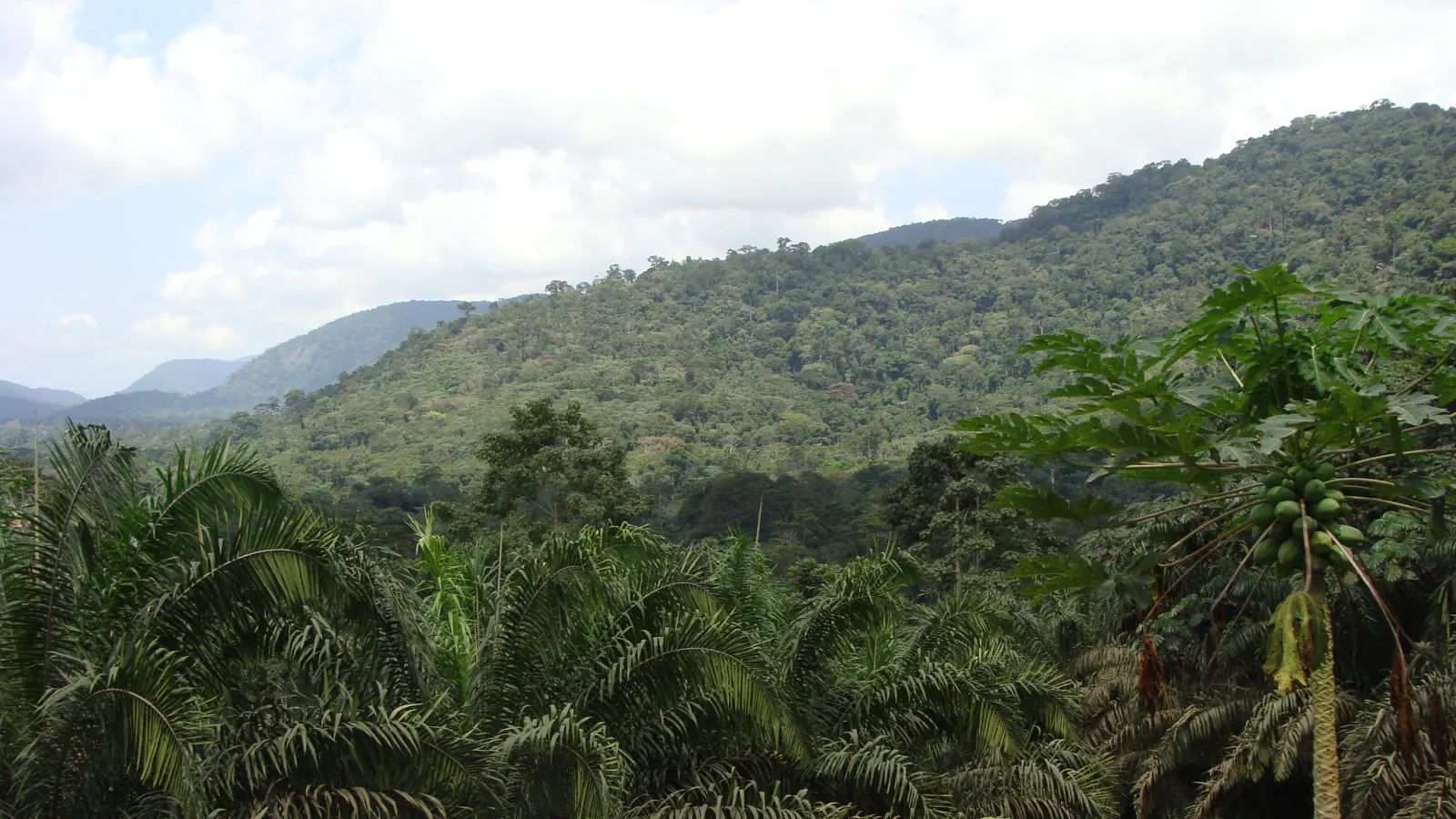
Lee and colleagues’ 1994 geology paper uses Pagalu for Annobón; EVE’s entry identifies Pagalu as an earlier name for the same island. Lee and colleagues’ abstract dates exposed volcanic rock there to 4.8 Ma, compared with 31 Ma on Príncipe and 13 Ma on São Tomé. It says the exposed-rock ages become younger towards the ocean, consistent with the authors’ suggested African-plate motion. A 2026 Equatorial Guinea Tentative List submission separately estimates Annobón’s formation at about 4.8 million years and places its last volcanic activity less than 100,000 years ago.[1][2][3]
Monte Alén: a 2019 camera-trap pilot
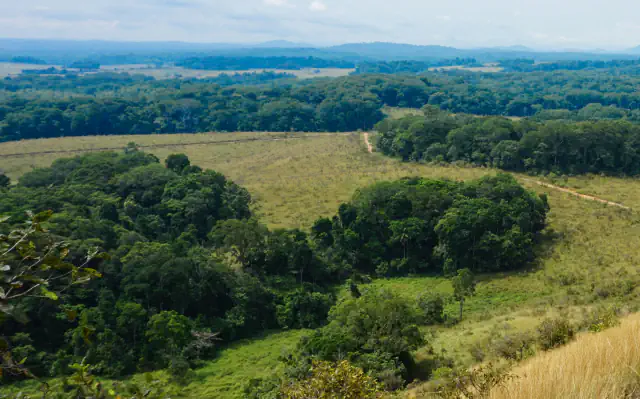
A June 2020 report by Bristol Zoological Society describes a camera-trap pilot at Monte Alén, begun in 2019. Six cameras covered about 30 km². Across a mean deployment of 114 days they produced more than 8,000 images; the report says chimpanzees were detected on four cameras and western lowland gorillas on two.[6]
Good to know
A few clear answers before you explore.
Which name does the 1994 geology paper use for Annobón?
It uses Pagalu; EVE’s 2009 entry identifies Pagalu as an earlier name for today’s Annobón.[1][2]
What restoration work did Batete receive?
The state submission dates the church to 1922–26. WMF says the 2020–21 campaign replaced the temporary roof put in place in 2003 and added equipment to monitor the structure.[4][5]
What did the 2019 camera-trap pilot at Monte Alén record?
The June 2020 report describes six cameras deployed in 2019: chimpanzees were detected by four cameras and western lowland gorillas by two.[6]
The WorldStamped community
Every visit becomes part of a story.
- Members with public visits
- 0
- Places with public visits or memories
- 0
- Public memories
- 0
No public visits have been counted here yet. Add this destination to your own map and choose what you want to share.
Members are counted once. Counts include only eligible public activity from profiles that allow search discovery. Private and followers-only content is excluded.