🇭🇷Country
Croatia, between coastal cities and living lakes
Croatia’s heritage takes several forms: the maritime city of Dubrovnik, the palace embedded in Split and the freshwater landscape of Plitvice. A country marker can hold them together; individual place memories keep their very different stories clear.
At a glance
A place worth remembering
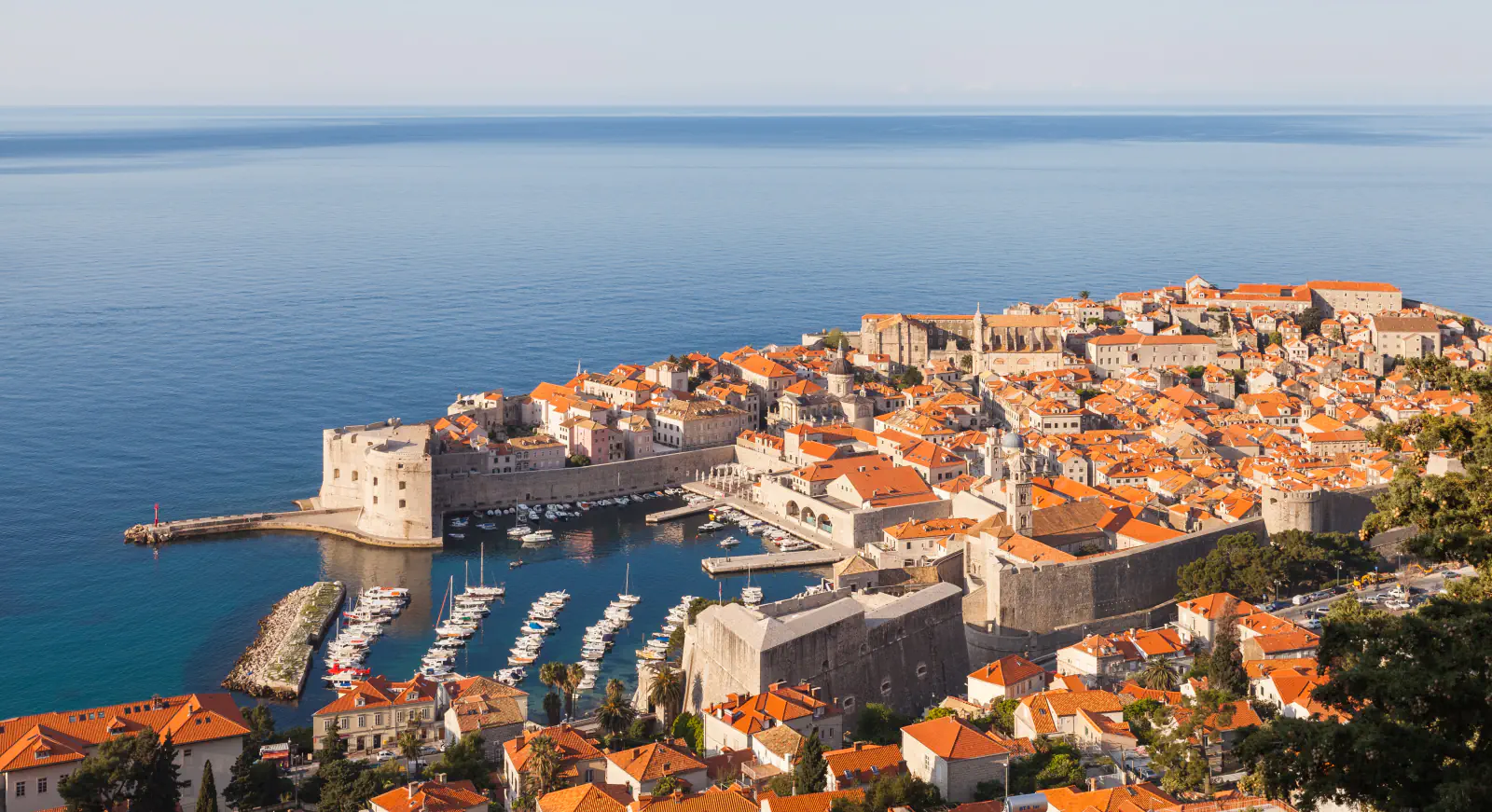
Dubrovnik: a maritime city in stone
Dubrovnik’s position on the Dalmatian coast helps explain its past as a Mediterranean maritime power. Its importance grew from the thirteenth century. Gothic, Renaissance and Baroque buildings remain part of the old city’s fabric, despite the destructive earthquake of 1667 and later damage during the 1990s. The old city entered the UNESCO World Heritage List in 1979. When looking across the rooftops, think of a city shaped by commerce, rebuilding and conservation rather than a single historical moment.[1]
Split: the palace is part of the city
Diocletian’s Palace dates from the late third and early fourth centuries. In Split, its remains belong to the city’s historic fabric, alongside buildings from later periods. The medieval cathedral reused the ancient mausoleum, while Romanesque churches and Gothic, Renaissance and Baroque palaces added further layers. This makes Split a useful place to notice how buildings change function. A photograph of a square or a doorway can record the meeting of Roman structures and the city that developed around them.[2]
Plitvice: the barriers are still being made
Plitvice’s lakes are connected through a water system that includes waterfalls and underground flows. Sixteen larger lakes have names; smaller unnamed lakes are also part of the system. Tufa, a form of calcium-carbonate deposit, builds barriers that hold water back. Their growth and erosion continue to reshape the lakes. The surrounding forest is part of the protected landscape, rather than a backdrop added to the water. Plitvice has been on the UNESCO list since 1979. This is a landscape to understand as an ongoing process, not a fixed arrangement of pools.[3][4]
Good to know
A few clear answers before you explore.
How many named lakes are there at Plitvice?
The park identifies 16 larger named lakes and additional smaller unnamed lakes. Waterfalls connect them, while tufa barriers separate their waters.[4]
Is Diocletian’s Palace separate from historic Split?
Its remains are integrated into the city’s historic fabric. Later churches and palaces form part of the same protected historical complex.[2]
When did Dubrovnik receive UNESCO recognition?
The Old City of Dubrovnik was inscribed on the UNESCO World Heritage List in 1979.[1]
The WorldStamped community
Every visit becomes part of a story.
- Members with public visits
- 0
- Places with public visits or memories
- 0
- Public memories
- 0
No public visits have been counted here yet. Add this destination to your own map and choose what you want to share.
Members are counted once. Counts include only eligible public activity from profiles that allow search discovery. Private and followers-only content is excluded.