🇨🇫Country
Forest, stone and savanna in the Central African Republic
At Dzanga Bai, researchers tracked forest elephants over twenty years; near Bouar, archaeologists built a tazunu chronology from charcoal dates.
At a glance
A place worth remembering
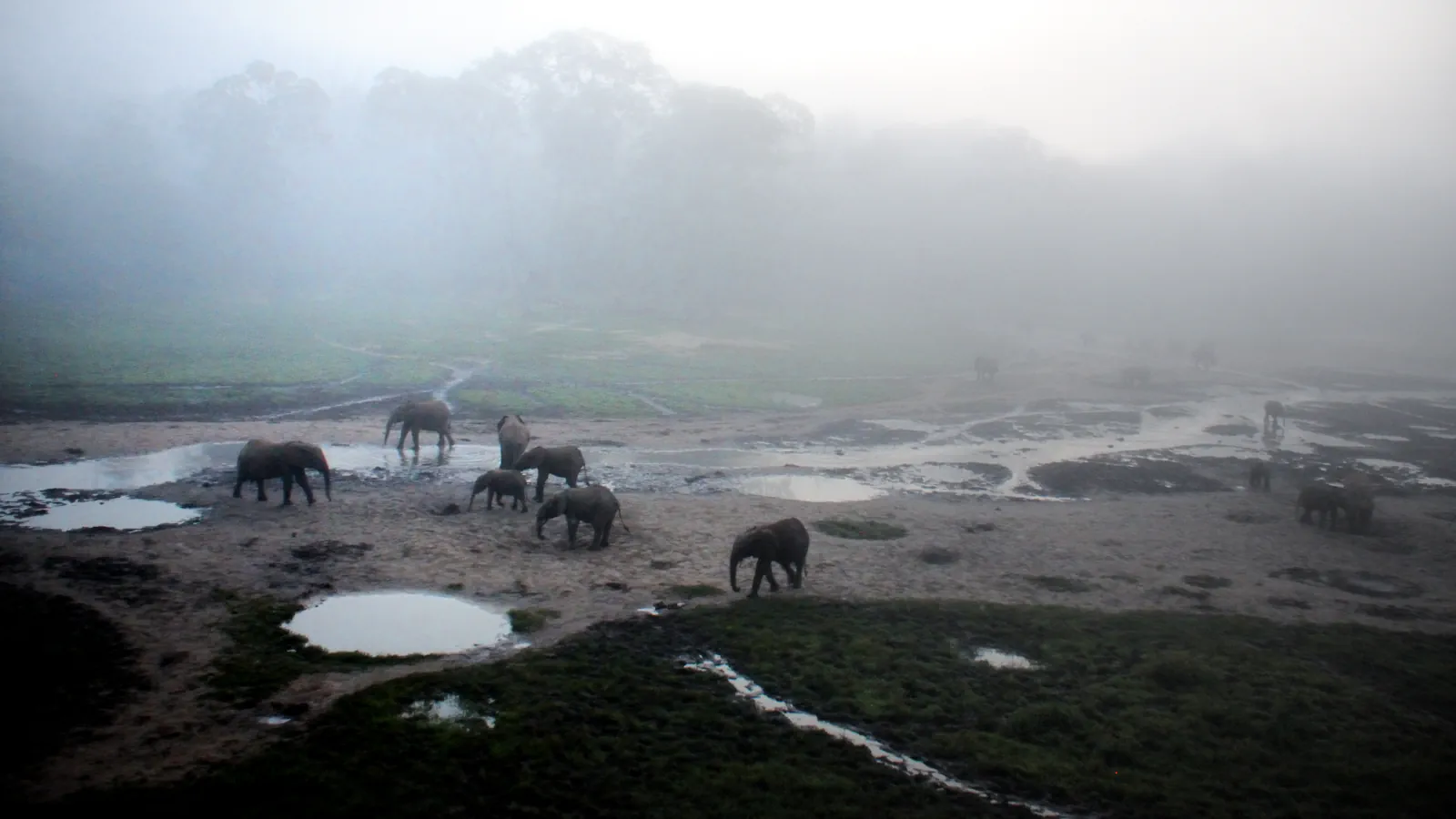
Following the elephants of Dzanga Bai
Each elephant was given an identity card with drawings of the marks that set it apart: torn or holed ears, tusks, tail shape and scars. The paper’s abstract reports 3,128 elephants identified in 1990–2010.[1]
Dating Bouar’s standing stones
Zangato calls the Bouar-region monuments tazunu, the Gbaya-Kara generic term for “standing stone.” His 1996 article draws on a base of 72 radiocarbon dates on charcoal, covering research up to the last campaign, in 1994. Its chronology places the megalithic period roughly between 1000 BC and AD 1800.[3]
A north–south transition in Manovo-Gounda
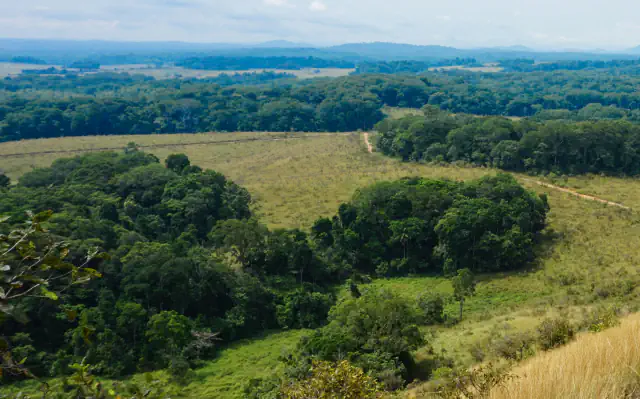
UNESCO’s description of Manovo-Gounda traces a habitat shift from northern grassland to southern savanna and gallery forest. The park spans the Sudano-Sahelian and Sudano-Guinean biogeographic zones.[4]
Good to know
A few clear answers before you explore.
What does “bai” mean?
Turkalo and colleagues explain that the local Babenzélé word refers to a naturally occurring forest clearing; elephants dig there for minerals or clay.[1]
What is UNESCO’s status for Bouar’s megaliths?
UNESCO lists “Les mégalithes de Bouar” on the Central African Republic’s Tentative List; the submission is dated 11 April 2006.[2]
What does UNESCO’s Aka singing listing describe?
A four-voice contrapuntal vocal tradition in the country’s south-west, used in ceremonies for new camps, hunting and funerals. UNESCO inscribed it in 2008, after its original proclamation in 2003.[5]
The WorldStamped community
Every visit becomes part of a story.
- Members with public visits
- 0
- Places with public visits or memories
- 0
- Public memories
- 0
No public visits have been counted here yet. Add this destination to your own map and choose what you want to share.
Members are counted once. Counts include only eligible public activity from profiles that allow search discovery. Private and followers-only content is excluded.