City
Budapest: Roman organ, iron market hall and Rudas Turkish bath
Three very different public places leave different kinds of evidence: a Roman dedication dates an organ gift, the Great Market Hall’s design brief explains its iron frame, and Rudas pairs a 16th-century Turkish bath with a later swimming facility.
At a glance
A place worth remembering
Aquincum: an organ given to an association in AD 228
The museum describes the organ as small and portable, with 52 pipes in four rows. The dedicatory inscription dates the gift to AD 228 and names Gaius Julius Viatorinus and the textile merchants’ collegium; the collegium also had the public task of fire detection and firefighting in the Civil Town. The Latin name hydra points toward water operation, though the museum notes that some argue it ran on air.[1][3][2]
The Great Market Hall: iron chosen for fire safety
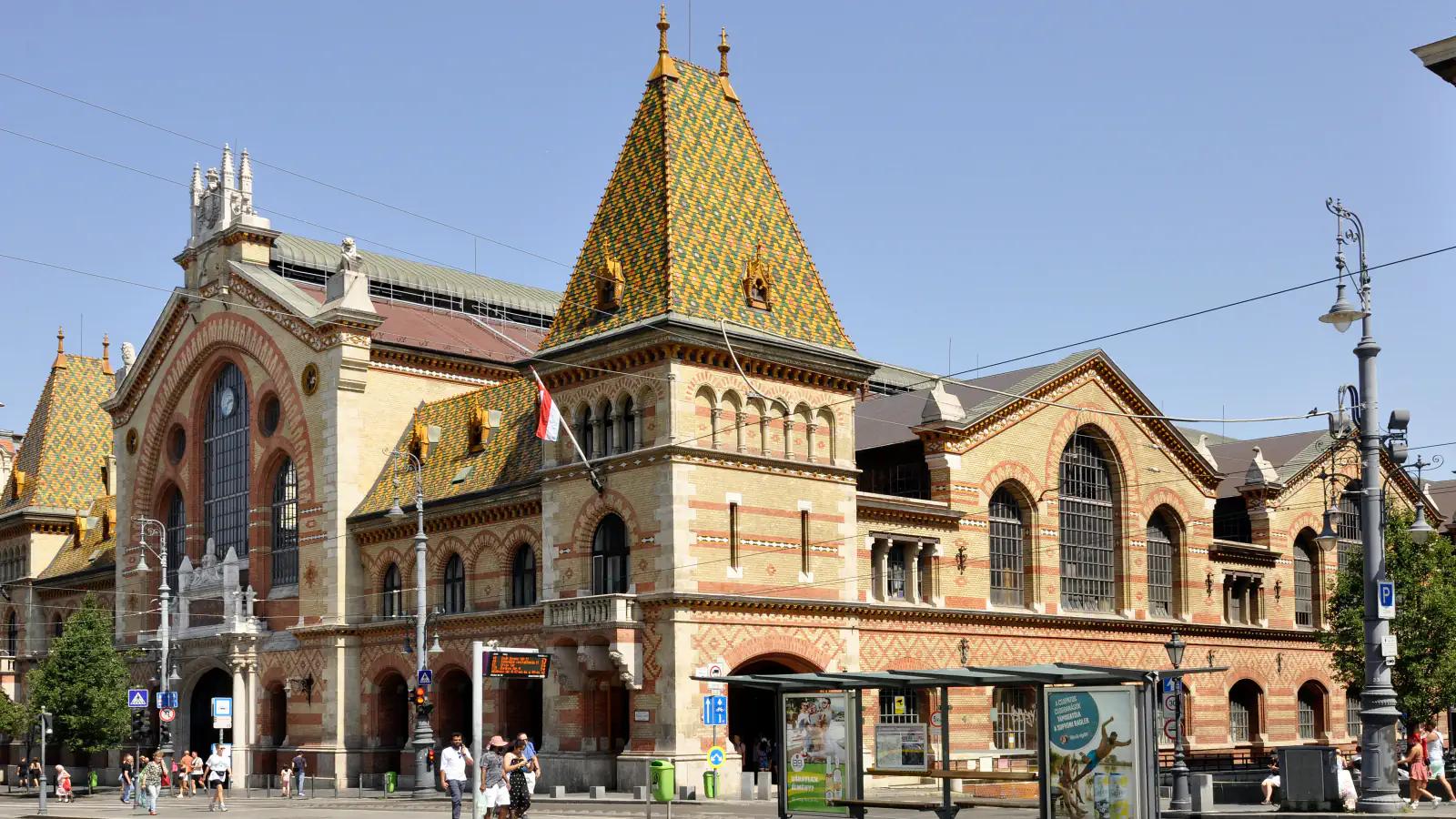
The 1892 tender required an iron supporting frame, chiefly to reduce fire risk and also for economy. Nine entries arrived and the jury accepted Samu Pecz’s design; work began in 1894. It opened in February 1897. The project also included a railway track and freight tunnel; Schlick made the steelwork, and Zsolnay supplied the coloured ceramics. It closed as unsafe in 1991 and reopened after a restoration completed in 1994.[4]
Rudas: a Turkish bath, a dome and an octagonal pool
Good to know
A few clear answers before you explore.
What do we know about the Aquincum organ?
The dedication places the gift in AD 228 and names Gaius Julius Viatorinus as its donor. The museum says hydra suggests water operation, but records a continuing debate about whether air powered the organ.[1][3]
Why does the Great Market Hall have an iron frame?
The 1892 design brief required iron mainly to reduce fire risk; it also appeared to be an economical structural choice.[4]
Where are the three places on a map?
Aquincum lies in Óbuda. The Great Market Hall stands at Fővám tér. The Rudas Thermal Bath is at Döbrentei tér 9, at the foot of Gellért Hill in Buda.[3][6]
The WorldStamped community
Every visit becomes part of a story.
- Members with public visits
- 0
- Places with public visits or memories
- 0
- Public memories
- 0
No public visits have been counted here yet. Add this destination to your own map and choose what you want to share.
Members are counted once. Counts include only eligible public activity from profiles that allow search discovery. Private and followers-only content is excluded.