🇧🇳Country
Brunei: river homes, one forest hectare and fossil leaves
Kampong Ayer’s houses changed as building materials became available. At Kuala Belalong, a one-hectare plot held 278 tree species; samples from two Brunei fossil sites show a striking difference between leaves and pollen.
At a glance
- Kampong Ayer
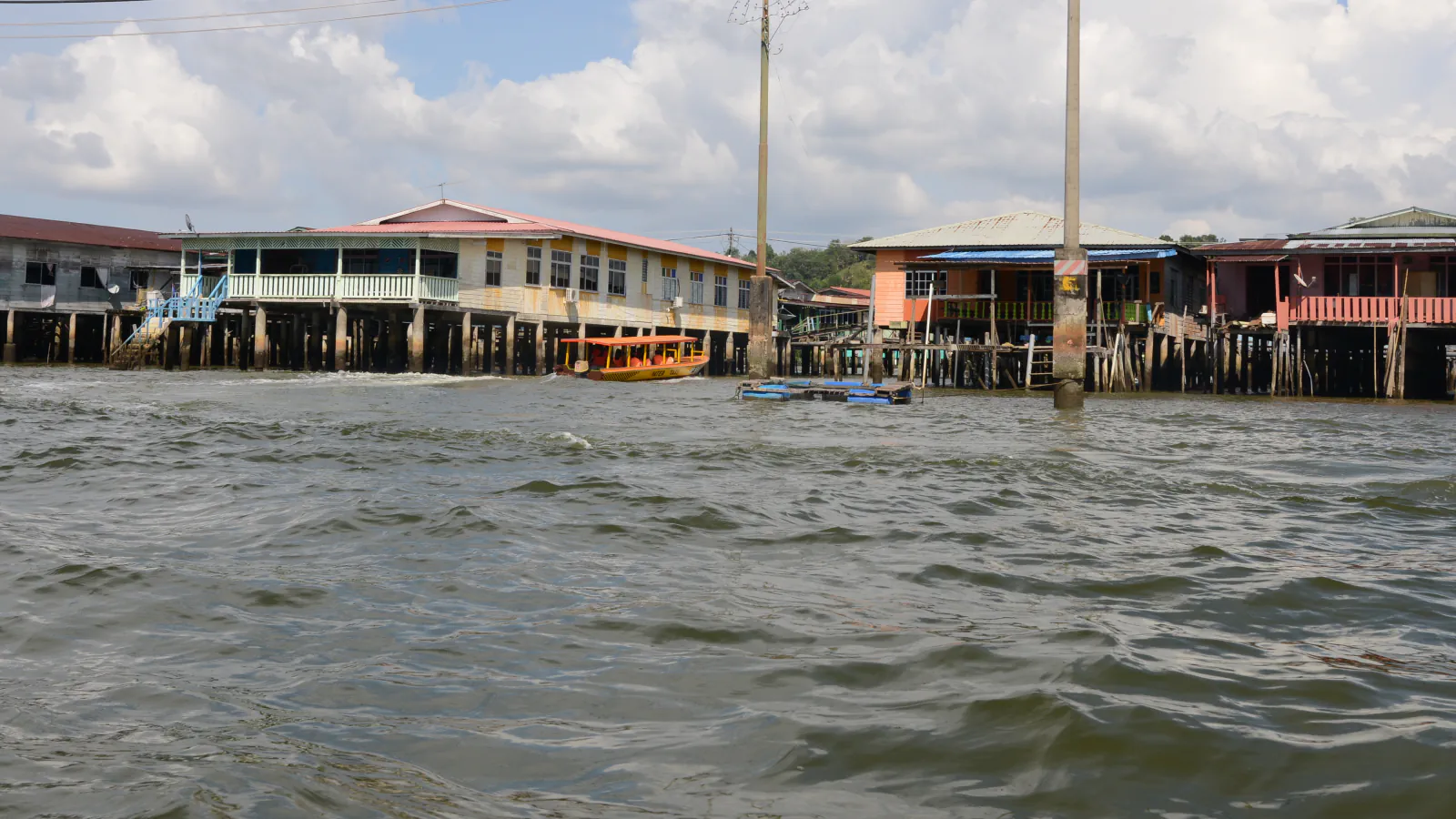
- Hansen’s 1995 account traces a change from timber supports to concrete pilings and brick walls.[1]
- Kuala Belalong
- One-hectare plot: 1,062 stems representing 278 tree species (publisher abstract).[2]
- Brunei fossil sites
- Dipterocarps: 79% of identified macrofossils, but under 1% representation in pollen from the same beds.[3]
A place worth remembering
Kampong Ayer: houses shaped by river materials
In Hansen’s 1995 account, the first houses rested on ironwood or mangrove supports driven into river mud, while nipa palm fronds roofed and walled them. Sawn wood and corrugated sheets became widely available in the 1940s, and new designs gained popularity in the 1950s. He links the load-bearing capacity of concrete piles and floor joists to the use of brick and larger homes. The account traces how building materials shaped homes over the river.[1]
Kuala Belalong: what one hectare records
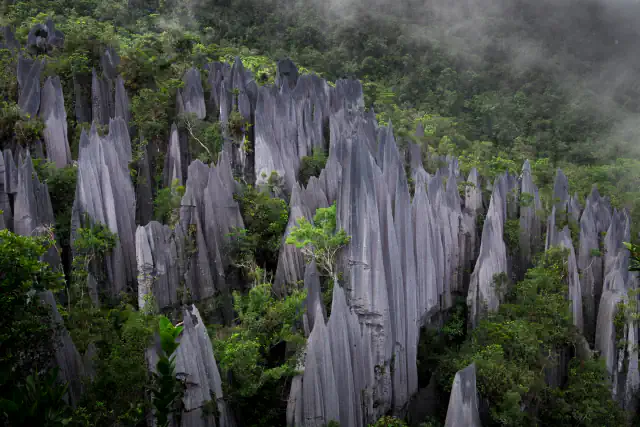
A 2004 study abstract describes a permanent one-hectare plot on the lower part of a slope in the Kuala Belalong valley, Temburong District. Researchers measured tree diameter 1.3 m above ground and included trees at least 5 cm across. They recorded 1,062 stems (1,019 live, 43 dead) from 278 species, identified to species or morpho-species level.[2]
Berakas Beach and Kampong Lugu: leaves and pollen
At two fossil sites in Brunei, dipterocarps made up 79% of identified macrofossil specimens, but had less than 1% representation in pollen from the same beds. The 2022 study’s authors say this supports the view that the shortage of dipterocarp pollen across many regional assemblages reflects taphonomic bias (what gets preserved).[3]
Good to know
A few clear answers before you explore.
Why were homes built above the river?
Hansen points to cooling airflow and sanitation, as well as the practical link to water and fishing. His account also describes the materials used for supports, walls and roofs.[1]
Why do the fossil leaves and pollen differ?
In the two studied deposits, dipterocarp remains dominate the identified macrofossils while their pollen is scarce. The authors say the scarcity of pollen reflects taphonomic bias, a skew in what gets preserved.[3]
What was the census threshold?
The study measured trunks 1.3 m above ground and included those at least 5 cm in diameter.[2]
The WorldStamped community
Every visit becomes part of a story.
- Members with public visits
- 0
- Places with public visits or memories
- 0
- Public memories
- 0
No public visits have been counted here yet. Add this destination to your own map and choose what you want to share.
Members are counted once. Counts include only eligible public activity from profiles that allow search discovery. Private and followers-only content is excluded.