City
Bangui and its river: rapids, floods and a station established in 1911
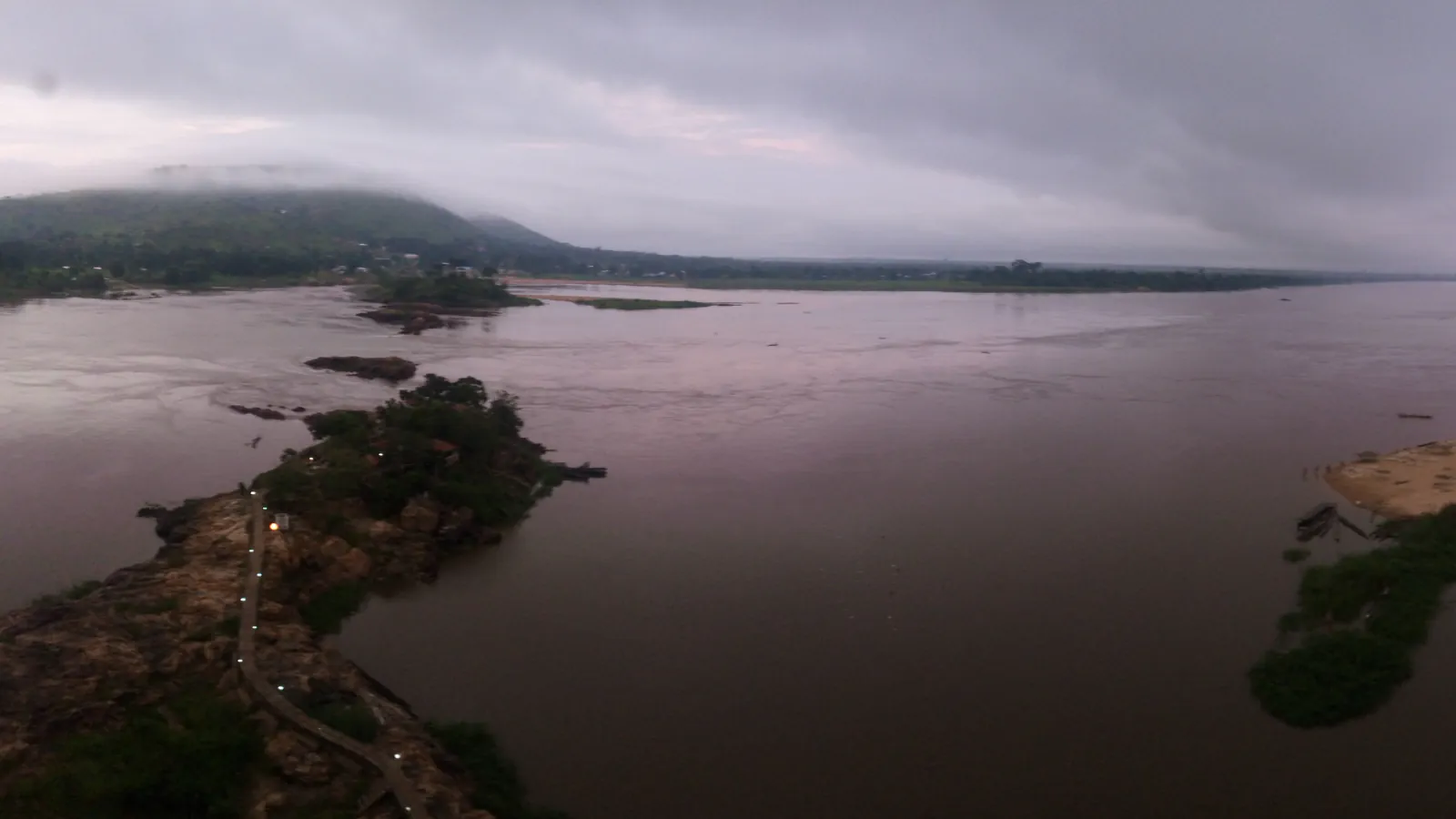
Boulvert’s 1983 account says “Bangui” means “rapids” in the Bobangui language and that the site corresponds to major rapids on the Oubangui upriver from the Congo. He describes floods moving the French post from Kolongo to a rocky site above the rapids; UNESCO’s 2006 Tentative List entry instead says the post was created on that rock on 26 June 1889. The gauge began in 1911; continuous daily measurements followed the 1920–1935 gap.
At a glance
A place worth remembering
The Bangui gauging station was set up in 1911
Yves Boulvert’s 1983 study explains Bangui as a Bobangui word for “rapids” and places the city beside major rapids on the route taken by boats travelling upriver from the Congo. The 2025 Biogeosciences paper examines the discharge series collected at Bangui over the long term. It dates installation of the gauge to 1911; early observations were intermittent, followed by a gap from 1920 to 1935 and then continuous daily measurements. The catchment above the city covers about 490,000 km². For 1935–2015 the paper reports a mean flow of 3,700 m³/s, usual high water from September to November and low water from February to April; it also records a 100-year flood of 14,000 m³/s in October 1916 and a lowest flow of 266 m³/s in April 1990. Museum-held freshwater bivalve shells, including Bangui specimens collected in December 1891 and 1914, were among the museum shells whose isotope records cover sections of roughly the past 130 years, which the authors used to study changes in hydroclimate.[6][1]
The rock where the early post moved above the floods
The accounts differ on the post’s initial location. Boulvert’s 1983 account says the French post was founded in June 1889 at Kolongo, beside a marsh and the mouth of the Mpoko; repeated high-water flooding led to its move a few years later above the rapids, to Rocher de l’Artillerie. UNESCO’s Tentative List entry instead says the post was created on that rock on 26 June 1889. It places the rock at today’s Hôtel Oubangui and notes that early buildings clustered on granulite there because floods and marshy low ground made the lower site difficult to build on.[6][2]
A research institute that began with yellow fever
Institut Pasteur de Bangui occupies the corner of Avenue de l’Indépendance and Rue Pasteur. The Pasteur Network dates its founding to 1961 and says its early work addressed yellow fever and arboviruses. Today its patient services include testing, vaccination and anti-rabies treatment; its other work covers diseases established in the region or newly emerging, epidemiological monitoring and professional training. The institute holds national reference status for polio, monkeypox, influenza, rabies and haemorrhagic-fever viruses, according to the network (its wording; WHO recommended “mpox” as the preferred term in 2022).[3][5]
Good to know
A few clear answers before you explore.
How long has the Oubangui been measured at Bangui?
The gauging station was set up in 1911. Kelemen and colleagues report intermittent records, then a gap from 1920 to 1935, and continuous daily measurements after that.[1]
Why was the early post moved onto the rock?
Boulvert’s 1983 account says the post was flooded during high water and moved a few years later above the rapids, to the rock later called Rocher de l’Artillerie.[6]
What does the Institut Pasteur de Bangui do?
The Pasteur Network lists testing, vaccination and anti-rabies treatment among its patient services, alongside research, epidemiological monitoring and professional development. It also describes the institute as a National Reference Laboratory for polio, monkeypox, influenza, rabies and haemorrhagic-fever viruses.[3]
The WorldStamped community
Every visit becomes part of a story.
- Members with public visits
- 0
- Places with public visits or memories
- 0
- Public memories
- 0
No public visits have been counted here yet. Add this destination to your own map and choose what you want to share.
Members are counted once. Counts include only eligible public activity from profiles that allow search discovery. Private and followers-only content is excluded.